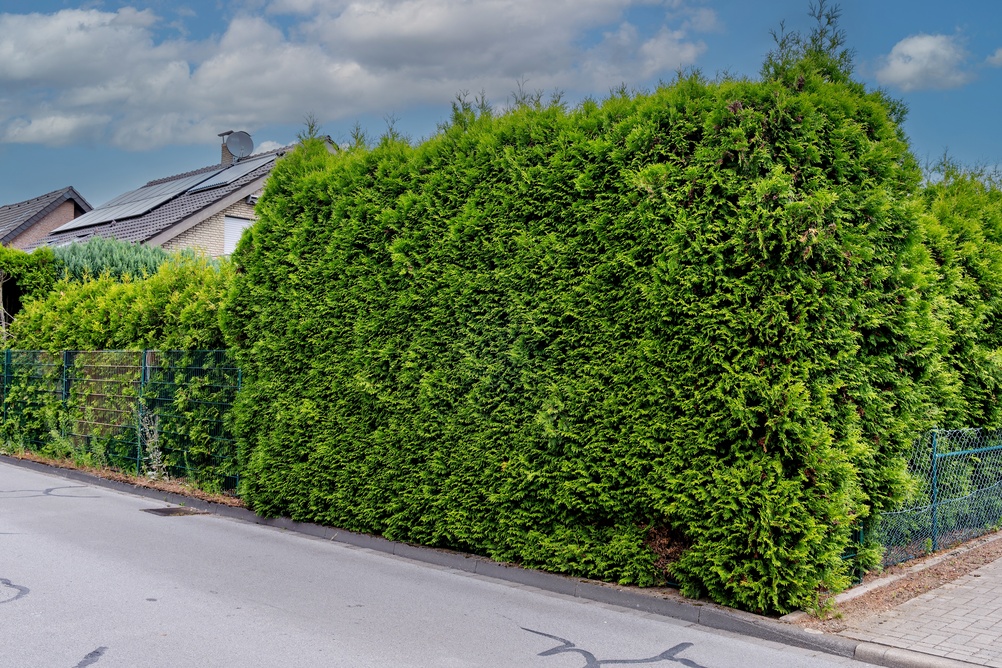
You plant a row of beautiful evergreen shrubs along your backyard fence, imagining the privacy they’ll provide once they fill in. A few years later, your neighbor knocks on your door with a complaint: your hedge is growing into their yard, blocking access to their fence, and dropping debris onto their property. They want you to cut it back, but doing so could leave your carefully grown privacy screen looking terrible. Suddenly, a simple landscaping project has become a neighborhood dispute.
The problem often starts with one overlooked detail: planting shrubs too close to the property boundary without accounting for their mature width. Privacy hedge property line disputes can lead to damaged landscaping, unexpected maintenance expenses, and even legal disagreements. Fortunately, a little planning can prevent most of these problems.
The Biggest Mistake Is Planting Right Against the Property Line
Many homeowners assume that as long as a shrub’s trunk sits on their property, they can plant it wherever they want. However, the branches of a mature privacy hedge can extend several feet beyond the original planting location. Improperly positioned shrubs can eventually overtake walkways, crowd property boundaries, and create maintenance problems. A row of shrubs planted just 12 inches from a fence might look perfectly positioned when young but become troublesome once the plants reach their mature width. Leaving enough room for growth is one of the simplest ways to prevent privacy hedge property line disputes before they begin.
Your Neighbor May Have the Right to Cut Back the Growth
Here’s where an innocent landscaping mistake can become especially frustrating: your neighbor may have legal rights regarding branches that cross onto their property. Courts have recognized a property owner’s ability to trim certain overhanging branches under a legal principle known as self-help. However, the exact rules vary by state, and trimming that unnecessarily damages or kills a neighbor’s plant can create potential liability. Imagine spending five years growing a dense evergreen screen only to have one side aggressively trimmed because it extends across the fence. Even when the neighbor has a legitimate complaint, the resulting damage can leave both homeowners frustrated and potentially facing legal expenses.
A Six-Foot-Wide Hedge Needs More Room Than You Think
One of the easiest ways to avoid trouble is to calculate the space your hedge will occupy when fully grown. For example, a shrub expected to reach six feet across has a natural radius of approximately three feet, meaning planting its center three feet from the boundary would place its mature outer growth near the property line. If you want extra space for pruning and maintenance, you’ll need to position it even farther inside your yard. The Government of New Brunswick’s hedge planting guidance recommends allowing sufficient distance from property boundaries so hedges can spread and still be maintained from the owner’s side. Checking mature width before purchasing plants can save hundreds of dollars in replacement costs and help prevent future privacy hedge property line disputes.
The Fence Might Not Mark Your Actual Property Boundary
Another common mistake is assuming an existing fence shows exactly where one property ends and another begins. In reality, fences are sometimes installed several inches or even feet inside the legal boundary, particularly when previous owners wanted room for maintenance. NC State Extension’s landscape design guidance recommends reviewing property plans and identifying boundaries, easements, and setbacks before beginning landscaping projects. If you plant a hedge along an incorrectly positioned fence, you could unintentionally place shrubs on land that legally belongs to your neighbor. When the boundary is uncertain, a licensed land surveyor can establish its location more reliably than an old fence, online parcel map, or informal agreement.
Local Rules May Limit How Tall Your Privacy Hedge Can Grow
A privacy hedge might seem different from a wooden fence, but some municipalities regulate both under similar landscaping or zoning ordinances. For example, the City of Madison, Wisconsin, provides specific guidance on fence and hedge placement, height measurements, and property boundaries. Other communities may impose additional restrictions near street corners, driveways, sidewalks, or intersections where tall vegetation could obstruct visibility. Homeowners associations may also establish rules governing approved plant varieties, screening heights, and landscaping appearance. Before investing in a row of fast-growing evergreens, check your local zoning requirements and HOA documents to avoid planting something you’ll eventually be required to trim or remove.
Fast-Growing Hedges Can Become Expensive Maintenance Projects
It’s tempting to choose the fastest-growing shrubs available when you’re desperate to block a neighbor’s view. However, rapid growth can also mean more frequent pruning, particularly when plants are confined to a narrow strip between properties. Formal hedges may require shearing three to five times during the growing season to maintain their shape. That maintenance becomes more complicated when branches extend across a fence and you cannot safely reach the opposite side from your own yard. Choosing a slower-growing or naturally compact variety may cost you some initial privacy, but it can reduce ongoing labor and the risk of privacy hedge property line disputes.
Aggressive Pruning Could Ruin the Privacy You Wanted
When an oversized hedge begins encroaching on a neighboring property, cutting it back isn’t always as simple as removing a few inches of growth. Some evergreen species respond poorly to severe pruning, particularly when cuts expose older wood that may not readily produce new foliage. Heavily pruning evergreen privacy screens can disfigure or damage them. In extreme cases, removing and replacing the oversized plants may be more practical than repeatedly fighting their natural growth pattern. Selecting shrubs that fit the available space from the beginning helps preserve the dense, attractive screening you originally wanted.
Your Hedge Could Interfere With Easements or Utilities
Property lines aren’t the only boundaries homeowners need to consider when installing privacy landscaping. Utility easements may allow service providers to access portions of your yard for underground cables, water lines, sewer infrastructure, or other equipment. Easements and rights-of-way can restrict how landowners use certain portions of their property. Planting a dense hedge over an underground utility corridor could eventually create access problems or result in plants being removed during maintenance work.
Before digging, contact 811 to request underground utility markings and review your property documents for recorded easements or restrictions.
Talking to Your Neighbor Before Planting Can Save Trouble
Privacy landscaping often works best when neighboring homeowners discuss their concerns before installing permanent plants. A brief conversation can reveal whether your neighbor plans to replace a fence, needs access for maintenance, or has concerns about branches crossing the boundary. Neighbors should communicate about trees and screening plants that could affect adjoining properties. You might agree on a suitable hedge height, choose a less aggressive plant variety, or establish how future pruning will be handled. Although a friendly conversation doesn’t override property laws or local regulations, it can prevent misunderstandings that otherwise escalate into expensive disputes.
Give Your Hedge Room to Grow Without Growing a Grudge
A well-designed privacy hedge can make your backyard feel peaceful, secluded, and more enjoyable without requiring an expensive fence installation. However, planting too close to a property boundary can turn that investment into a recurring source of conflict. Before buying shrubs, confirm your property lines, check local restrictions, and calculate each plant’s mature width rather than relying on its nursery size. Leave enough room to maintain the hedge from your own property, and choose varieties that won’t require constant aggressive pruning to stay contained. Avoiding privacy hedge property line disputes ultimately comes down to respecting the space your plants need and the boundaries your neighbors have a right to enjoy.
Have you ever dealt with a neighbor’s overgrown hedge, or had someone complain about landscaping along your property line? Share your experience in the comments!
What to Read Next
5 Landscaping Projects That Look Easy Until the Repair Bills Arrive
Why Gardeners Should Think Twice Before Moving Soil From One Yard to Another
Your Neighbor’s Tree Is Dropping Leaves Into Your Yard — Who Has to Clean Them Up?
Leave a Reply