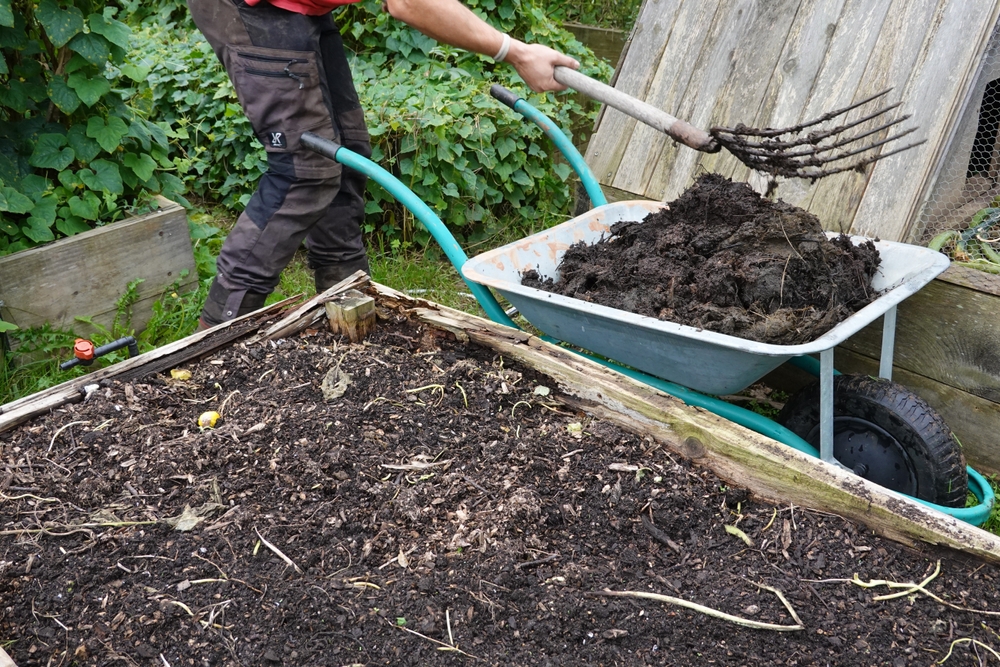
A neighbor offers you a truckload of free manure just as you’re cleaning out your garden for fall. It sounds like the perfect opportunity to improve your soil without spending money on expensive fertilizers or bagged compost. After all, manure has been used to enrich gardens for generations, so what could possibly go wrong?
Quite a bit, actually.
Spreading fresh manure directly into fall garden beds can introduce harmful bacteria, damage plant roots, and create nutrient problems that may not become obvious until spring.
While fall is sometimes an appropriate season for applying manure, the type, timing, and condition of the material matter more than many gardeners realize.
Before adding fresh manure to garden beds, here’s what you need to understand about the risks and how to prepare your soil safely.
Fresh Manure Can Burn Tender Plant Roots
One of the biggest concerns with adding fresh manure to garden beds is the possibility of fertilizer injury. Fresh manure, particularly poultry manure, may contain concentrated ammonium compounds and soluble salts that can damage sensitive plant roots. When concentrations become excessive, plants may develop brown leaf edges, wilting, stunted growth, or symptoms that resemble drought stress. Young seedlings and recently transplanted vegetables are especially vulnerable because their developing root systems cannot tolerate the same conditions as established plants. Allowing manure to undergo proper composting before application can reduce some of these risks, although gardeners should still avoid applying excessive amounts.
Harmful Bacteria Can Survive in Uncomposted Manure
Fresh animal manure can contain disease-causing microorganisms, including certain strains of E. coli, Salmonella, and other pathogens that can contaminate edible crops. These organisms are particularly concerning when manure contacts vegetables that grow close to the soil or are commonly eaten raw. The USDA National Organic Program generally requires a minimum of 120 days between raw manure application and harvesting crops whose edible portions contact soil, or 90 days for crops whose edible portions do not contact soil. Those intervals are organic production requirements, not guarantees that all pathogens have disappeared, and home gardeners should follow appropriate food safety recommendations. If you’re planning to harvest fall lettuce, spinach, carrots, or other vegetables soon, applying fresh manure to those beds is an unnecessary contamination risk.
Fall Weather Can Wash Valuable Nutrients Away
Many gardeners assume that spreading manure in fall gives nutrients plenty of time to settle into the soil before spring planting. However, heavy rain, melting snow, and saturated ground can carry manure nutrients away before plants have an opportunity to use them. Nitrogen losses can be especially problematic because some forms of nitrogen move readily with water under certain soil conditions. Managing nutrients carefully helps protect soil health and reduces the risk of pollution entering waterways. Avoid spreading fresh manure on frozen, snow-covered, saturated, or erosion-prone ground, and consider whether properly composted material would be a better option for your garden.
You Could Introduce Weeds That Return in Spring
A free load of manure can sometimes contain an unwanted surprise in the form of viable weed seeds. Horses and other livestock may consume plants containing seeds that survive digestion and remain capable of germinating after passing through the animal. If manure hasn’t been composted under suitable conditions, those seeds may end up scattered throughout your garden beds. By spring, the soil you hoped to improve could be supporting an impressive crop of weeds instead of vegetables. Proper hot composting can reduce many viable weed seeds, making it a better choice than spreading uncomposted manure directly into planting areas.
Too Much Manure Can Create Nutrient Imbalances
It’s easy to assume that more manure automatically means richer soil and healthier plants, but that’s not always the case. Manure contains nitrogen, phosphorus, potassium, and other nutrients that can accumulate when applications exceed what crops actually need. Excess phosphorus is a particular concern in gardens that receive repeated manure applications over several years. A soil test can reveal whether your beds need additional nutrients or whether adding more fertilizer could create problems. Before spreading fresh manure in garden beds, contact your local cooperative extension office for soil testing recommendations and use the results to determine whether an application is appropriate.
Some Manure Contains Herbicide Residues
Not every problem with manure comes from bacteria, salts, or nutrient concentrations. Certain persistent herbicides used on pastures and hayfields can survive livestock digestion and remain active in manure or contaminated bedding. These residues can damage sensitive garden crops, including tomatoes, peppers, beans, and peas, even when the manure looks well decomposed. NC State Extension warns that some herbicides can persist in manure and compost and recommends investigating the source before using questionable materials. If you’re accepting manure from a farm, ask what herbicides were used on the animals’ feed or pasture and consider a plant bioassay before spreading unfamiliar material throughout your garden.
Aging Manure Isn’t the Same as Proper Composting
One of the most common misconceptions about fresh manure in garden beds is that leaving it in a pile for a few weeks automatically makes it safe. Aging allows some decomposition to occur, but it doesn’t necessarily expose all the material to temperatures sufficient to reduce pathogens and weed seeds. Proper composting involves managing moisture, oxygen, carbon-rich materials, and temperature to encourage controlled decomposition. Even finished-looking compost should be evaluated carefully when its source or processing history is unknown, particularly before use around edible crops. For gardeners who want a predictable soil amendment, purchasing properly processed compost or making compost using established extension recommendations is generally a safer choice.
Fall Can Still Be a Good Time to Improve Your Soil
Avoiding fresh manure doesn’t mean you need to leave your garden beds untreated until spring. Fall is an excellent opportunity to add finished compost, protect exposed soil with shredded leaves, or establish cover crops where the growing season allows. These practices can improve soil structure, reduce erosion, and help maintain organic matter without introducing the same risks associated with uncomposted animal waste. Gardeners who choose to apply raw manure in fall should follow harvest intervals, local regulations, soil-test guidance, and recommendations appropriate for their climate and crops. The important distinction is that fall application can sometimes be managed safely, but simply spreading fresh manure and hoping winter weather fixes everything isn’t a reliable strategy.
Better Garden Soil Starts With Patience
Fresh manure in garden beds can create more problems than it solves when gardeners overlook pathogens, excess nutrients, weed seeds, and potential herbicide contamination. Although manure is a valuable organic resource, its benefits depend on proper handling, appropriate application rates, and careful timing. Taking the time to compost manure correctly or selecting a verified finished product can help protect both your plants and the food you grow. If you’re preparing your garden for winter, focus on improving soil health without introducing unnecessary risks that could follow you into spring.
Have you ever used fresh manure in your garden, and did it improve your soil or create unexpected problems? Share your experience and gardening tips in the comments.
What to Read Next
How to Identify Bare Spots in Garden Beds Before Winter
Your Raised Bed Is Empty — Should You Cover It Before Winter?
Fall Flowers That Keep Garden Beds Colorful After Summer Fades
Leave a Reply