One chilly night can wipe out months of herb growth surprisingly quickly, especially when a warm fall suddenly turns cold. Basil is particularly vulnerable, but container-grown rosemary and other tender herbs may also need help when temperatures tumble. Fortunately, protecting herbs from frost doesn’t require an expensive greenhouse or a cart full of garden supplies. Old sheets, row covers, mulch, and a little advance planning can often buy plants valuable extra time, while containers can simply be moved somewhere protected. The key is knowing which herbs need rescuing, watching the forecast, and getting protection in place before temperatures hit their overnight low.
Know Which Herbs Are Actually in Danger
Not every herb needs to be treated like basil when frost appears in the forecast. University of Minnesota categorizes basil and rosemary among warm-season herbs, while parsley, chives, cilantro, dill, thyme and sage are cool-season choices. Basil is particularly vulnerable because it is a tender annual, and Minnesota notes that frost kills the plant. Cilantro, by comparison, can survive light frost, so covering every herb bed as though all plants have identical cold tolerance can create unnecessary work. Start protecting herbs from frost by identifying what you’re growing rather than throwing blankets over the entire garden.
Pay Attention Before Temperatures Reach 32 Degrees
Don’t wait until you’re getting ready for bed to discover that frost is expected overnight. A light frost around 32 degrees Fahrenheit can damage tender plants, while temperatures around 28 degrees or colder can kill many warm-season crops, according to the University of Minnesota. Frost can also occur under certain local conditions even when the official air-temperature forecast looks slightly warmer, particularly in low spots where cold air settles. A gardener with basil worth another $15 or $20 in grocery-store herbs has a good reason to pay attention when nighttime temperatures start flirting with the mid-30s. Think of the forecast as an early-warning system rather than waiting for frost to appear on the lawn.
Cover Tender Herbs Before the Temperature Drops
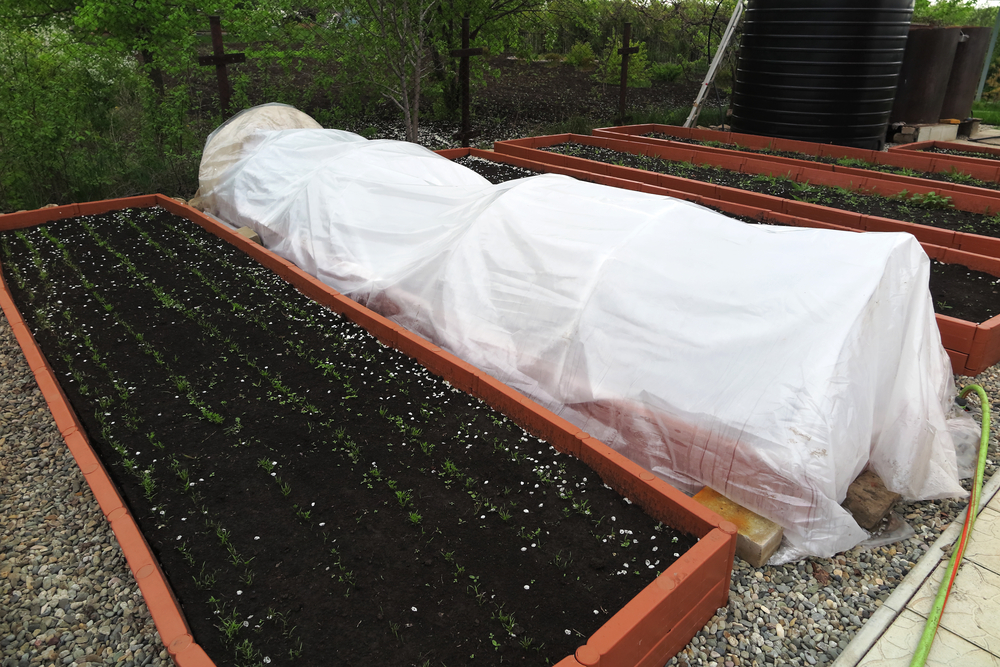
Row covers are one of the simplest ways to provide temporary cold protection. Minnesota says medium-weight row covers can protect plants against light frost, while heavier fabrics can offer protection at temperatures around 20 degrees under suitable conditions. For a small herb bed, gardeners can also use readily available materials such as sheets or other breathable coverings when only short-term protection is needed. Support the covering over delicate plants when practical and secure the edges so cold air doesn’t simply blow underneath it overnight. Remove or vent protective coverings as conditions warm because heavy covers can trap excessive heat on sunny days.
Move Container Herbs Instead of Fighting the Weather
A potted herb has one major advantage over something planted in the ground: it can travel. If a sudden frost threatens, moving basil, rosemary, or another tender container plant into a garage, porch or indoor location overnight may be simpler than trying to insulate the pot outside. Penn State notes that tender herbs such as basil can be grown indoors during winter, although they’ll need suitable growing conditions. Before bringing plants into your living space for an extended period, inspect the leaves, stems, and soil for insects so you’re not moving unwanted guests indoors too. If you’re only dodging a single cold night, even an unheated protected space can sometimes provide the short-term buffer you need.
Don’t Assume Bringing Basil Indoors Guarantees a Winter Harvest
Saving a favorite basil plant sounds easy until it spends several weeks in a dim kitchen window. University of Minnesota explains that basil brought indoors may need artificial lighting for 10 to 12 hours per day because winter indoor light may be inadequate. Basil is also an annual, so even a rescued plant won’t necessarily live indefinitely simply because it escaped the frost. For gardeners without a good indoor growing setup, harvesting and preserving the leaves may make more sense than attempting to nurse a mature plant through winter. Sometimes protecting herbs from frost means saving the harvest rather than saving the entire plant.
Give Hardy Perennial Herbs a Different Kind of Protection
Perennial herbs such as thyme and sage generally don’t need to be carried into the house every time frost appears. Their bigger winter challenge can be repeated freezing and thawing around shallow roots rather than one ordinary fall frost. Penn State recommends protecting perennial and biennial herbs with about four inches of straw, oak leaves or evergreen boughs after the ground freezes. Waiting matters because piling winter mulch onto plants too early can interfere with the natural transition into dormancy. This is longer-term winter protection, not the same strategy as covering tender basil for one unexpectedly cold October night.
Harvest What You Can’t Realistically Save
When a hard freeze is coming, don’t gamble an entire basil crop on a sheet and good intentions. Harvest healthy leaves and stems beforehand so the food you’ve already grown doesn’t become blackened garden waste the next morning. Penn State says herbs including basil, parsley, dill, chives, mint and tarragon can be frozen, and chopped herbs can be frozen in water in ice-cube trays for later use. Basil can also be frozen with oil, but Penn State cautions that herbs stored in oil must be frozen rather than kept at room temperature. A freezer bag full of homegrown basil isn’t quite the same as fresh leaves, but it beats paying repeatedly for small supermarket packages all winter.
Don’t Forget That Cold Isn’t the Only Problem
A frantic attempt at protecting herbs from frost can sometimes create another problem if plants are left wet, smothered, or overheated. Covers should be removed or ventilated when daytime temperatures rebound, and plants moved indoors need adequate light and drainage rather than constant watering. Minnesota notes that indoor herbs should generally be watered when the soil is dry about half an inch below the surface, because constantly soggy soil can encourage root rot. Herbs that survive the initial frost still need ordinary plant care once the emergency has passed. Treat frost protection as temporary weather management, not a reason to abandon the growing conditions the herb needs the rest of the time.
A Few Minutes Tonight Could Save Weeks of Herbs
The most effective approach to protecting herbs from frost is deciding ahead of time what is worth covering, moving, or harvesting. Tender basil deserves immediate attention, container herbs can often be moved, and established hardy perennials usually need a different winter strategy altogether. Keep an old sheet or appropriate row cover handy, monitor nighttime forecasts, and harvest tender herbs before a hard freeze overwhelms the protection you can realistically provide. If a plant isn’t worth carrying through winter, preserve the harvest and start fresh next season rather than spending money and effort trying to save everything.
Which herbs do you try to keep growing after the first frost, and which ones do you harvest and call it a season?
What to Read Next
Cool-Season Crops That Still Have Time to Grow Before Frost
Your First Frost Is Coming — 8 Garden Jobs That Should Happen Before It Arrives
The First Frost Is Coming — These 7 Garden Plants Are Worth Saving Before It Hits
Leave a Reply