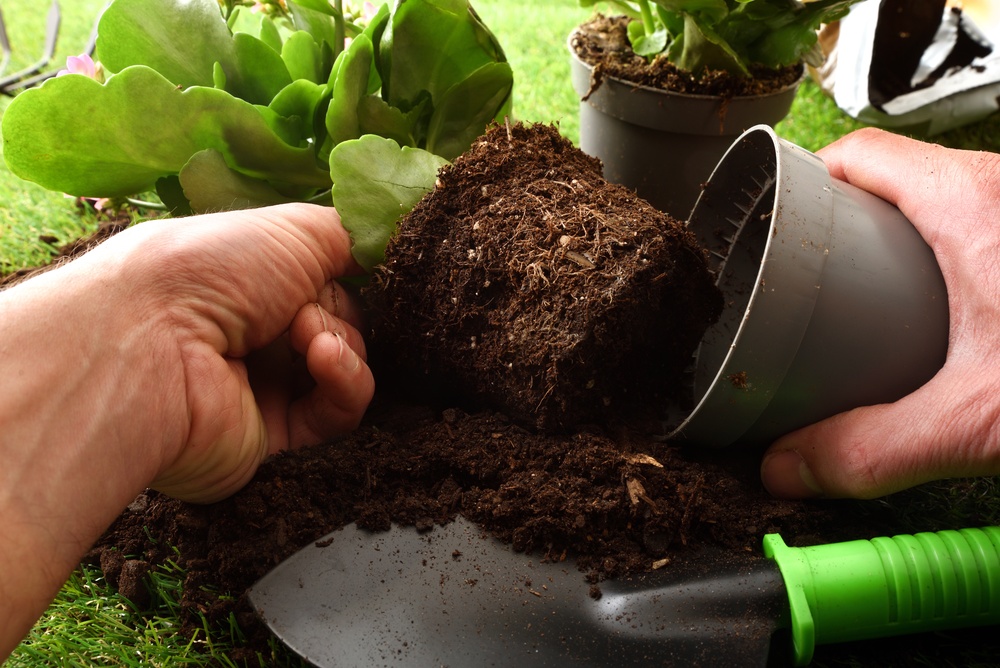
Standing in the garden center, paying $4 for a bag of cheap potting soil instead of $10 or $15 can feel like an obvious money-saving decision. Then your containers stay soggy, seedlings struggle, roots barely develop, and suddenly you’re buying replacement plants, fertilizer, perlite, or another bag of growing mix anyway. Price doesn’t automatically determine quality, and an inexpensive product can certainly work, but what is inside the bag matters much more than the picture of enormous tomatoes printed on the front. Iowa State University notes that poor-quality potting mixes are often heavy and slow-draining, while better mixes provide both drainage and moisture retention without readily compacting. Before filling 10 containers with the cheapest bag on the pallet, check these features first.
1. Pick Up the Bag Before You Buy It
Weight can give you an immediate clue about what you’re buying because good container media generally needs plenty of pore space for air and drainage. Iowa State’s 2025 guidance on potting media explains that many high-quality mixes are roughly 85% pore space, dramatically more than ordinary soil. If a relatively small bag feels exceptionally heavy and dense, read the ingredient list carefully before assuming you’re getting more product for your money. Heavy isn’t automatically bad—some containers benefit from additional weight—but dense material can create problems when roots need both oxygen and water. A cheap potting soil that compacts badly may save a few dollars at checkout while creating an expensive growing problem later.
2. Look for Ingredients That Create Air Space
A good potting mix isn’t simply dirt stuffed into a plastic bag. North Carolina State explains that common soilless-media ingredients include perlite, pine bark, sphagnum peat moss, vermiculite, and sand, each contributing different properties to the finished product. Perlite, for example, promotes drainage and aeration, while vermiculite absorbs water and helps retain nutrients. Peat moss contributes water-holding capacity, and appropriately sized bark can improve aeration because its larger particles create additional pore space. When comparing two bags, reading the ingredient list may tell you considerably more about potential performance than comparing their brand names.
3. Avoid a Mix That Looks Like Heavy Garden Dirt
One of the easiest money-saving mistakes is assuming ordinary soil should work perfectly well inside a flowerpot because plants grow in soil outdoors. Container physics are different, and the University of Maryland warns that commercial products sold as topsoil, planting soil, planting mix, or potting soil can vary considerably in quality. Maryland recommends avoiding mixes that feel heavy or gritty, contain very fine particles, or appear clumped because those characteristics can indicate poor container performance. Iowa State similarly explains that garden soil placed in containers can compact, reducing both drainage and aeration around roots. If your cheap potting soil turns into something resembling a dense mud brick after several waterings, the low purchase price isn’t much consolation.
4. Check Whether Fertilizer Is Actually Included
Don’t assume the word “potting” means the bag contains enough plant food to carry tomatoes, peppers, or flowers through an entire season. Many commercial mixes contain a small amount of fertilizer to help newly potted plants get started, but those nutrients may last only a couple of weeks. Other products may contain slow-release fertilizer designed to work considerably longer, while some mixes require you to supply essentially all ongoing nutrition yourself. None of those options is inherently wrong, but they create different costs after you leave the store. A $5 mix plus $12 of additional fertilizer isn’t necessarily a better bargain than an $11 product that already includes useful nutrients.
5. Make Sure Water Can Move Both Ways
The best container medium has to accomplish two jobs that sound contradictory: hold enough moisture for roots while allowing excess water to drain. University of Maryland Extension explains that soilless mixes commonly use materials such as peat moss, perlite, and vermiculite to create that balance, retaining moisture while leaving pore space for drainage and root growth. A dense mix that stays saturated can deprive roots of oxygen, while an extremely coarse mix that dries almost immediately may force you to water constantly. Some peat-based mixes can also become difficult to wet again after drying completely, so initial watering technique matters. Before blaming yourself for a struggling container, consider whether your cheap potting soil is making moisture management unnecessarily difficult.
6. Match the Mix to What You’re Growing
There isn’t one perfect bag of potting mix for every plant, which is why buying solely by price can backfire. NC State notes that root-rot-sensitive plants and plants preferring drier conditions benefit from greater air space, while thirsty crops such as tomatoes can benefit from mixes with more water-holding capacity. Succulents, herbs, seedlings, houseplants, hanging baskets, and large vegetable containers therefore shouldn’t automatically receive identical treatment. You don’t necessarily need a separate expensive specialty bag for every species, but you may need to amend a general-purpose mix to suit particularly demanding plants. Spending another dollar or two upfront can be cheaper than replacing a $20 plant whose roots sat wet all summer.
7. Compare Cost by Volume, Not Just by Bag
A giant bag isn’t always a bargain, and two packages that look similar on the shelf may contain substantially different volumes of growing medium. Compare cubic feet, quarts, or liters rather than simply looking at the sticker price, then consider whether one product will require additional perlite, compost, fertilizer, or other amendments. Gardeners who use large quantities can also save by buying bigger packages of quality soilless media rather than numerous small bags; large bags or compressed bales can be cheaper per unit for people who start many seedlings or maintain container gardens. If a $15 bag fills three times as many pots as a $6 bag, the supposedly expensive option may actually have the lower cost per container. That’s the calculation that should determine whether cheap potting soil really deserves the word “cheap.”
The Cheapest Mix Is the One That Keeps Your Plants Alive
Frugal gardening isn’t about automatically choosing the lowest price; it’s about getting the most useful growing season from every dollar you spend. Before buying cheap potting soil, check the bag’s volume and ingredients, feel its weight, consider its texture, determine whether fertilizer is included, and make sure its drainage characteristics fit the plants you’re growing. A bargain mix can be perfectly useful if it has the right structure, while an expensive branded product can still be unnecessary for your particular garden. If the inexpensive mix needs $10 worth of amendments or contributes to losing several plants, however, you’ve erased the original savings.
Have you found an inexpensive potting mix that performs surprisingly well—or bought a bargain bag you regretted as soon as you opened it? Tell us about it in the comments.
What to Read Next
Stop Buying Potting Soil Every Year — Here’s What Can Actually Be Reused
You May Not Need to Buy New Potting Soil for Every Container Next Spring
Leave a Reply