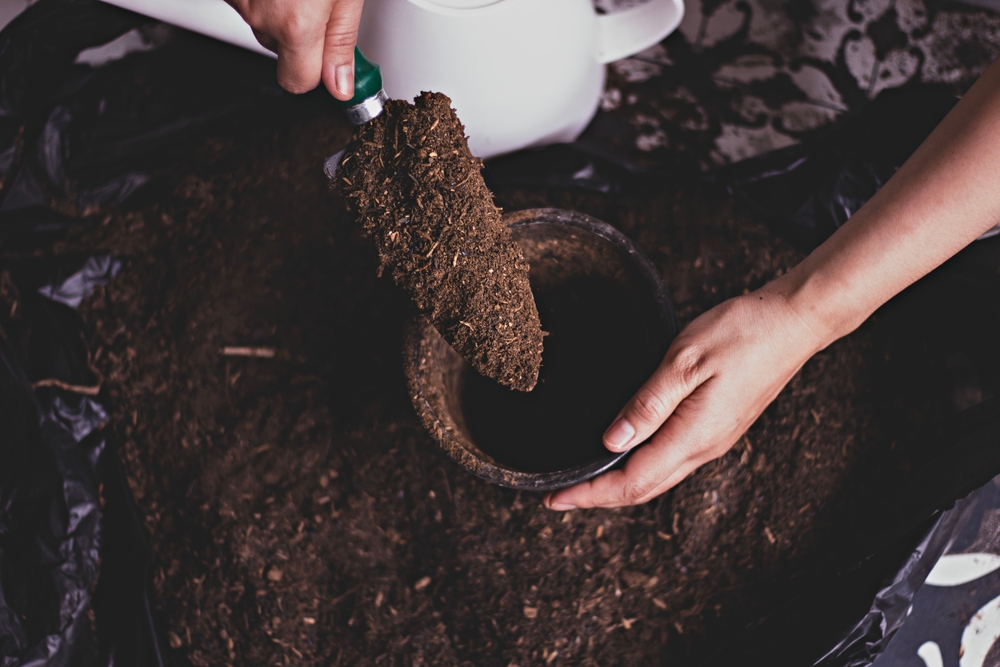
Dumping every container at the end of the gardening season can feel painfully wasteful, especially when you’ve filled several large planters with expensive potting mix. The good news is that gardeners don’t necessarily need to start with completely fresh bags every spring. The University of Illinois says soilless potting media can be reused when the plants previously growing in it were healthy and didn’t experience major disease problems. The trick to reusing potting soil is knowing what can be refreshed, what deserves a second life elsewhere in the garden, and what should be discarded because it could cause problems next season. Before buying another cart full of potting mix, inspect what you already have.
Healthy Container Mix Can Often Get Another Season
Start by thinking about how the plants in each container performed rather than simply looking at the old potting mix. If the plants remained generally healthy and you didn’t encounter a major disease problem, you can remove the old plant material and reuse soilless media the following season. Pull out old roots, stems, leaves, and other debris, then loosen the remaining mix instead of leaving it as one compacted root ball. You’ll probably need to add some fresh potting mix because roots and settling can reduce the usable volume over the course of a growing season. For a frugal gardener with multiple large containers, reusing potting soil this way can substantially reduce how many new bags are needed.
Refresh Old Mix Instead of Simply Planting Into It
Used potting mix isn’t nutritionally identical to a new bag, even when it still looks perfectly fine. Container plants have access to a limited volume of growing medium, and frequent watering can leach nutrients from that mix throughout the season. It is generally recommended that you regularly replace those nutrients through an appropriate fertilizer program, such as slow-release or liquid fertilizer used according to directions. Adding some fresh potting mix can also restore lost volume, while ingredients such as perlite may help when the old mix needs better drainage and aeration. In other words, reusing potting soil doesn’t mean expecting last year’s exhausted mix to perform like a freshly opened bag without any help.
Disease Is the Biggest Reason to Start Fresh
Saving money on potting mix isn’t worthwhile if you carry a plant disease directly into next year’s garden. If plants suffered serious root disease, seedlings repeatedly collapsed, or you’re uncertain about what killed something in the container, replacing the media is the safer approach. The University of Minnesota warns that pots, tools, and potting media used during previous seasons can harbor pathogens responsible for damping-off disease. Some experts recommend against reusing the previous season’s potting soil because it may contain disease organisms. Extension recommendations therefore vary, but the practical takeaway is straightforward: reuse healthy media selectively rather than assuming every old container is safe.
Old Mix Eventually Stops Working Like Potting Mix
Even disease-free potting mix can’t be reused indefinitely because its physical structure changes. Soilless mixes commonly contain materials such as peat, bark, coconut coir, vermiculite, and perlite that help provide the combination of moisture retention, drainage, and air that container roots require. Organic materials in these mixes eventually decompose enough that the media loses important drainage and aeration properties. If old mix has become dense, muddy, badly compacted, or remains waterlogged much longer than it once did, adding a handful of new soil may not fix the underlying problem. That’s when reusing potting soil can become false economy because poor root conditions and failed plants may cost more than replacing the growing medium.
Worn-Out Potting Mix Doesn’t Necessarily Belong in the Trash
Potting mix that’s no longer suitable for containers may still have a useful second life. You should move any deteriorated soilless media to the compost pile or garden once it has broken down enough that its drainage and aeration are no longer adequate for containers. That means one bag of potting mix can potentially spend several seasons in containers before its organic material ultimately becomes part of the larger garden system. Be more cautious with media from diseased plants because some pathogens can survive in plant debris or growing media and return to infect future plants. When disease is involved, identify the problem first rather than automatically dumping the old contents into your compost pile.
Your Pots Can Definitely Be Reused—But Clean Them
The soil isn’t the only gardening purchase that should last longer than one season. Plastic nursery pots, ceramic containers, hanging baskets, and seed trays can often be reused repeatedly as long as they’re structurally sound and have adequate drainage. Always thoroughly wash previously used containers and sanitize them with a solution of one part bleach to nine parts water before reuse. Containers need drainage holes because waterlogged soil leaves roots without adequate air and can encourage root rot. A free reused container isn’t much of a bargain if old debris or poor drainage creates problems for the next plant.
Seed-Starting Mix Is One Place Not to Get Too Frugal
Tiny seedlings are a poor place to test how many seasons you can squeeze from an old batch of potting mix. Damping-off diseases can attack seedlings rapidly, causing young stems and roots to rot before plants have an opportunity to establish themselves. It is recommended that you use clean, new potting mix for seedlings rather than reused potting media, along with clean containers and good drainage. That’s a relatively small amount of fresh mix compared with what you’d need to refill every large patio container from scratch. Spend money on fresh media where plants are most vulnerable and concentrate your reusing potting soil strategy on established outdoor container plants that remained healthy.
Make Every Bag of Potting Mix Work Harder
Frugal gardening isn’t about reusing everything forever; it’s about getting full value from materials without creating bigger and more expensive problems. Healthy container media may provide another growing season after plant debris is removed and the mix is refreshed, while deteriorated material can eventually graduate to the garden or compost pile. Soil from diseased plants deserves much more caution, and seedlings are better started in fresh, clean media rather than last year’s leftovers. Pair reusing potting soil with reusable containers, proper cleaning, good drainage, and sensible fertilizing, and buying completely new soil every spring becomes much less necessary.
Do you reuse potting mix from year to year, or do you empty every container and start fresh each spring? Share your method in the comments.
What to Read Next
You May Not Need to Buy New Potting Soil for Every Container Next Spring
Leave a Reply