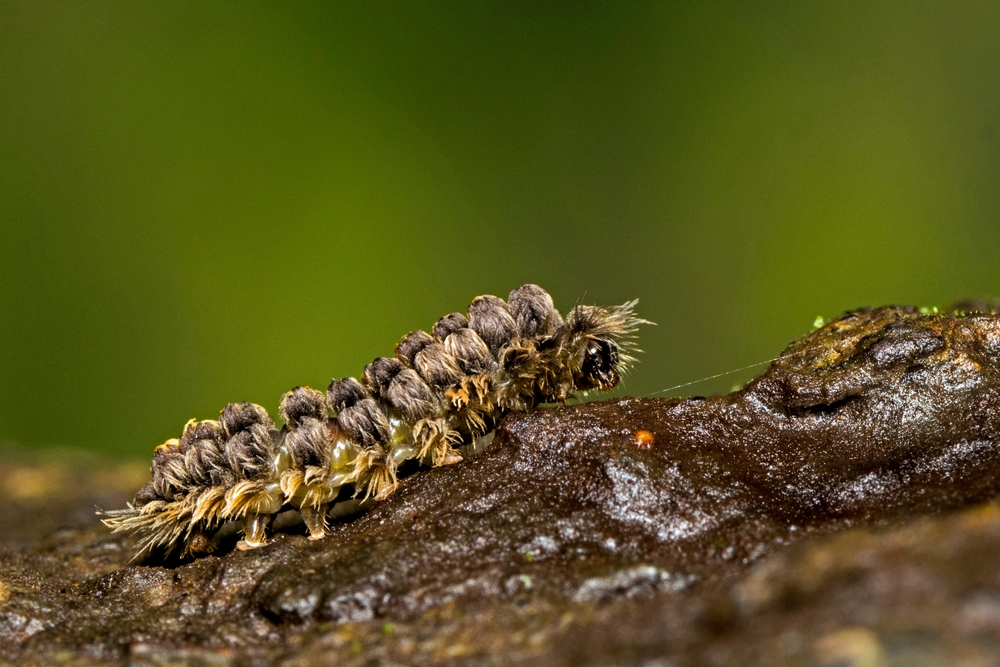
Spot a tiny fuzzy caterpillar crawling across an oak leaf and your first instinct might be to take a closer look—or even pick it up. With its thick coat of silky hair, the puss caterpillar can look more like a miniature toupee than an insect capable of delivering an intensely painful sting. Hidden underneath that harmless-looking exterior, however, are venomous spines that can turn a moment of curiosity into hours of burning pain. Gardeners, children, and anyone doing fall yard cleanup can encounter these caterpillars without realizing what they’re touching. Learning to recognize a puss caterpillar sting risk before reaching into shrubs or fallen leaves is much easier than learning about it afterward.
That Fuzzy Coat Is Hiding Something
The puss caterpillar, Megalopyge opercularis, eventually becomes the southern flannel moth, but its larval stage is the one gardeners need to recognize. According to the University of Florida’s Institute of Food and Agricultural Sciences, the caterpillar’s soft-looking hair can conceal shorter venomous spines underneath. Those hollow spines have toxin glands at their bases, and contact can cause an immediate and sometimes severe reaction. The caterpillar may be gray, tan, brownish, or yellowish and can resemble a small piece of fur resting on a leaf. If you can’t confidently identify a fuzzy caterpillar, treating it as a look-but-don’t-touch garden visitor is the safer choice.
A Puss Caterpillar Sting Can Hurt Immediately
This isn’t an insect that has to bite you to cause trouble. Brushing against it can break the tiny venomous spines and embed them in your skin, which is why a puss caterpillar sting can happen while pruning, gardening, or simply leaning against vegetation. NC State says contact can produce severe pain lasting several hours, with swelling potentially remaining for days. The University of Florida reports that people can experience immediate intense burning followed by a distinctive red pattern on the skin corresponding with the spines. Reactions vary significantly from one person to another, so someone else’s relatively mild experience doesn’t predict how your body will respond.
3. The Reaction Can Go Beyond a Painful Rash
Pain, redness, burning, itching, and swelling are among the symptoms people may experience after contact with a stinging caterpillar. More significant reactions to puss caterpillars can include headache, nausea, vomiting, fever, rapid heartbeat, low blood pressure, and swollen lymph nodes, according to University of Florida entomologists. Severe systemic symptoms have also been reported, although they are less common than localized pain and swelling. Poison Control warns that some caterpillar exposures can cause serious allergic reactions involving difficulty breathing or swallowing. Trouble breathing, severe swelling, rapidly worsening symptoms, or another serious reaction warrants prompt medical attention rather than waiting to see whether it disappears.
You May Find Them on Familiar Landscape Trees
Puss caterpillars aren’t restricted to some exotic wilderness where the average homeowner will never encounter them. Elm, hackberry, maple, oak, and sycamore are among host plants, putting them squarely in landscapes many people walk through every day. University of Florida guidance similarly identifies oaks and elms as common hosts and notes that the species feeds on a wide variety of plants. That means someone raking beneath a shade tree, trimming branches, or reaching through foliage could make contact without deliberately approaching the caterpillar. Gloves and long sleeves provide sensible protection when working around vegetation where stinging caterpillars have been spotted.
The Puss Caterpillar Isn’t the Only One That Stings
Not every dangerous caterpillar looks like a little ball of fur. The saddleback caterpillar, for example, has a striking green “saddle” across its back and clusters of venomous spines projecting from its body. Saddleback caterpillars feed on plants from more than 40 families and can cause immediate pain followed by redness and swelling. Gardeners in parts of the Southeast may also encounter Io moth caterpillars and other stinging species, which you should avoid contact with bare skin. The broader gardening rule is useful: don’t handle an unfamiliar caterpillar simply because it looks interesting.
But “Fuzzy” Doesn’t Automatically Mean Venomous
There’s an important flip side to the warning because gardeners shouldn’t assume every hairy caterpillar they encounter is dangerous. Hickory tussock moth caterpillars, for example, are conspicuous white-and-black fuzzy caterpillars often seen during fall, and Penn State says their hairs may irritate sensitive people’s skin but notes no known cases of systemic allergic reactions from this species’ hairs. Other hairy caterpillars can be harmless to touch, although identification mistakes are easy when you’re looking at a tiny insect buried in foliage. That’s why visual identification through a Cooperative Extension office or reputable university insect guide is preferable to testing an unknown caterpillar with your finger. You don’t need to kill every fuzzy caterpillar in the yard—you simply need to stop treating unfamiliar ones like pets.
If You Touch One, Don’t Start Rubbing
If you suspect a puss caterpillar sting, rubbing the affected skin can make matters worse by pushing remaining spines around. Poison Control recommends removing the caterpillar without using bare hands, then placing adhesive tape sticky-side down over the exposed skin and pulling it away to help remove hairs or spines. Fresh pieces of tape can be used repeatedly, after which the area should be gently washed with soap and water. Poison Control says itching may be treated with a baking-soda-and-water paste or hydrocortisone cream, while University of Florida sources also mention ice packs as a measure that may help some reactions. If you’re unsure what touched you or symptoms are significant, Poison Control or a healthcare professional can provide advice tailored to the exposure.
Teach Children the “Don’t Touch Fuzzy Bugs” Rule
Adults aren’t the only people attracted to an unusually fluffy insect crawling across a leaf. A child may see what looks like a tiny furry creature and reach for it before a parent has time to identify it, which makes a simple household rule useful. Poison Control specifically recommends teaching children to leave caterpillars alone and advises gardeners to wear gloves and a hat in areas where problematic caterpillars are present. Pets can also investigate unfamiliar insects with their noses or mouths, so keeping animals away from a known cluster is sensible. Take a photograph from a safe distance if identification is needed instead of picking the caterpillar up to get a better look.
Admire the Fuzz From a Safe Distance
The puss caterpillar sting is a good reminder that appearances aren’t reliable indicators of which garden creatures are safe to handle. Its thick coat may look soft, but hidden venomous spines can produce intense pain and, in some people, more serious symptoms. You don’t need to fear every caterpillar or immediately reach for pesticide, because most garden encounters can be handled simply by keeping your hands away and giving the insect space. Wear gloves during yard work, teach children not to pick up unfamiliar caterpillars, and use a reputable Extension resource when you need an identification.
Have you ever spotted a strange fuzzy or spiny caterpillar in your garden and wondered whether it was safe to touch? Share what you found in the comments.
What to Read Next
Found a Snake Under the Mulch? Don’t Reach for It Until You Know What You’re Looking At
5 Plants You Should Never Burn in a Backyard Fire
Don’t Bring Your Outdoor Plants Inside Until You Check the Drainage Holes
Leave a Reply