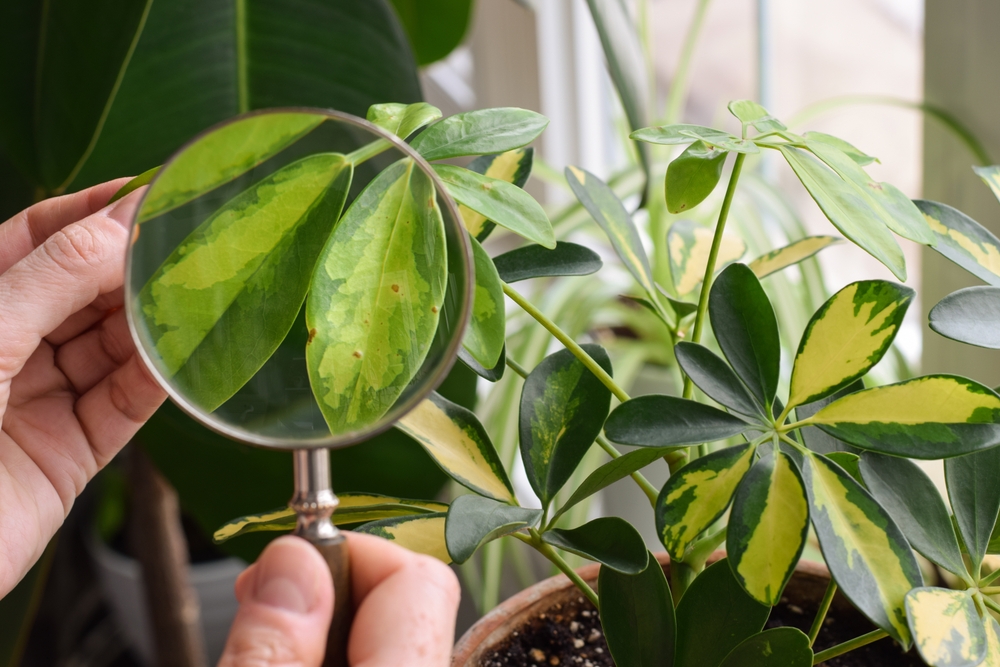
If your houseplants spent summer soaking up sunshine on the porch or patio, you may be preparing to bring them inside as fall nights get colder. Unfortunately, a plant isn’t always the only thing making the trip through your front door. Spider mites can hide on foliage, and they’re so tiny that you may notice damaged leaves or fine webbing before you notice the pests themselves. The University of Minnesota calls spider mites a major houseplant pest and warns that they thrive in the warm, dry conditions commonly found inside homes during winter. A careful houseplant pest inspection before your plants come inside can prevent one tiny hitchhiker from becoming a much bigger indoor headache.
Spider Mites Are Incredibly Easy to Miss
Spider mites aren’t actually insects; they’re tiny relatives of spiders, which helps explain why they can be difficult to notice during a quick visual check. Spider mites are roughly 1/50 of an inch long, making them considerably smaller than many familiar houseplant pests. They often feed on the undersides of leaves, exactly where you’re least likely to see them while carrying a heavy planter inside. By the time an infestation becomes obvious, you may notice stippled foliage, discoloration, declining leaves, or fine webbing. That’s why a proper houseplant pest inspection means turning leaves over rather than simply looking at the top of the plant.
Your Warm House Can Make the Problem Worse
Outdoors, spider mites live in an ecosystem filled with rain, humidity, natural predators, and changing weather. Spider mites thrive under warm, dry conditions, making the indoor winter environment particularly favorable. Once houseplants move inside, mites also lose some of the environmental checks that helped keep their numbers down outdoors. Houseplant pests can be difficult to control after a population becomes established because natural predators and rainfall aren’t present inside your home. A handful of nearly invisible mites in September can therefore become a far more noticeable problem later in the season.
Check for More Than Just Webbing
Fine webbing is probably the most recognizable sign of spider mites, but waiting until you see webs can mean you’ve missed the earlier clues. Spider mite feeding can produce stippling, gray or bronze discoloration, premature leaf drop, and fine webbing, particularly on the undersides of leaves. Look closely around leaf veins, stems, new growth, and the places where leaves connect to the plant. University of Minnesota Extension suggests gently tapping foliage over a white piece of paper and watching for tiny moving specks as another way to scout for mites. Spending a couple of minutes on each plant during your houseplant pest inspection is much easier than treating an entire indoor collection later.
Spider Mites Aren’t the Only Fall Hitchhikers
Even if you don’t find mites, your inspection isn’t finished because several other pests can ride indoors on summering houseplants. You should watch for scale, mealybugs, aphids, whiteflies, ants, and even cockroaches before bringing plants inside. Aphids often gather around stems and tender new growth, while mealybugs resemble small white cottony patches and scale may look more like a bump on the plant than an insect. Whiteflies may reveal themselves by flying from the foliage when a plant is disturbed, while ants and other pests can hide around containers or in potting media. Check underneath pots and around rims and drainage holes too, rather than assuming every unwanted passenger will be sitting conveniently on a leaf.
Give the Plant a Shower Before It Comes Inside
A hose can be one of the cheapest tools in your fall pest-control kit. It is recommended that you spray plant foliage with a steady stream of water before immediately turning to insecticides. Pay attention to both sides of the leaves because many common houseplant pests congregate underneath them. You can also thoroughly rinse foliage outside and allow it to dry before bringing the plant indoors. Water alone won’t solve every infestation, but it’s an inexpensive first step that can physically knock many pests from a plant before it enters your house.
Quarantine Outdoor Plants Before Joining the Collection
Your favorite sunny window probably isn’t the best first destination for a plant coming in from outdoors if several other houseplants already live there. You should isolate returning plants from existing houseplants for three to four weeks. That waiting period gives hidden pest problems time to become visible before insects or mites have easy access to your entire collection. Generally, it’s a good idea to quarantine plants returning indoors because many pests readily move between plants placed close together. Continue your houseplant pest inspection throughout quarantine instead of assuming one clean check on moving day guarantees the plant is pest-free.
Treat the Pest You Actually Have
Seeing one suspicious speck doesn’t mean you should immediately cover every houseplant with whatever pesticide happens to be in the garage. Correct identification matters because treatments that work against one pest may not be appropriate for another, and pesticides should always be labeled for the plant, pest, and location where they’re being used. You can lean on options such as rinsing leaves, physically removing certain pests, pruning heavily infested areas, and using insecticidal soap or horticultural oil when appropriate. It is also important to follow pesticide labels. Also, not every insecticide is appropriate for indoor use or every houseplant species. When you’re unsure what’s crawling on your plant, getting an identification through your local Extension office can prevent wasted money and unnecessary treatment.
A Five-Minute Check Can Protect Your Whole Indoor Garden
Moving plants inside before damaging cold arrives is important, but moving them indoors pest-free deserves just as much attention. It’s a good idea to begin the move when nighttime temperatures are consistently around 50 degrees Fahrenheit, although individual plants differ in their cold tolerance. Inspect the foliage, stems, soil, pot rims, and drainage holes, rinse plants outdoors, and quarantine them before putting them beside established houseplants. Repeat your houseplant pest inspection during the following weeks because spider mites and other pests aren’t always obvious on the day the plant comes inside.
Have you ever brought a houseplant indoors for winter only to discover bugs a few weeks later? Tell us what hitchhiked inside in the comments.
What to Read Next
The $5 Plant at the Clearance Rack Could Be a Bargain — Or Bring Home a Pest Problem
Can Companion Planting Reduce Pest Damage Without Extra Spending?
Leave a Reply