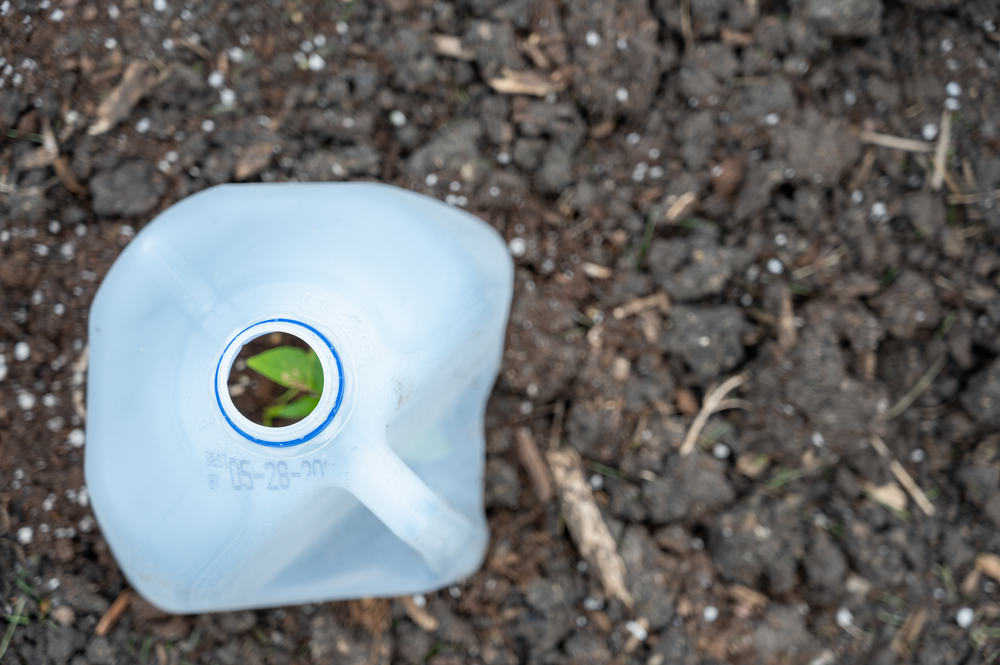
A few empty milk jugs can become a surprisingly effective garden defense when rabbits start treating fresh fall seedlings like a backyard salad bar. With a little cutting, cleaning, and clever placement, these everyday containers can help shield tender plants while they establish themselves.
Fall gardens often begin with excitement and end with frustration when hungry wildlife discovers the buffet. Before reaching for harsh solutions, gardeners can turn household items into practical barriers that give crops a better chance to grow strong.
The Clever Reason Milk Jugs Work in Fall Gardens
Milk jugs create a simple physical barrier that blocks rabbits from reaching small seedlings and young leaves. The clear plastic also allows sunlight to reach plants while creating a small protective space around delicate growth.
Gardeners often call these homemade covers mini greenhouses, although they do not work exactly like a traditional greenhouse. A carefully prepared jug can protect lettuce, spinach, kale, broccoli, and other cool-season crops during their most vulnerable early days. The container acts like a tiny shield against curious noses, quick paws, and unexpected garden visitors.
The trick works best when gardeners remove the bottom of a clean milk jug and place the remaining container over the plant. The jug should sit securely in the soil so rabbits cannot easily nudge it aside. Gardeners also need to remove the cap because airflow matters, especially on sunny fall afternoons.
Choosing the Right Crops for Milk Jug Protection
Not every fall vegetable needs a plastic fortress, but some plants benefit greatly from extra protection during early growth. Seedlings with soft leaves and small stems often attract rabbits because they provide an easy snack.
Crops such as lettuce, cabbage, broccoli, cauliflower, and young herb plants make excellent candidates for milk jug covers. A gardener who plants a row of fall greens can quickly discover that rabbits prefer the newest leaves, which makes early protection especially valuable. These covers work best while plants remain small because larger vegetables eventually outgrow the available space.
Gardeners should think of milk jugs as temporary bodyguards rather than permanent homes. Once plants grow taller and stronger, the covers need removal so leaves have room to spread and rain can reach the soil. Regular garden checks help prevent cramped plants or excessive heat buildup inside the containers.
Preparing Milk Jugs Without Hurting Plants
A little preparation turns an ordinary milk jug into a useful gardening tool instead of a plastic obstacle. Washing the jug thoroughly removes leftover milk residue that could attract insects or create unpleasant odors around plants.
The bottom cut should create enough room for the plant while leaving a sturdy edge that gardeners can push into the soil. Sharp plastic edges need attention because rough cuts can damage leaves or make handling the container uncomfortable. A small opening near the top can improve ventilation while still keeping rabbits away from the plant.
Gardeners also should avoid placing jugs over plants during hot, sunny periods without checking temperatures. Clear plastic can trap warmth, and young seedlings may struggle if the space becomes too warm. Removing the jug during mild days or when plants outgrow the container keeps the garden moving in the right direction.
Other Rabbit Defense Tricks That Pair Well With Jugs
Milk jugs help with small plants, but rabbits remain determined garden visitors with impressive persistence. Combining several simple strategies creates a stronger defense than relying on one method alone.
A tidy garden with fewer hiding spots gives rabbits fewer comfortable places to linger near crops. Gardeners can also install short fencing around beds, use wire mesh around vulnerable areas, and remove fallen vegetable scraps that attract attention. Rotating protection methods keeps the garden less predictable for persistent pests.
Natural deterrents can add another layer of protection, although gardeners should remember that scents fade quickly after rain or watering. Plants with strong aromas, such as herbs like rosemary or sage, may discourage some wildlife activity around garden edges. A thoughtful mix of barriers, good cleanup habits, and occasional monitoring usually creates the best results.
The Tiny Jug Trick That Keeps Fall Gardens Moving Forward
Milk jugs prove that effective gardening tools do not always come from a garden center. This simple reuse idea gives fall gardeners an affordable way to defend young crops while reducing household waste.
The biggest benefit comes from timing because rabbits cause the most trouble when plants remain small and tender. A few minutes spent preparing containers can save weeks of disappointment after watching seedlings disappear overnight. The method also gives gardeners a chance to observe their plants closely and catch problems before they become bigger headaches.
Will milk jugs become part of your fall gardening strategy, or do you have another clever way to keep rabbits away from seedlings?
You May Also Like…
7 Budget Tools Every Gardener Needs for Safe, Clean Shrub Pruning
Spring Cleaning Your Soil: The Way to Wake Up Your Garden
The Tool-Share Strategy: How to Get Luxury Garden Tools for Free
How to Keep Garden Tools Rust-Free Without Chemicals
Turn Household Containers Into Thriving Veggie Gardens With Buckets, Totes & Milk Jugs

Brandon Marcus is a staff writer for FrugalGardening.com at District Media, Inc., where he delivers practical gardening advice with a relatable, no-nonsense style. An avid amateur gardener, he holds a BA degree and with over ten years of professional writing experience, he is also an award-winning published author whose first book, Questions For Deep Thinkers, was released by Adams Media. His work has appeared in major publications including Fandom.com, CHUD.com, TheColdWire.com, and Fansided.com.
Leave a Reply