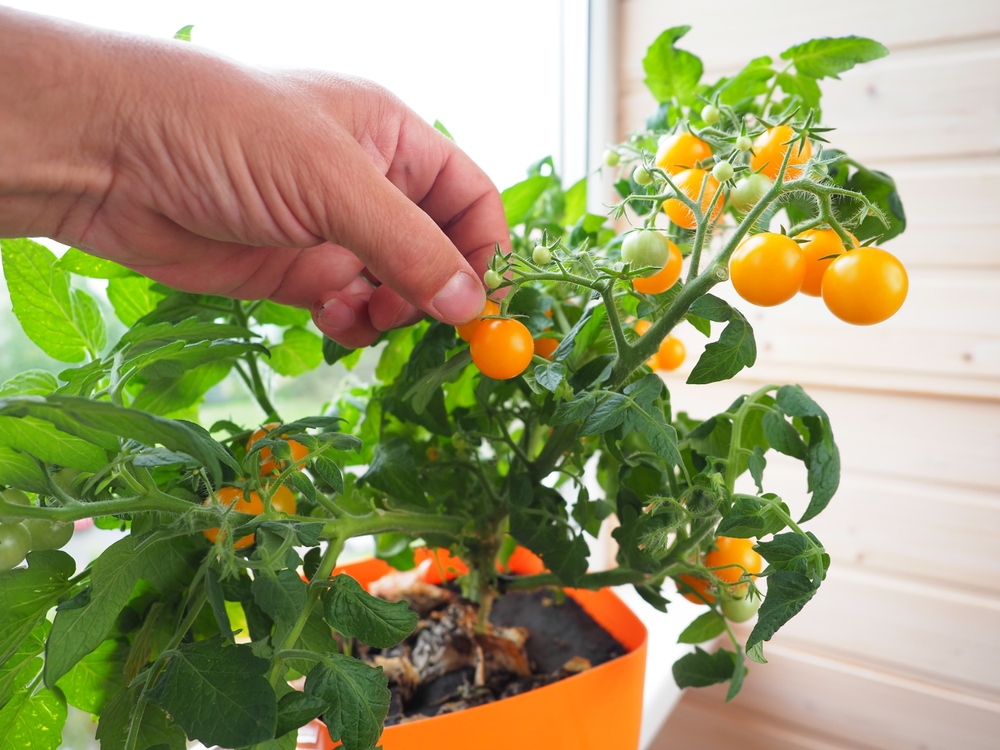
Tiny tomato plants sitting on a patio table look charming, but can they actually fill a salad bowl? The answer surprises many gardeners because the right tabletop tomato can produce a steady stream of flavorful fruit over an entire growing season when it receives proper care.
That does not mean every miniature tomato deserves precious patio space. Some varieties produce only a handful of tomatoes before slowing down, while others keep setting fruit week after week. Picking the right plant, choosing an appropriate container, and meeting a few basic growing needs make the difference between a decorative conversation piece and a surprisingly productive little food factory.
Tiny Plants Can Deliver Surprisingly Big Harvests
Many tabletop tomatoes belong to dwarf, micro dwarf, or compact determinate varieties that breeders developed specifically for containers. Popular choices such as Tiny Tim, Orange Hat, Red Robin, and Micro Tom stay small enough for a tabletop while still producing clusters of cherry-sized fruit. These plants rarely tower over nearby flowers, yet they often carry dozens of tomatoes during their productive period. The fruit usually tastes much sweeter than grocery store tomatoes because gardeners pick it at peak ripeness instead of shipping it across the country. Size limits the overall harvest, but careful variety selection keeps production surprisingly respectable.
Gardeners sometimes expect a tabletop tomato to match the output of a six-foot indeterminate plant growing in a raised bed. That expectation sets the little plant up for unfair criticism because compact varieties serve a different purpose. They provide fresh tomatoes within easy reach of a balcony, porch, apartment patio, or sunny windowsill where larger plants simply cannot fit. A single healthy plant often supplies enough cherry tomatoes for snacks, salads, and garnishes throughout much of the season, especially when gardeners harvest ripe fruit regularly.
Sunlight Decides Whether Success Arrives
Tabletop tomatoes may stay compact, but they refuse to compromise on sunlight. These plants need at least six to eight hours of direct sun each day, and even more sunlight often leads to better flowering, stronger stems, and sweeter fruit. A shady porch may look like the perfect display area, yet it usually produces lanky growth and disappointing harvests.
Water also plays a starring role because small containers dry out much faster than garden beds. Warm summer afternoons can leave the pot nearly dry before dinner, especially during heat waves. Checking soil moisture daily helps prevent blossom drop, cracked fruit, and stressed plants that stop producing. A quality potting mix combined with a container that includes drainage holes creates an environment where roots remain healthy instead of sitting in soggy soil.
The Container Matters More Than Many Gardeners Realize
Many decorative pots sold alongside tabletop tomatoes look attractive, but appearance alone rarely guarantees success. A container that holds at least one to three gallons of potting mix gives roots enough room to support healthy foliage and consistent fruit production. Shallow novelty containers often dry out quickly and restrict root growth long before the season reaches its peak.
Fertilizer also deserves attention because tomatoes consume nutrients at an impressive pace. Mixing slow-release fertilizer into the potting mix at planting time provides a solid foundation, while occasional feeding with a balanced liquid fertilizer supports continued flowering and fruit development. Gardeners who skip fertilizing often notice vigorous green leaves at first, followed by fewer flowers and smaller harvests later in the season. A simple feeding routine keeps those compact plants working hard instead of merely looking pretty.
Realistic Expectations Lead to Greater Satisfaction
A tabletop tomato will never replace a backyard vegetable patch packed with full-sized plants. Instead, it offers convenience, fresh flavor, and the simple pleasure of stepping outside to pick a handful of ripe tomatoes moments before lunch. That experience feels especially rewarding for apartment dwellers, new gardeners, or anyone who lacks traditional garden space.
Gardeners also gain valuable experience from these compact plants because they reveal tomato-growing basics without requiring a large investment of time or space. Watching flowers transform into green fruit and finally bright red tomatoes creates confidence for future gardening adventures. Even children often develop enthusiasm for growing food after harvesting tiny tomatoes from a plant they helped care for. The harvest may fit in a bowl instead of a basket, but the satisfaction often exceeds expectations.
Small Space, Fresh Flavor, Big Reward
Tabletop tomatoes absolutely earn their place when gardeners choose productive varieties, provide generous sunlight, water consistently, and feed the plants throughout the season. These miniature plants deliver far more than decoration because they produce fresh, flavorful tomatoes exactly where outdoor space remains limited. Their compact size also makes routine care simple, allowing almost anyone to enjoy homegrown tomatoes without building raised beds or maintaining a large garden. While nobody should expect bushels of fruit from a tabletop plant, many gardeners discover that steady handfuls of sweet cherry tomatoes add plenty of value to a sunny corner. Sometimes the smallest tomato plant on the patio ends up becoming the one everyone visits first.
What has been the most productive tomato variety in your garden, or would you give tabletop tomatoes a spot on your patio this season? Share your experience in the comments below.
You May Also Like…
Year of the Tomato: New Blight‑Resistant Varieties Offer High Yields in Cool, Wet Climates
7 Things That Secretly Stress Tomato Plants
Why Your Tomatoes Look Healthy But Produce Almost No Fruit
Why Tomatoes Grow Leaves but Delay Fruit Production
The “Trash” Fertilizer: 5 Household Waste Items Your Tomatoes Crave

Brandon Marcus is a staff writer for FrugalGardening.com at District Media, Inc., where he delivers practical gardening advice with a relatable, no-nonsense style. An avid amateur gardener, he holds a BA degree and with over ten years of professional writing experience, he is also an award-winning published author whose first book, Questions For Deep Thinkers, was released by Adams Media. His work has appeared in major publications including Fandom.com, CHUD.com, TheColdWire.com, and Fansided.com.
Leave a Reply