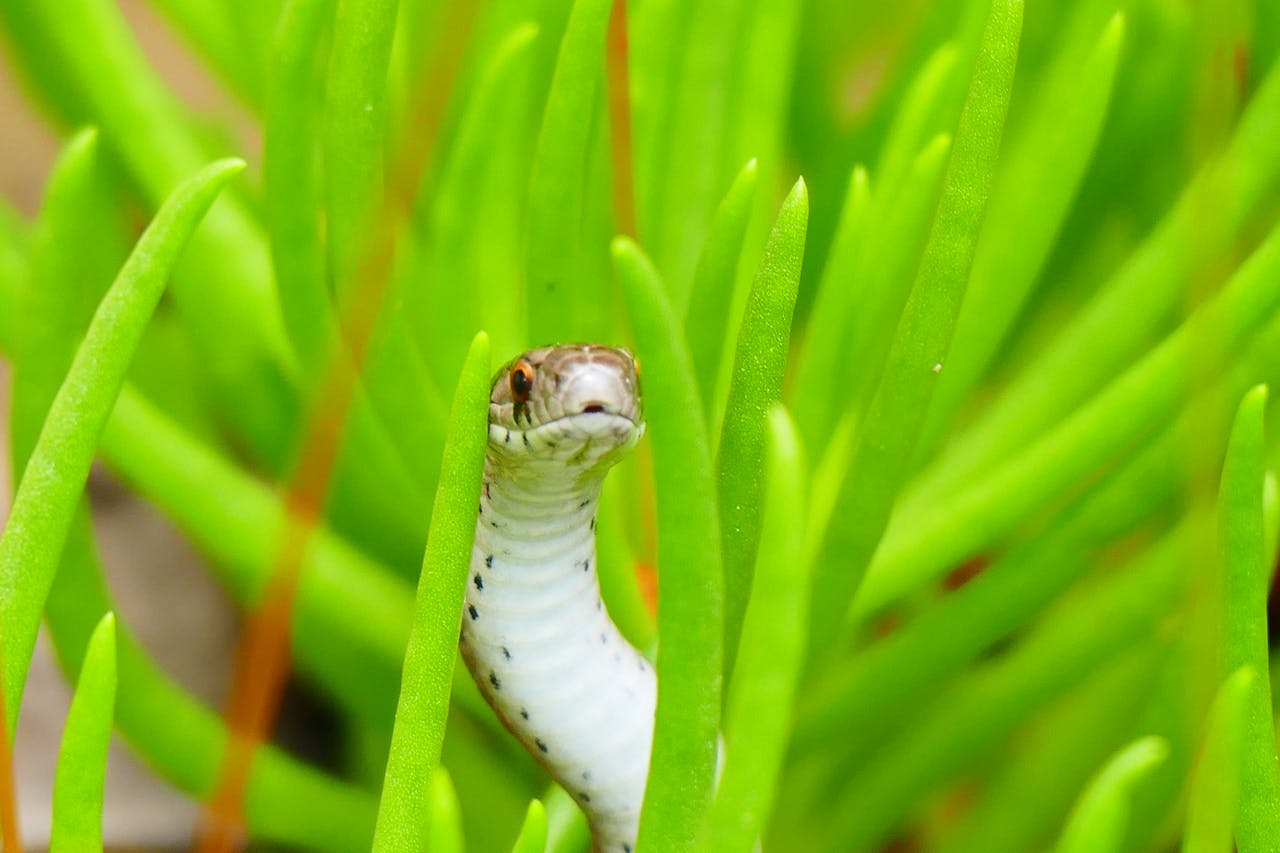
Backyards often look peaceful on the surface, but certain plants create perfect hiding spots for snakes seeking shade, moisture, and cover. Dense foliage, low ground cover, and tangled growth all provide ideal shelter where snakes can slip in and out unnoticed. Many homeowners plant these greenery favorites for beauty or privacy without realizing they also create prime reptile real estate.
Snakes do not come looking for trouble, but they absolutely take advantage of safe, cool hiding places. Knowing which plants attract them helps shape smarter landscaping choices without sacrificing a lush, beautiful yard.
1. English Ivy Creates a Dense Snake Highway
English ivy spreads quickly and forms thick mats that hug the ground and climb structures. That dense coverage traps moisture and creates cool pockets where snakes love to rest during hot days. The plant’s tangled vines also make it easy for snakes to move unseen across fences, walls, and garden beds. Ivy rarely leaves open ground, so it gives snakes both shelter and travel routes in one package.
Homeowners often choose ivy for its classic, low-maintenance look, but its structure encourages hidden activity underneath. Snakes often hunt small rodents that also use ivy as cover, which increases the chance of visits. Trimming ivy regularly and lifting it off the soil reduces hidden pathways. Clear edges and spacing between ivy patches make the yard less appealing for reptile movement.
2. Hostas Offer Cool Shade and Perfect Cover
Hostas grow broad, overlapping leaves that form natural umbrellas over the soil. Those shaded pockets stay cool and damp, which attracts insects and small prey animals. Snakes often slip beneath hostas to rest during daylight hours without being seen. The plant’s thick leaf clusters also block visibility, giving snakes a safe hiding zone.
Gardeners love hostas for their bold texture and easy growth, especially in shaded areas. Unfortunately, the same shade that benefits the plant also supports snake-friendly conditions. Keeping hosta beds trimmed and spaced helps reduce dense hiding spots. Adding gravel or mulch with open spacing around them reduces the cool, dampness that snakes prefer.
3. Ornamental Grasses Build Hidden Tunnel Systems
Ornamental grasses like pampas grass and fountain grass grow in thick clumps that sway and fold over themselves. These clusters create tunnel-like interiors where snakes can move freely without exposure. The tall blades also block visibility, making it nearly impossible to spot movement inside. Moisture often collects at the base, adding another attraction for reptiles.
These grasses add dramatic movement and texture to landscaping, but their structure often becomes too dense over time. Snakes use them for both hunting and resting, especially near water sources or bird feeders. Cutting grass back in late winter helps break up thick colonies. Dividing large clumps also reduces continuous hiding corridors.
4. Creeping Juniper Forms a Low-Profile Shelter Network
Creeping juniper spreads low and wide, forming a thick evergreen carpet across the ground. Its overlapping branches create tight spaces where snakes can slide under protection from predators and heat. The plant also stabilizes soil, which attracts insects and small rodents that snakes follow. Its evergreen nature means it offers shelter year-round.
Many landscapers use creeping juniper on slopes and borders because it controls erosion effectively. However, its dense mat structure hides movement extremely well. Pruning edges and thinning interior sections improve airflow and reduce hidden cavities. Keeping the base visible discourages snakes from settling in.
5. Hydrangea Bushes Create Cool, Hidden Interiors
Hydrangeas grow into large, leafy shrubs that form shaded interiors close to the ground. Their broad leaves overlap and block sunlight, creating cool pockets that snakes use for resting. Fallen leaves often collect beneath the plant, adding extra cover and moisture. That combination makes hydrangea beds especially appealing during warm months.
These flowering shrubs bring dramatic color to gardens, especially in summer landscapes. Unfortunately, their size and density also provide ideal concealment for small wildlife that attracts snakes. Pruning lower branches opens airflow and reduces hidden ground cover. Clearing debris beneath hydrangeas also removes potential nesting zones.
6. Blackberry Brambles Offer Tangled Protection Zones
Blackberry bushes grow in wild, tangled clusters with sharp canes and thick foliage. Those thorny barriers protect snakes from predators while giving them access to prey like rodents and insects. The dense growth also traps heat and moisture near the ground. Snakes often weave through the base where visibility stays low.
Backyard gardeners sometimes allow blackberry patches to grow along fences or unused corners. That unmanaged growth quickly turns into a perfect shelter system. Cutting back old canes and keeping rows organized reduces dense tangles. Removing overgrowth near structures also limits hidden travel routes.
7. Bamboo Stands Create Dense Vertical Cover
Bamboo grows rapidly and forms tight clusters of tall, hollow stalks. The overlapping stems create shaded corridors where snakes move without exposure. Fallen leaves pile up at the base, adding softness and moisture that attract prey animals. The combination of height and density makes bamboo one of the most protective plant environments.
Homeowners often plant bamboo for privacy screens and fast coverage. However, unmanaged growth turns it into a hidden maze. Regular thinning of stalks improves light penetration and reduces interior density. Installing barriers around bamboo roots also limits its spread into unwanted areas.
A Smarter Garden Starts with Smarter Plant Choices
Backyard design plays a major role in how wildlife interacts with outdoor spaces. Dense plants, overgrowth, and unmanaged ground cover all create shelter opportunities that snakes naturally use. Smart trimming, spacing, and cleanup routines reduce those hiding spots without stripping away beauty. A balanced garden keeps plants healthy, open, and easier to monitor throughout the seasons.
Which plants currently dominate your backyard space, and how easily could they be adjusted to reduce hidden zones? Share thoughts, experiences, or garden surprises in the comments below.
You May Also Like…
Which Plant Pairings Naturally Reduce Pests and Improve Yields
7 Natural Repellents That Help Keep Insects Away
Build a Trellis on the Cheap: 3 DIY Supports for Your Climbing Plants
How to Keep Your Garden Alive During Vacation Season
10 Common Gardening Myths That Waste Money

Brandon Marcus is a staff writer for FrugalGardening.com at District Media, Inc., where he delivers practical gardening advice with a relatable, no-nonsense style. An avid amateur gardener, he holds a BA degree and with over ten years of professional writing experience, he is also an award-winning published author whose first book, Questions For Deep Thinkers, was released by Adams Media. His work has appeared in major publications including Fandom.com, CHUD.com, TheColdWire.com, and Fansided.com.
Leave a Reply