Summer gardens rarely follow the script. Spring bulbs fade, early perennials take a break, and suddenly a flower bed that looked spectacular in May starts showing awkward patches of bare soil. The good news is that several fast-growing flowers can step in and restore color before summer slips away.
Quick-growing flowers do more than hide empty spots. They attract pollinators, soften the look of fading plants, and keep containers, borders, and raised beds looking lively through the hottest weeks of the season. With the right choices, even a last-minute planting can transform a tired corner into one of the brightest parts of the garden.
1. Zinnias
Zinnias rank among the fastest and easiest flowers to grow from seed once warm weather settles in. Many varieties begin blooming in about six to eight weeks, and they continue producing flowers until frost if gardeners remove faded blooms regularly. They come in nearly every color except true blue, making them easy to match with almost any garden style. Compact varieties fit containers, while taller selections create colorful backdrops in flower beds. Butterflies also flock to zinnias, adding even more life to the garden.
Freshly planted zinnias appreciate full sun, good air circulation, and soil that drains well. Water the base of the plants instead of soaking the leaves to reduce disease problems during humid weather. Avoid overcrowding because crowded plants invite powdery mildew. A handful of compost mixed into the planting area often provides enough nutrition for the season. Within a few weeks, those empty patches begin disappearing beneath cheerful blooms.
2. Cosmos
Cosmos bring an airy, relaxed look that balances heavier flowering plants beautifully. These flowers sprout quickly from seed and often bloom within two months, producing delicate flowers that dance above feathery foliage. Pink, white, magenta, and rich crimson shades brighten even simple garden beds. They also tolerate summer heat surprisingly well once established. Pollinators visit constantly, especially bees and butterflies.
Rich soil actually encourages more leaves than flowers, so cosmos often perform better in average garden soil. Tall varieties sometimes benefit from light staking if summer storms become frequent. Deadheading encourages fresh buds throughout the season, although many gardeners leave a few flowers to produce seed for next year. Their graceful appearance makes even new plantings look mature. Few flowers create so much visual impact with so little effort.
3. Calendula
Calendula produces sunny yellow and orange blooms that seem to glow during morning and evening light. Although many gardeners associate calendula with cooler weather, it still performs well during milder parts of summer in many regions with regular watering. The flowers appear quickly from seed and continue blooming with frequent deadheading. Their edible petals also add color to salads and garnishes. That combination of beauty and usefulness gives calendula lasting appeal.
Morning sun and afternoon shade help calendula stay attractive when temperatures climb. A layer of mulch keeps roots cooler while reducing moisture loss during hot spells. Removing spent blooms every few days encourages an impressive number of new flowers. Gardeners often tuck calendula between vegetables because it adds beauty while attracting beneficial insects. Empty spaces suddenly feel intentional rather than forgotten.
4. Nasturtiums
Nasturtiums offer one of the quickest transformations a summer garden can experience. Their round leaves spread rapidly, covering bare ground while bright flowers appear in shades of orange, yellow, red, and cream. Both trailing and bush varieties grow quickly, allowing gardeners to fill containers, hanging baskets, or flower beds with ease. The flowers and leaves also taste pleasantly peppery, making them popular edible garden additions. Few annuals combine ornamental value and kitchen appeal so successfully.
Poor to average soil actually suits nasturtiums better than heavily fertilized ground. Too much fertilizer encourages lush foliage but fewer flowers. Water young plants consistently until roots establish, then allow the soil to dry slightly between waterings. Aphids occasionally gather on new growth, but ladybugs often arrive soon afterward to help restore balance. Their sprawling habit also helps shade exposed soil during the hottest part of summer.
5. Sweet Alyssum
Sweet alyssum may produce tiny flowers, but together they create an impressive carpet of color. White remains the classic choice, although pink, lavender, and purple varieties also brighten garden edges beautifully. Many modern cultivars continue flowering through summer better than older selections, especially with regular watering. Their sweet fragrance drifts through the garden on warm evenings. Bees appreciate the steady supply of nectar as well.
Gardeners often use sweet alyssum to soften the edges of walkways, containers, and raised beds. A quick trim midway through summer encourages fresh growth if plants begin looking tired. Because alyssum spreads outward, it fills gaps efficiently without overwhelming neighboring plants. It also pairs especially well with taller flowers that leave exposed soil beneath their stems. The result looks polished without requiring complicated maintenance.
6. Sunflowers
Not every sunflower reaches towering heights. Many compact varieties mature quickly and produce cheerful blooms in as little as two months. These smaller selections fit comfortably into flower beds, vegetable gardens, and large containers while delivering the same sunny personality as their giant relatives. Gold, bronze, and even creamy white varieties offer plenty of design options. Birds later enjoy the seeds if gardeners leave the flower heads in place.
Direct sowing works best because sunflowers develop deep taproots early in life. Choose a location with full sun and enough room for mature plants to spread naturally. Regular watering during establishment produces stronger stems that resist summer winds better. Successive sowings every couple of weeks create waves of fresh blooms throughout the season. Even a single cluster instantly pulls attention toward an empty section of the garden.
7. Marigolds
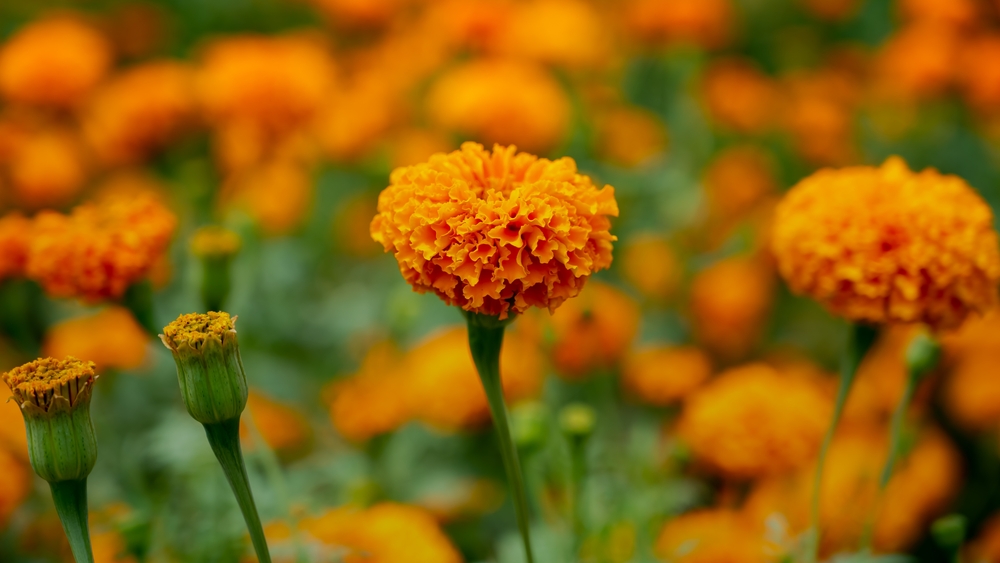
Marigolds deserve their reputation as dependable summer workhorses. They germinate quickly, grow rapidly, and bloom continuously with very little fuss. Bright yellow, orange, gold, and deep red flowers complement vegetables, herbs, and ornamental plantings alike. French marigolds stay compact, while African marigolds produce larger blooms on taller stems. Both types handle summer heat with remarkable resilience.
Consistent deadheading encourages marigolds to keep producing flowers instead of setting seed early. Full sun delivers the strongest flowering display, although light afternoon shade helps in especially hot climates. Good drainage remains important because soggy soil can damage roots quickly. Gardeners frequently plant marigolds around tomatoes and peppers because they add vibrant color alongside edible crops. Their reliable performance explains why they remain favorites generation after generation.
A Garden That Never Looks Finished Too Soon
A few empty spots never have to define an entire summer landscape. Fast-growing flowers such as zinnias, cosmos, calendula, nasturtiums, sweet alyssum, compact sunflowers, and marigolds bring fresh color exactly when many spring blooms begin fading. Mixing several of these flowers creates layers of texture, supports pollinators, and keeps gardens looking fresh well into late summer. Choosing varieties that bloom at slightly different times also stretches the display without adding much extra work. Sometimes the best-looking summer garden begins with filling the spaces that seemed impossible to fix.
What fast-growing flower has rescued a bare spot in the garden, or which one would make the first choice this season? Give us your favorite picks and growing tips in the comments.
You May Also Like…
Warm Weather Can Delay Female Flowers on Melons—Gardeners Shouldn’t Panic Yet
8 Flowers That Keep Blooming Through the Worst Summer Heat
8 Heat-Tolerant Flowers That Bloom All Summer Long
Deadheading 101: Keep Your Flowers Blooming All Summer With This Simple Trick
The Cheap Backyard Upgrade That Makes Summer Nights Better

Brandon Marcus is a staff writer for FrugalGardening.com at District Media, Inc., where he delivers practical gardening advice with a relatable, no-nonsense style. An avid amateur gardener, he holds a BA degree and with over ten years of professional writing experience, he is also an award-winning published author whose first book, Questions For Deep Thinkers, was released by Adams Media. His work has appeared in major publications including Fandom.com, CHUD.com, TheColdWire.com, and Fansided.com.
Leave a Reply