• Skip to primary navigation
  • Skip to main content
  • Skip to primary sidebar

Frugal Gardening

Simple ways to save money while you garden

  • About
  • Contact Us
  • Garden Frugally
  • Buy These
  • Our Editorial Commitment
  • Navigation Menu: Social Icons

    • Facebook
    • Pinterest
    • Twitter

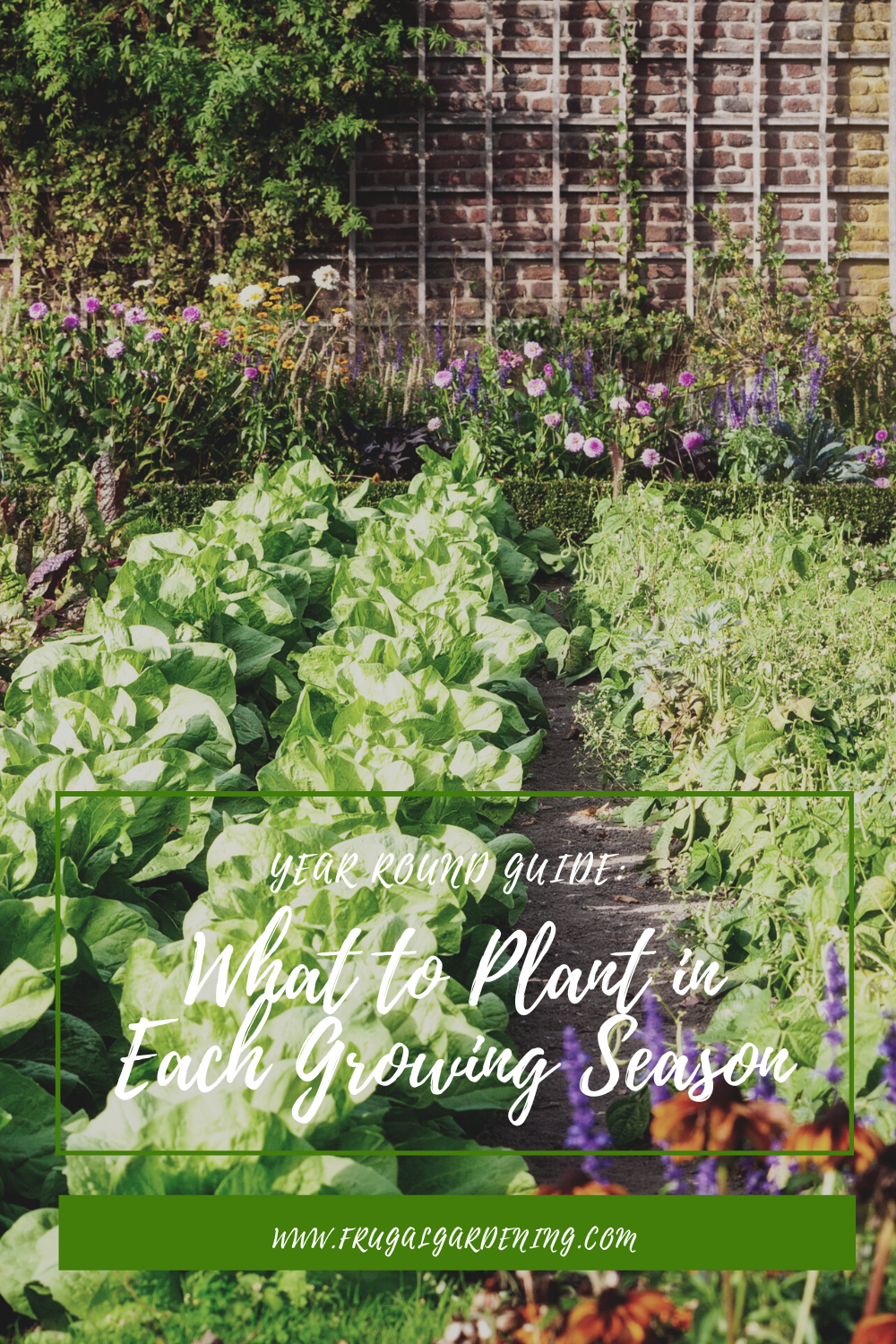
Year Round Guide: What to Plant in Each Growing Season

October 4, 2022 by Ali Southerland Leave a Comment


Planning what to plant each season can be fun as you dream of all the delicious things your kitchen garden will bring you, but you should know your hardiness before you start buying plants.

Your Zone

The USDA has divided America into hardiness zones. A hardiness zone is a geographical area that determines which plants grow best in that climate.

You can use your zone to pick varieties especially well adapted to your climate.

And if you know your hardiness zone, you can find average soil temperature data during different parts of the year, so you always plant seeds or transfers at the right time.

Spring

Growing a spring garden means growing cold-weather crops. Some of these veggies can survive frost, and others get sweeter with low temperatures.

Leafy Greens

Lettuce

Seeds can be sowed as soon as the ground can be worked, 2 weeks before the last frost, or up to 1 month before the last frost date if you are sowing inside.

Kale

Seeds are ready to plant immediately after the last frost or inside, 4-6 weeks before the last frost.

Spinach

Spinach can be started inside as early as 6 weeks before the last frost date, and you can sow seeds directly in the soil as soon as it can be worked.

Cabbage

Cabbage should be planted 4 weeks before the last frost, or it can be started up to 8 weeks before the last frost.

Fruit Trees

Most fruit trees are sold as bare-root plants meaning they come without being potted in soil. Instead, they have been stored in a cool area all winter while in a dormant state. Early spring is the best to get fruit trees in the ground because transplanting the dormant tree is less stressful than planting the active tree.

Summer

The season of plenty. Gardeners love summer.

Tomatoes and other Nightshades

The nightshades include tomatoes, peppers, eggplants, and potatoes. These crops should be started within 4-6 weeks before the last frost or sowed directly in the soil within a few weeks.

Cucumbers and Melons

Cucumbers, watermelons, and honeydew can be started 4-6 weeks before the last spring frost or after the soil has reached about 60℉.

Squashes

Squashes, like crooked neck or zucchini, have the best chance of germination if they are sowed directly in the soil soon after the last frost.

Beans

You should directly sow beans into the garden soil shortly after the last frost.

Autumn

You can grow everything listed for the spring in the autumn.

Leafy Greens

Lettuce

Start inside in a cool place 60 days before the first frost date.

Kale

Start at least 45 days before the first frost, but 60 days is ideal.

Spinach

You should start spinach at least 60 days before the first frost date.

Cabbage

Plant cabbage as early as 8 weeks before the first frost date.

Onions

Onions are a staple of the fall garden. Plant onion seeds directly in the soil 2-3 weeks before the first frost.

Garlic

Plant garlic bulbs 3 weeks before the ground freeze in your area.

Conclusion

As you think about planning your garden throughout each season, double-check the dates of frost and freezing, and check for varieties that are well adapted to your hardiness zone.


Read More:

Gardens, Books, and Legacies

10 Best Gardening Podcasts Worth Listening To

Are Old Tires Toxic to Plants?

Ali Southerland

Ali is a homeschooling mom of 5 who includes gardening and food prep as important subjects in her school. She has been raising plants her whole life and learned how to garden from her father. When she isn’t caring for her plants, she can be found reading or hiking.

Filed Under: garden tips Tagged With: Gardening Guide, Year Round Gardening Guide

Previous Post: « Gardens, Books, and Legacies
Next Post: 5 Tips for Starting a Garden and Landscaping Company »

Reader Interactions

Leave a Reply Cancel reply

Your email address will not be published. Required fields are marked *

Primary Sidebar

Struggling to get your garden off the ground? Put those days behind you with our special starter kit – perfect for thrifty green thumbs everywhere. Get growing and add a splash of color today!

Popular Posts

  • usda free seeds websiteHow To Get Free Seeds From The Government by Amanda Blankenship Seeds might seem like a small expense, but any seasoned…
  • Enviro Ice On PlantsShould I Use Enviro Ice On My Plants? by Kathryn Vercillo Every week, I receive food from Hungryroot. It's a great…
  • is shredded paper good for the gardenFrom Trash to Treasure: Transform Shredded Paper Into Garden Gold by Amanda Blankenship Should you use shredded paper as garden mulch? It might…
  • Enviro IceWhat Happens to Plants If You Use Enviro Ice on Them? by Amanda Blankenship About a year ago, I wrote our first article about…
Never Burn This Plant When Cleaning Up the Yard — Even If It Looks Dead

Never Burn This Plant When Cleaning Up the Yard — Even If It Looks Dead

Poison ivy can look like nothing more than a crispy pile of garden debris when the season turns, but that dead-looking material deserves a very wide berth. Burning it can send urushiol, the oily substance that causes poison ivy’s infamous rash, into the smoke, creating a much bigger problem than a few itchy spots. The…

Read More

Found a Snake in the Garden? What It’s Doing There May Surprise You

Found a Snake in the Garden? What It’s Doing There May Surprise You

A snake sliding through the garden can turn a peaceful morning of watering tomatoes into a full-blown wildlife documentary. But that snake probably did not wander into the yard with plans to terrorize the gardener. In many cases, it arrived because the garden offers exactly what a snake needs: food, shelter, water, warmth, or a…

Read More

Your HOA Says the Garden Has to Go. What Can They Actually Make You Remove?

Your HOA Says the Garden Has to Go. What Can They Actually Make You Remove?

A backyard vegetable garden can turn an ordinary patch of grass into tomatoes, peppers, herbs, pollinators and, occasionally, a very determined zucchini. Then an HOA letter arrives and suddenly that cheerful little garden looks like a legal dispute with tomato vines. The good news: an HOA does not automatically get to remove whatever it dislikes….

Read More

The First Frost Is Coming — These 7 Garden Plants Are Worth Saving Before It Hits

The First Frost Is Coming — These 7 Garden Plants Are Worth Saving Before It Hits

The first frost can turn a lush garden into a sad collection of blackened stems almost overnight, but not every plant needs to meet its chilly fate. Some garden favorites deserve a rescue mission before temperatures dip, especially plants that can move indoors, produce more food, or return next year from stored roots. The important…

Read More

  • About
  • Contact Us
  • Garden Frugally
  • Buy These
  • Our Editorial Commitment
  • Navigation Menu: Social Icons

    • Facebook
    • Pinterest
    • Twitter
  • Facebook
  • Pinterest
  • Twitter

Copyright © 2026 · Foodie Pro & The Genesis Framework