• Skip to primary navigation
  • Skip to main content
  • Skip to primary sidebar

Frugal Gardening

Simple ways to save money while you garden

  • About
  • Contact Us
  • Garden Frugally
  • Buy These
  • Privacy Policy
  • Navigation Menu: Social Icons

    • Facebook
    • Pinterest
    • Twitter

Ladybugs Versus Asian Lady Beetles

October 12, 2020 by Steph Coelho Leave a Comment


Ladybugs Versus Asian Lady Beetles

Gardeners—especially those new to the hobby—may find it tough to distinguish between bad bugs and beneficial insects. It can take some time to get a hang of which bugs to leave alone and which to squish dead. Unfortunately, some good garden bugs have evil lookalikes. Case in point: ladybugs versus Asian lady beetles.

How can you tell the two apart? And which one do you want to keep around while you kick the other to the curb?

Ladybugs versus Asian Lady Beetles

Many gardeners are happy to find ladybugs hanging around their plots. While they don’t pollinate plants like bees and butterflies, they hungrily snatch up a variety of garden pests, including aphids.

The Asian lady beetle, on the other hand, is considered a pest. They leave behind a smelly yellow residue and because they aren’t native to North America, they’ve quickly overtaken resources destined for native ladybugs. They also bite and tend to gather in large groups—yuck!

While lady beetles look quite similar to ladybugs, they aren’t even the same species! Confused yet? Not to worry, here’s a breakdown of the differences between the two:

Ladybugs

  • do not bite
  • are beneficial garden insects
  • eat pests like mites, aphids, and whiteflies
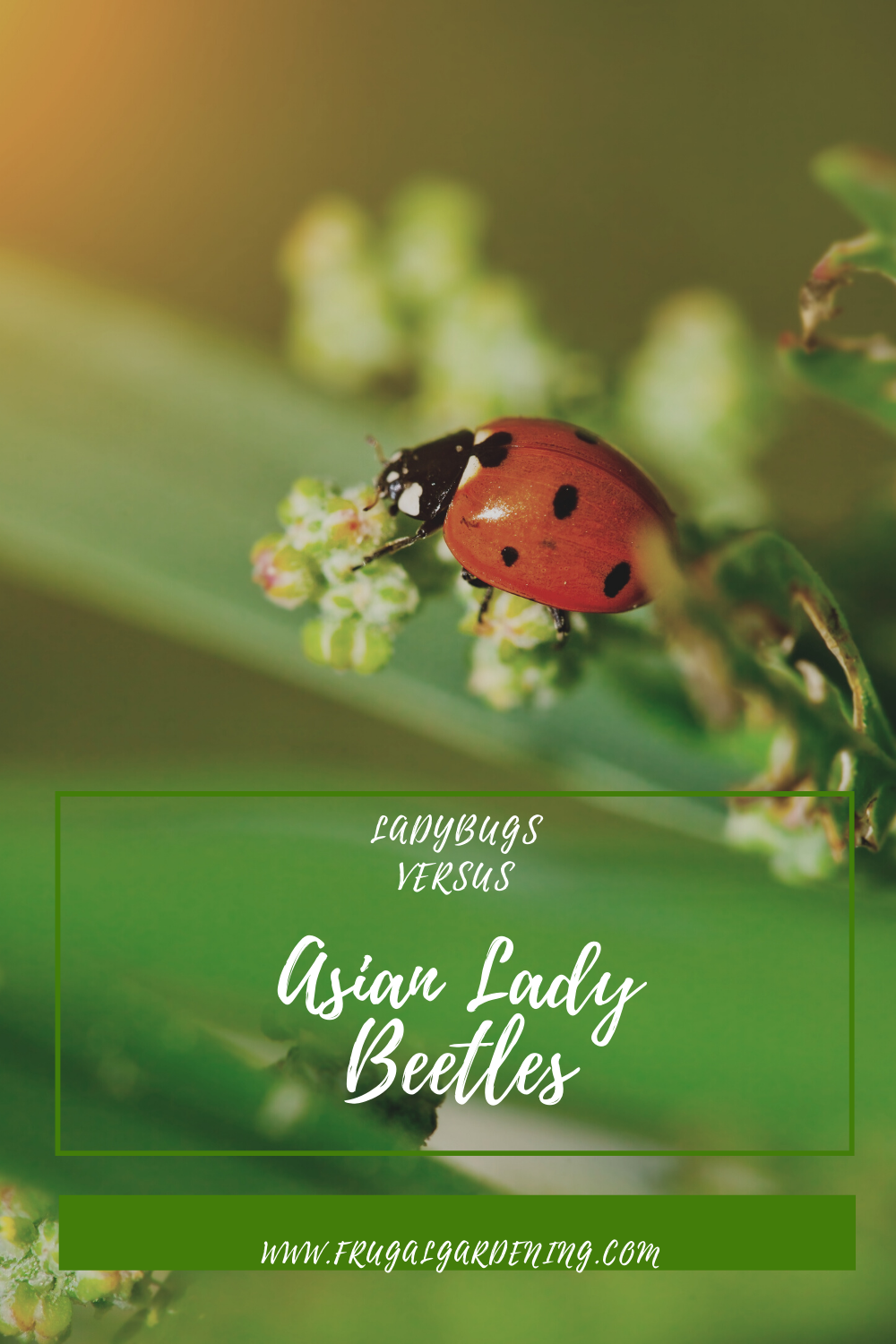
  • are bright red and have black spots
  • are very round (or oval-shaped)
  • have nearly all-black heads with two distinct white markings
  • overwinter outdoors

Ladybeetles

  • are biters
  • eat some garden pests
  • gather in groups and often turn into household pests during the colder months
  • leave behind yellow goop with a nasty smell, it’s not dangerous but it can stain surfaces
  • are bigger than ladybugs
  • have a coloring that varies from red to orange
  • have a pointier shape
  • always have a white M or W-shaped marking on their head

What do you do if you have lady beetles around or inside your home? Vacuum them up and immediately dispose of them. You can also buy store-bought traps to catch them. Orkin pest control recommends making sure all cracks and gaps in your home’s exterior are filled. Additionally, if you’re struggling to control the issue, don’t wait before calling in the help of experts.

Another Nasty Beetle

Another Asian beetle that wreaks havoc on gardens is the Japanese beetle. It’s actually more destructive than the Asian lady beetle, but a lot easier to tell apart. Instead of red-coloring, Japanese beetles have iridescent reddish-green carapaces that shimmer in the sunlight.

They would be lovely to look at if they didn’t eat everything in their path! Thankfully, they tend to attack gardens in cycles. One year, you might have a swarm of Japanese beetles descending on your beans and flowers, and the next they might be gone altogether.

Need some help with identification? Check out this helpful YouTube video:

https://www.youtube.com/watch?v=9SyPD_qn_ZU

Photograph of Steph Coelho.
Steph Coelho

Steph Coelho is a freelance writer gardening in zone 5b. She is a certified Square Foot Gardener and has taught various garden-related workshops. When she’s not digging in the dirt or writing, she’s cooking up fresh produce, running, or listening to her favorite podcasts.

Filed Under: beneficial bugs Tagged With: bad bugs, beneficial bugs, garden insects, garden pests, good bugs, lady beetles, ladybugs, pests

Previous Post: « 5 Winter Squash Varieties for the Frugal Gardener Short on Space
Next Post: Troubleshoot the Seed Starting Process »

Reader Interactions

Leave a Reply Cancel reply

Your email address will not be published. Required fields are marked *

Primary Sidebar

Struggling to get your garden off the ground? Put those days behind you with our special starter kit – perfect for thrifty green thumbs everywhere. Get growing and add a splash of color today!

Popular Posts

  • usda free seeds websiteHow To Get Free Seeds From The Government by Amanda Blankenship Seeds might seem like a small expense, but any seasoned…
  • Enviro Ice On PlantsShould I Use Enviro Ice On My Plants? by Kathryn Vercillo Every week, I receive food from Hungryroot. It's a great…
  • is shredded paper good for the gardenFrom Trash to Treasure: Transform Shredded Paper Into Garden Gold by Amanda Blankenship Should you use shredded paper as garden mulch? It might…
  • Enviro IceWhat Happens to Plants If You Use Enviro Ice on Them? by Amanda Blankenship About a year ago, I wrote our first article about…
5 Cheap Garden Path Ideas That Improve Access and Drainage

5 Cheap Garden Path Ideas That Improve Access and Drainage

Gardens don’t just grow flowers—they grow memories, moments, and sometimes a muddy mess underfoot. Imagine stepping outside to harvest fresh herbs or sip morning coffee only to find your shoes sucked into a soggy patch of earth. Nobody wants to tiptoe across a swamp disguised as a backyard, so a functional garden path isn’t just…

Read More

How to Encourage Earthworms That Improve Soil Naturally

How to Encourage Earthworms That Improve Soil Naturally

Soil might look like dirt, but it’s actually a bustling underground city, and earthworms are the VIPs everyone wants at the party. These wriggly, glossy engineers don’t just wiggle around for fun—they aerate the soil, help roots breathe, and transform scraps into plant food that’s pure magic. A garden without them is like a concert…

Read More

The Hidden Causes of Curling Leaves and How to Stop Them

The Hidden Causes of Curling Leaves and How to Stop Them

A plant never curls its leaves for no reason. That twist, that fold, that tight little roll signals a clear message: something feels off, and it needs attention now. Healthy plants stretch outward, soak up light, and show off smooth, open leaves that signal strength. When those leaves start curling, shrinking, or warping, they shift…

Read More

How to Deal With Sudden Leaf Yellowing Before Plants Decline

How to Deal With Sudden Leaf Yellowing Before Plants Decline

Leaves turning yellow feels like a personal betrayal from your plant. One day, everything is vibrant green, and the next, those glossy leaves are sporting sad yellow patches. Sudden yellowing signals trouble, and ignoring it only accelerates decline. Understanding the root cause fast can save plants from a slow march toward wilted doom. This is…

Read More

  • About
  • Contact Us
  • Garden Frugally
  • Buy These
  • Privacy Policy
  • Navigation Menu: Social Icons

    • Facebook
    • Pinterest
    • Twitter
  • Facebook
  • Pinterest
  • Twitter

Copyright © 2026 · Foodie Pro & The Genesis Framework