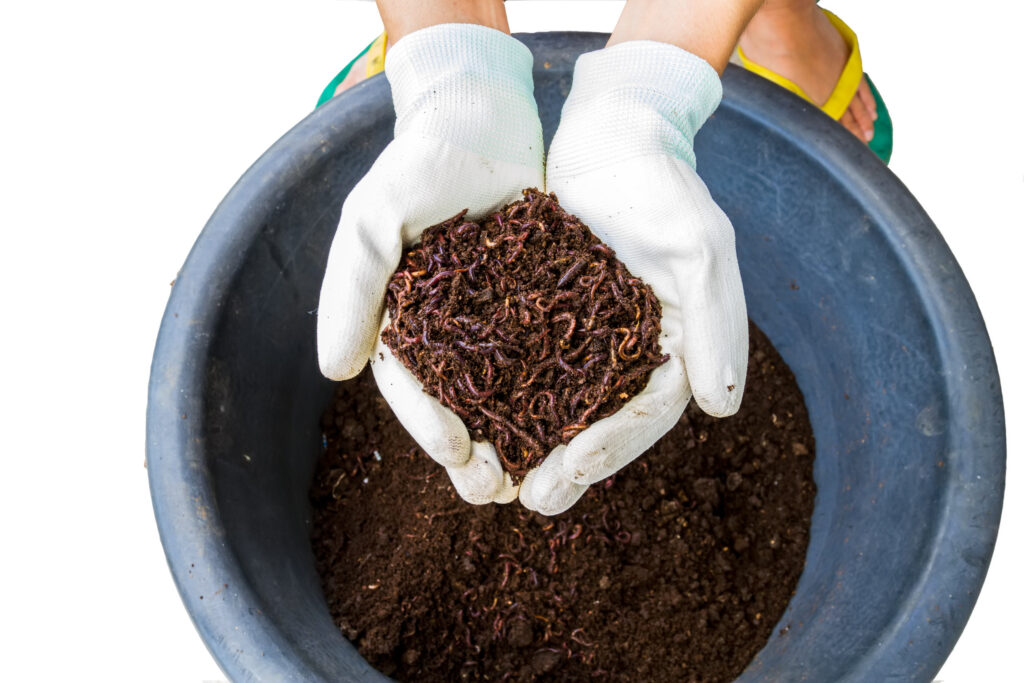
I was chatting with a friend the other day and she asked me if I’d ever heard about worm farming. I said, “sure, like to compost in your apartment, right?” And she said, “sure, but did you know that you can actually make money with worm farms?” Huh. I did not know that.
My Friend’s Worm Farming Story
She had been out and about running her daily errands. In a parking lot, she saw someone pull up to a woman’s car that was beside her and call out, “hey do you have any worms?” How could you not be curious about such an interaction! So, she got to talking to the woman. She found out that she’s a worm farmer for a living. The woman raises about 8000-10000 worms. She sells them to gardeners and farmers and even to the city.
Occasionally, she faces battles you would never think about if you weren’t a worm farmer. For example, her worms got taken over by centipedes and she lost most of her farm. She had to start over. How do you write off that loss on your taxes at the end of the year? The whole thing is so fascinating. And it got me wondering what’s really involved in becoming a worm farmer.
Worms Are Good For Gardens
There are, of course, many different types of worms. Not all are ones you would want in your garden. But there are lot of benefits to worms in garden, particularly earthworms. And actually, most worms are earthworms. If you see worms in your garden, then it’s often a sign that your garden is healthy. And if you want a healthier garden, you might choose to add worms to your garden.
Worms help gardens by:
- Processing your soil and compost and turning it into nutrients. They essentially compost for you in a super effective way. As a result, they make your soil healthier and improve garden growth.
- They also move the earth around. They create tunnels in the soil that improve air and water movement as well as growth opportunities for the roots of plants.
So, I see two main benefits to worm farming:
- The worms help your own garden to grow.
- You can sell the worms to other people who want their gardens to grow.
You Can Make Money Worm Farming
In our conversation, my friend mention a pilot in Sonoma who made his money worm farming. So, I did my research and learned about Jack Chambers. The story goes that he put some worms into his compost, left for five days, and came home shocked to discover rich soil where the worms were living. He fell in love with worm farming (called vermiculture, by the way) and turned it into a business. He’s raised millions for his company, which sells the worms to farmers. In Sonoma, that means a lot of vineyards, too.
It seems like you could start this kind of business with relatively little investment. The Savvy Smallholder says that it can be a part-time or full-time job. Seems like something you could start small and see if you like it. At the very least, you will probably improve your own garden’s soil in the process. They explain that if you aren’t ready to raise worms to sell, then you can start with vermicomposting: “worm farming for recycling waste.”
Apparently you can sell worm castings, various worm products, and the worms themselves. Worm castings are basically earthworm-created manure or fertilizer. As for the worms themselves, in addition to selling them to farms, you can sell them for bait. It’s a business to think about!
How Much Do Garden Worms Cost?
I’ve never bought worms. Therefore, I was a little surprised to learn that you can buy them on Amazon for your garden. One pound of red wigglers, which seems to be about 1000 worms, sells for between $40 and $100 there. That said, there are lots of options at various price points. I would imagine that if you sell directly to small gardeners, and perhaps you use organic gardening techniques, then that would change your price. Likewise, if you have a huge worm farm and sell in bulk to big farms, that would change the price. So, I can’t tell what kind of profit you could make. But you don’t seem to pay anything for worm upkeep since they’re doing their thing in the compost and soil, so most of it must be profit.
What do you think about giving worm farming a try?
Read More:
- How to Get Free Worms For Your Garden
- DIY Compost Using a 5 Gallon Bucket
- 5 Reasons to Use Fish Amino Acids on Your Plants

Kathryn Vercillo is a long time writer, crafter and author of several books. A resident of San Francisco, she is committed to helping others explore, articulate and share their own individuals stories. When she’s not evaluating investing opportunities Kathryn is an avid knitter, researcher, and blogger.
Leave a Reply