Imagine walking into your garden and catching a whiff of something that smells suspiciously like a dead animal. You check beneath the bushes, look around the fence, and wonder whether something has died nearby.
Then you realize the smell is coming from one of your flowers.
Believe it or not, some gardeners intentionally grow a plant that produces the unmistakable odor of rotting meat. Even stranger, they consider it one of the most fascinating plants in their collections.
Meet the carrion flower, a bizarre succulent that combines spectacular blooms with a smell most people would rather avoid.
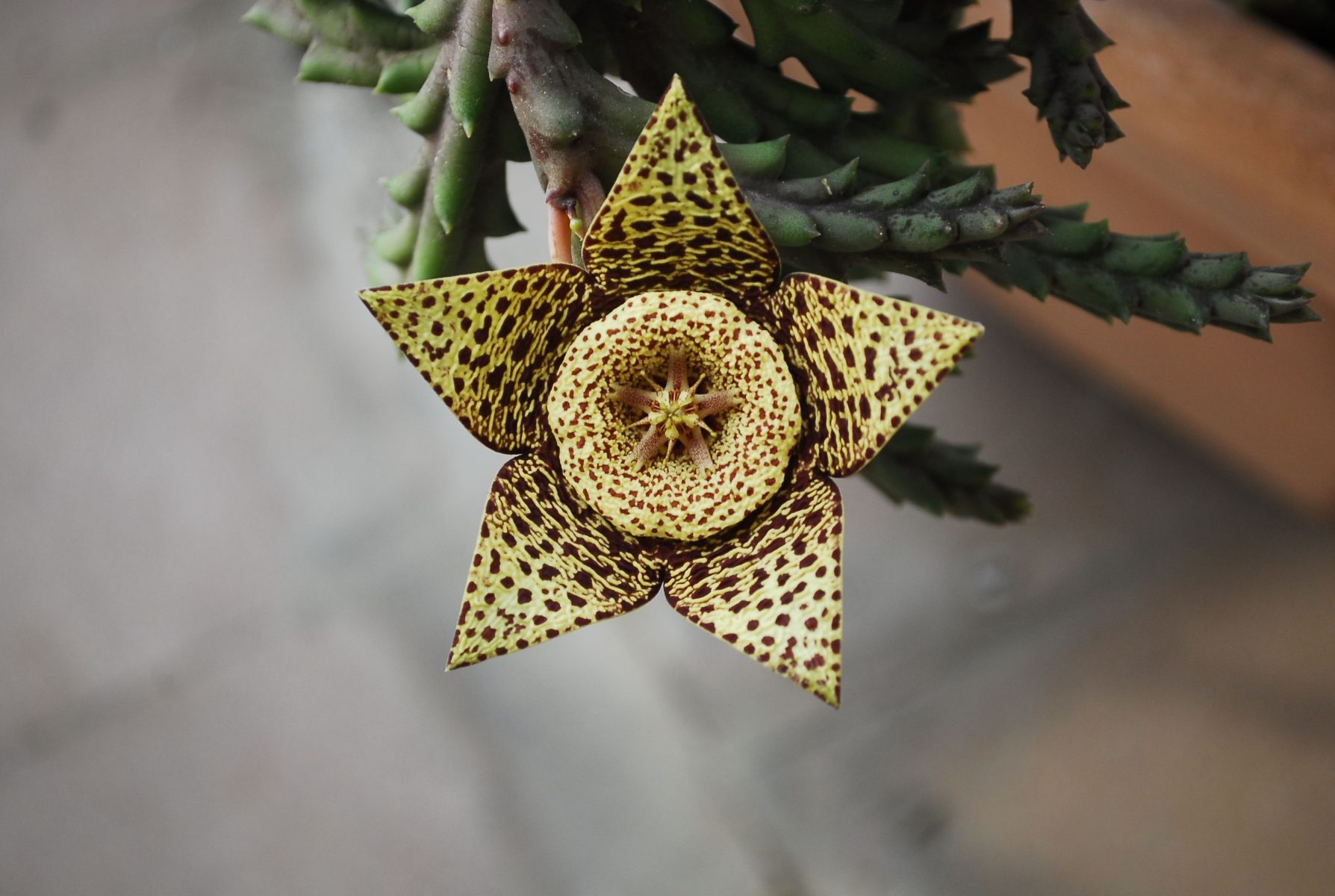
One of the most famous examples is Stapelia gigantea, sometimes called the giant starfish flower. Its enormous, star-shaped blossoms can reach more than a foot across under favorable conditions, making them almost impossible to ignore.
So why would anyone willingly grow something that smells this terrible?
The answer involves unusual pollination strategies, surprisingly beautiful flowers, and a plant that can be relatively inexpensive to maintain.
This Strange Flower Can Grow Bigger Than Your Hand
The carrion flower doesn’t look particularly alarming before it blooms, resembling a clump of thick, green, cactus-like stems. However, when flowering begins, the plant produces enormous, five-pointed blossoms decorated with yellowish backgrounds, reddish markings, and fine hairs. According to the Missouri Botanical Garden, Stapelia gigantea can produce flowers measuring approximately 10 to 16 inches across. The blossoms often have a leathery appearance that makes them look almost artificial, particularly when viewed up close. Their unusual appearance is one reason collectors prize them despite the unpleasant surprise that comes with flowering.
The Rotting-Meat Smell Actually Serves a Purpose
While most flowering plants attract pollinators with sweet fragrances, the carrion flower uses an entirely different strategy. Its foul odor mimics decomposing animal tissue, attracting flies that normally search for rotting material. The South African National Biodiversity Institute explains that these insects are drawn to the flowers and may even deposit eggs after mistaking them for suitable breeding sites. As the flies move across the blossoms, they can transfer pollen and help the plants reproduce. What smells disgusting to humans is actually a highly specialized adaptation that allows the plant to attract its preferred pollinators.
Some Gardeners Grow It Because It’s So Unusual
Gardeners who collect rare or unusual plants often look for specimens that offer something beyond ordinary flowers and foliage. The carrion flower certainly qualifies because its appearance, scent, and pollination strategy are unlike those of most familiar garden plants. Its dramatic blooms can become conversation starters, especially when visitors discover that the smell is coming from a living flower rather than something decomposing nearby. Botanical gardens also cultivate these plants because they provide an opportunity to explain how different species have evolved to attract insects. For people who enjoy unusual succulents, the novelty of watching a giant star-shaped flower develop can outweigh the temporary inconvenience of its odor.
You Don’t Need a Huge Garden to Grow One
Despite its dramatic flowers, Stapelia gigantea is a relatively compact succulent that can be grown in containers. The University of Florida IFAS Extension recommends growing carrion flowers in a coarse, well-draining growing medium and allowing the soil to dry between waterings. Unlike plants that require consistently moist soil, this succulent stores water in its fleshy stems and can suffer from excessive watering. A container with drainage holes is particularly important because standing water can encourage root rot and damage the plant. For budget-conscious gardeners, growing a carrion flower in a reusable pot can be an appealing alternative to maintaining a large, high-maintenance flower bed.
The Biggest Growing Mistake Is Giving It Too Much Water
Many gardeners accidentally damage succulents by treating them like ordinary flowering houseplants. Carrion flowers are adapted to relatively dry conditions, meaning constantly damp potting soil can create serious problems for their roots and stems. The University of Florida recommends moderate watering during active summer growth and keeping plants considerably drier during winter. Gardeners should also avoid assuming that every succulent needs intense afternoon sunlight, since light shade may be beneficial in particularly hot climates. Monitoring soil moisture and adjusting watering to seasonal conditions is usually more effective than following a rigid watering schedule.
Your Climate Determines Where You Can Keep It
The carrion flower may look tough, but it isn’t suited to freezing winter temperatures. The University of Florida identifies Stapelia gigantea as suitable for outdoor cultivation in USDA hardiness zones 10 and 11, making it a better permanent landscape plant in frost-free climates. Gardeners in colder regions can still enjoy it by growing the plant in a container and moving it indoors or into a protected location before cold weather arrives. A bright indoor growing area can help maintain the plant during winter, although watering should be reduced when growth slows. This flexibility makes container gardening a practical option for anyone who wants to experiment with unusual plants without risking cold-weather damage.
There’s One Problem With Bringing It Indoors
Growing a carrion flower indoors can become complicated when the plant begins producing its famous blossoms. The Chicago Botanic Garden warns that the odor can become overpowering inside enclosed spaces. A flower that seems mildly unpleasant outdoors may be much harder to tolerate in a small living room or bedroom. For this reason, gardeners often prefer keeping blooming plants outdoors when temperatures are suitable or positioning them somewhere with good ventilation. If the smell becomes unbearable, removing the blossoms is another option, although doing so means sacrificing the plant’s most dramatic feature.
You Can Grow More Plants Without Buying New Ones
Another appealing feature of the carrion flower is that gardeners can propagate it without purchasing additional mature plants. The Missouri Botanical Garden notes that Stapelia gigantea can be propagated through division and stem cuttings. Healthy cuttings generally need time for their cut surfaces to dry and callus before being placed in an appropriate, well-draining growing medium. This process can allow an established plant to produce additional specimens for other containers or for sharing with gardening friends. However, gardeners should avoid taking cuttings from wild populations and instead obtain plants from reputable cultivated sources.
A Terrible Smell Can Still Make a Fascinating Garden Plant
The carrion flower proves that gardening isn’t always about producing the sweetest fragrance or the most conventional beauty. Its enormous blossoms, unusual appearance, and fascinating relationship with flies make it one of the more memorable succulents a gardener can grow. Although the smell can be unpleasant, proper placement and careful watering can make the plant relatively manageable. For gardeners who enjoy unusual specimens, propagating their own plants can also help keep the hobby affordable. Sometimes the most interesting addition to a garden is the one that makes visitors wrinkle their noses before asking where they can get one.
Would you grow a flower that smells like rotting meat if it produced enormous, beautiful blooms? Or would the smell be an immediate dealbreaker? Share your thoughts in the comments!
What to Read Next
5 Plants That Look Completely Dead but Can Surprise You With New Growth
Your Neighbor Complains About Your Wildflower Garden — Could You Be Forced to Mow It Down?
What Happens if You Plant the Seeds From a Grocery Store Lemon?
Leave a Reply