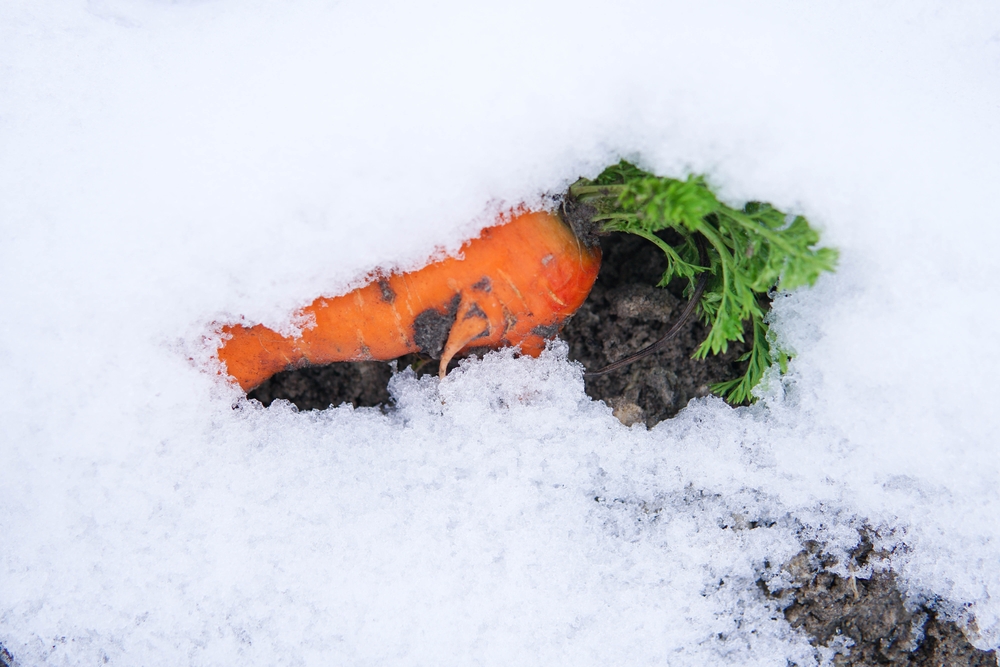
When fall cleanup arrives, you don’t necessarily have to pull every carrot from the garden and make room for bags of produce in the refrigerator. In many climates, overwintering carrots lets the soil serve as a surprisingly effective storage space, allowing you to dig fresh roots weeks or even months after the normal harvest season. University of Illinois says gardeners in many areas can harvest carrots throughout winter when the rows are protected with heavy mulch. Cold weather may even improve the flavor of some varieties, although leaving carrots outside isn’t risk-free. Before abandoning the carrot bed until January, here’s what actually happens underground and how to improve your chances of pulling out crisp carrots instead of rotten ones.
Cold Weather Doesn’t Immediately Kill Your Carrots
Carrots are considerably more cold-tolerant than tomatoes, peppers, cucumbers, and many other familiar garden crops. Fall-planted carrots can remain in the garden after light frosts, and West Virginia University recommends mulching them with straw before a freeze if you plan to overwinter them. The green tops may eventually look battered or die back as temperatures fall, but the edible root has the advantage of being insulated by the surrounding soil. Oregon State University’s winter carrot project notes that carrots can tolerate temperatures down to at least 20°F without protection, with mulch and row covers potentially providing considerably more protection. The bigger practical problem eventually becomes keeping the soil around those roots from freezing solid.
Your Carrots May Actually Taste Sweeter
Cold-weather carrots have earned a reputation for sweetness, and there is some science behind the garden lore. West Virginia University notes that some carrot varieties become sweeter after remaining in the ground through frost. The effect isn’t a license to leave every variety outside indefinitely, but it gives gardeners a reason not to panic when the first light frost appears in the forecast. In practice, a carrot pulled after cool fall weather can taste noticeably different from one harvested during the heat of late summer. If you’re experimenting with overwintering carrots, taste one before frost and another afterward and see whether you notice a difference yourself.
Mulch Turns the Garden Into a Makeshift Root Cellar
The goal isn’t necessarily to keep the carrot plants actively growing throughout winter. Instead, you’re trying to prevent the ground from freezing hard enough that you can’t reach the roots or that extreme conditions damage them. University of Maryland says fall-planted carrots can be harvested throughout winter when they’re covered with organic mulch such as straw or shredded leaves before the ground freezes. North Carolina Cooperative recommends at least four inches of mulch over overwintering root vegetables before a hard freeze, while colder climates may warrant substantially heavier protection. Think of mulch as insulation rather than a heater: it moderates temperature swings and helps keep the soil beneath it workable longer.
Frozen Ground Can End Your Winter Harvest
There’s an important difference between a carrot surviving cold weather and you being able to harvest it. Once garden soil freezes into something resembling concrete, digging carrots becomes difficult even if the roots underneath remain viable. Experts suggest using mulch, row cover, or a low tunnel and recommend harvesting winter carrots when temperatures are above freezing. If you live somewhere with long stretches of deeply frozen soil, relying exclusively on overwintering carrots becomes considerably less convenient than it is in a milder winter climate. Gardeners in those regions may want to harvest part of the crop for indoor cold storage and leave a smaller portion outside as an experiment.
Wet Soil Can Be Just as Troublesome as Extreme Cold
Winter isn’t automatically kind to carrots simply because temperatures stay above freezing. Poorly drained soil can remain saturated after repeated rain, snowmelt, or freeze-thaw cycles, increasing the risk of root deterioration and disease. Oregon State University notes that carrots left in the garden can suffer damage from soil-dwelling pests and diseases and may sometimes survive better in storage with their tops removed. Heavy clay that stays soggy presents a different winter-storage environment from loose, well-drained soil in a raised bed. If your carrot patch routinely turns into mud for weeks at a time, harvesting and storing the crop indoors may be the safer bet.
Hungry Animals May Discover Your Storage System
Unfortunately, you’re not the only creature capable of figuring out where the carrots are stored. Rodents and other garden visitors can discover roots beneath mulch, particularly as other winter food sources disappear. A beautifully insulated carrot bed doesn’t save money if you pull back the straw in February and discover that something else has been eating the crop for weeks. Watch for tunnels, disturbed mulch, chewed roots, and other signs of activity when harvesting throughout winter. Gardeners with persistent rodent problems may decide that overwintering carrots isn’t worth sacrificing a large portion of their harvest.
Don’t Wait Too Long Once Spring Returns
Winter storage shouldn’t quietly turn into leaving forgotten carrots in the bed indefinitely. Carrots are biennial plants, meaning surviving roots can resume growth and eventually prepare to flower and produce seed during their second growing season. As that process begins, the texture and eating quality of the root can deteriorate because the plant is redirecting its stored energy toward new growth. If you’ve successfully carried carrots through winter, plan to finish harvesting them before vigorous spring growth gets underway rather than treating the garden as permanent storage. Mark the row in fall, too, because it’s remarkably easy to forget exactly where a dormant root crop is hiding once the garden changes appearance.
Harvesting Carefully Helps Prevent Broken Roots
Pulling a winter carrot straight out of cold, firm soil can leave you holding green tops while half the carrot remains underground. University of Minnesota recommends loosening soil beside carrots with a garden fork before pulling them to reduce the chance of breaking the roots. Move the mulch aside, loosen the soil beside the carrot rather than stabbing directly underneath it, and gently work the root free. Replace the mulch over carrots you’re leaving behind so the remaining section of the bed retains its insulation. This harvest-as-needed approach is what makes overwintering carrots so convenient when conditions cooperate.
You Don’t Have to Gamble the Entire Crop
A frugal gardener doesn’t have to choose between digging every carrot in October and leaving every carrot outside until spring. Harvest enough to provide a reliable supply indoors, then heavily mulch a section of the remaining bed and see how overwintering carrots performs in your particular soil and climate. Properly stored harvested carrots can last for months, while the outdoor crop gives you the possibility of fresh garden carrots during winter without dedicating refrigerator space to the entire harvest. The following year, you’ll have first-hand knowledge about how much mulch worked, how late the soil remained workable, and whether pests or excess moisture caused problems in your garden.
Would you leave part of your carrot crop underground this winter, or would you rather harvest everything before the first hard freeze?
What to Read Next
Stop Fertilizing These Plants Before Winter — You May Be Encouraging the Wrong Growth
Leaving Soil Bare All Winter? You May Be Creating More Work for Spring
Don’t Store Garden Soil Like This Over Winter — You Could Ruin the Whole Bag
Leave a Reply