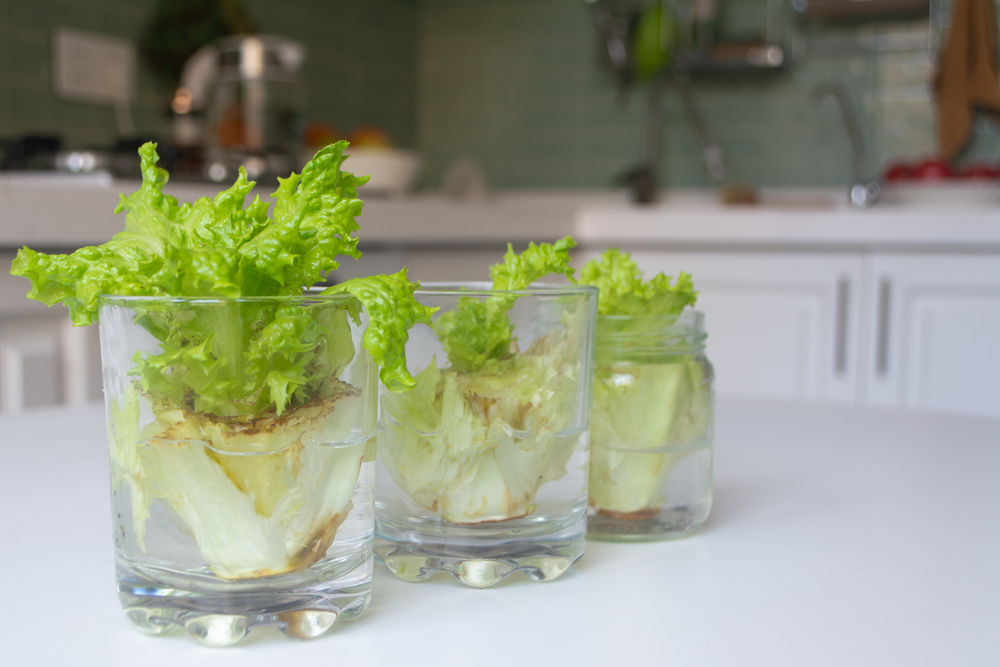
You’ve probably seen the kitchen hack: instead of throwing away the bottom of a head of romaine lettuce, put it in water and supposedly grow yourself more lettuce for free. It sounds almost too good to be true, especially when the original lettuce has already been eaten and the stump was headed for the compost pile anyway. So, is regrowing lettuce from scraps actually a money-saving gardening trick, or does it produce little more than an interesting windowsill experiment? The answer falls somewhere in between, because lettuce really can send up fresh leaves from the leftover base, but expectations matter. Here’s what happens, how much usable lettuce you can realistically expect, and whether we’d bother doing it again.
We Started With a Stump That Normally Would Have Been Thrown Away
The basic setup couldn’t be much cheaper because the main ingredient is something most households would otherwise discard. After using the leaves from a head of romaine, leave roughly two inches of the base intact rather than cutting the lettuce all the way down to the bottom. Penn State recommends placing that bottom piece in a flat container with about a half-inch of room-temperature water and setting it in a sunny location. That’s essentially the experiment: no grow lights, specialized fertilizer, seed-starting mix, or expensive countertop growing system required. From a frugal standpoint, regrowing lettuce from scraps starts with an obvious advantage because you’re experimenting with something that had virtually no remaining financial value.
New Lettuce Growth Appears Surprisingly Fast
The fun part is watching what looks like a useless stump prove that it isn’t finished growing. Fresh green leaves begin emerging from the center while the older cut portions around the outside remain largely unchanged, and the difference can become noticeable within just a few days under good conditions. Lettuce is among the vegetables that can be regrown using a process similar to celery, where roots and new leaf growth develop from the leftover base. Keep the water shallow rather than submerging the entire stump, and add more as needed so the base continues to have access to moisture. If your goal is simply to prove that regrowing lettuce from scraps works, you probably won’t have to wait very long to see convincing evidence.
Keeping the Water Clean Matters More Than You Might Expect
A lettuce stump sitting in the same glass of warm water indefinitely isn’t the low-maintenance shortcut social media sometimes makes it look like. You should try to clean the container every three to four days, rinsing it with warm water without soap, and maintaining about a half-inch of room-temperature water. Watch the base closely as well, because slimy, badly deteriorating plant tissue isn’t something you want sitting on your kitchen counter simply for the sake of squeezing out a few more leaves. Fresh growth should look healthy and crisp rather than brown, moldy, or decomposed. Regrowing lettuce from scraps is cheap, but that doesn’t mean ignoring basic cleanliness just to save a vegetable stump.
Here’s the Catch: You Probably Won’t Grow Another Full Head
This is where expectations created by online photos can get ahead of what the plant is realistically going to produce. A lettuce base has enough stored energy and living tissue to generate new growth, but putting a stump in water isn’t equivalent to planting a fresh lettuce crop in fertile soil with a developed root system. University of Minnesota explains that lettuce has shallow roots but still requires adequate water and nutrients for good-quality growth. The regrown leaves can provide a small second harvest, but you shouldn’t expect the original supermarket head to magically replace itself at full size on the windowsill. Anyone attempting to regrow lettuce from scraps primarily to slash the grocery budget may therefore find the amount of food a little disappointing.
The Harvest Is Better Viewed as Bonus Lettuce
Instead of measuring success by whether the stump produces another $2 or $3 head of romaine, think about what you’re getting from something you planned to throw away. A handful of fresh leaves might be enough for a sandwich, taco topping, burger, wrap, or small side salad, even if it isn’t enough for a family-sized Caesar salad. Lettuce leaves can be harvested individually once they reach usable size, which is a sensible approach with small regrown plants. Harvest the new leaves while they’re tender rather than endlessly waiting for the stump to become something it probably never will. Viewed as free bonus food rather than a replacement for buying lettuce, the experiment starts making considerably more financial sense.
Planting It in Soil Can Take the Experiment Further
If roots develop and you’re interested in continuing, you don’t necessarily have to leave your lettuce sitting in water forever. Illinois Extension describes kitchen-scrap gardening as a starting point for regrowing vegetables and notes that similar regrowth projects can be transferred into potting soil once sufficient development occurs. Soil gives a plant access to nutrients that plain water doesn’t provide, although transferring the stump means the experiment begins requiring a little more effort and potentially some materials. If you already own potting mix and an empty container, the additional cost can effectively be zero, making it an easy next step for a frugal gardener. If you have to buy a pot, soil, fertilizer, and other supplies specifically to produce a few extra lettuce leaves, however, regrowing lettuce from scraps quickly stops looking like a serious money-saving strategy.
The Biggest Payoff May Not Be the Grocery Savings
If we’re judging this experiment purely by pounds of food produced, planting lettuce seed in a garden or container is a much better route to a substantial harvest. But regrowing lettuce from scraps has other advantages: it reduces kitchen waste, costs almost nothing, and gives children or beginning gardeners a remarkably easy way to watch plant growth happen in real time.
Newbies can regrow romaine, celery, and other vegetable scraps as a simple gardening activity and lesson in plant propagation. It can also change the way you look at other kitchen leftovers, because green onions, celery, bok choy, cabbage, and several root-vegetable greens can also be candidates for regrowth experiments. Sometimes the value of a frugal project isn’t that it saves $100 but that it produces something useful from an item that otherwise would have gone into the trash.
So, Would We Regrow a Lettuce Stump Again?
Yes—but we’d do it for free leaves and fun rather than expecting an endless supply of supermarket-quality lettuce. The experiment requires little more than a leftover stump, a shallow container, water, sunlight, and a few minutes of maintenance, so there’s almost no financial downside if you already bought the lettuce anyway. The second harvest is unlikely to replace another entire head, but even a sandwich or two worth of greens represents food produced from something that otherwise would have been discarded. For meaningful grocery savings, grow lettuce from seed and harvest individual leaves repeatedly, but keep regrowing lettuce from scraps in your bag of tricks whenever a healthy romaine stump lands on the cutting board.
Have you ever regrown lettuce, green onions, celery, or another vegetable from kitchen scraps—and did you get enough food to make it worthwhile? Share your results in the comments.
What to Read Next
Can You Grow Mâche Where Summer Lettuce Failed?
What Should You Do With Bolted Lettuce Besides Throwing It Away?
Leave a Reply