• Skip to primary navigation
  • Skip to main content
  • Skip to primary sidebar

Frugal Gardening

Simple ways to save money while you garden

  • About
  • Contact Us
  • Garden Frugally
  • Buy These
  • Privacy Policy
  • Navigation Menu: Social Icons

    • Facebook
    • Pinterest
    • Twitter

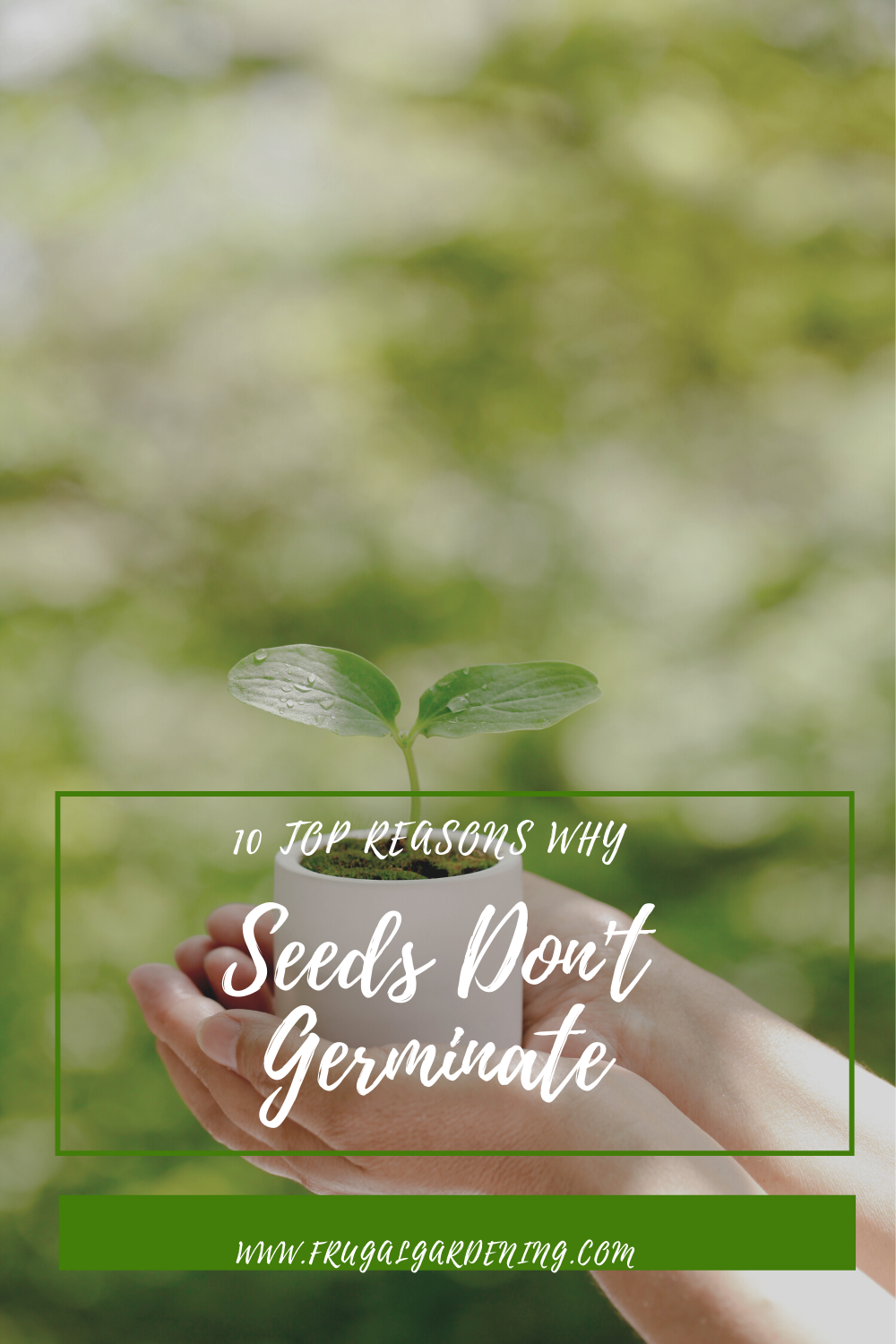
10 Top Reasons Why Seeds Don’t Germinate

April 6, 2021 by Steph Coelho Leave a Comment


10 Top Reasons Why Seeds Don't Germinate

There are a lot of reasons why seeds don’t germinate. Knowing what can go wrong is the first step in solving the problem. If you’re struggling to start seeds this spring, here are a few things to look out for.

Why Aren’t Seeds Germinating?

Here are a few common reasons why seeds don’t germinate.

    • It’s too hot. It’s a common misconception that seeds require heat to germinate. Not all seeds like it hot. Some germinate best when the soil is cool. The ideal temperature for lettuce seeds, for instance, is between 40 to 85 degrees Fahrenheit. Closer to 80 degrees means seeds are less likely to emerge.
    • It’s too cold. Similarly, some seeds require plenty of warmth to germinate. Things like tomatoes, eggplant, and peppers do best if you use a heat mat. If you don’t provide extra warmth, your seeds may take longer to germinate or not germinate at all.
    • The soil is too wet. Seeds and seedlings need air to survive. If you drown your seeds in water, they may not be able to access oxygen, and they’ll eventually rot. When starting seeds, you want your soil to be moist but not overly so.
    • Damping-off. This is a fungal disease that commonly affects seeds and seedlings. Avoid it by using sterilized seed starting mix, disinfecting tools, and using quality seed. If you notice your seedlings continually succumbing to damping-off, it might be wise to throw out that seed packet.
    • Seeds are getting eaten. In some areas, you may already be direct seeding outside. It’s a great way to get a jump start on the season. Unfortunately, some animals, like birds and small mammals, don’t really care that you’re excited about the gardening season. If you plant seeds and wonder why they aren’t germinating, it might be because critters are eating them when you’re not around. You can use netting or other protective covers, like cloches, to keep your seeds away from hungry mouths.
    • You’ve got duds. Sometimes, seeds, even from quality retailers, just aren’t going to germinate. Most reputable seed companies have a germination percentage figure on their seed packets to let you know how many seeds are expected to germinate. The lower the percentage, the more likely you are to have a few non-starters. If you continually find yourself with duds on your hands, it’s time to find a new seed supplier.
    • Your seeds are too old. Seeds don’t last forever. They’ll last a shorter time if they’re stored haphazardly. Some types of seeds also last longer than others. If your seeds aren’t sprouting, check the date on the packet. I often buy packets of seed that contain way more seed than I know I’ll be able to use. I like to share seeds with other gardening pals to make sure they don’t go to waste.
    • You’re not being patient enough. Some seeds take a while to germinate. While lettuce seedlings usually pop up within less than a week, many herbs take a lot longer to sprout. Others can take months. Seeds will also take longer to germinate if the conditions aren’t quite right.
    • Your seeds need an extra helping hand. Some seed types require periods of freezing weather or soaking in water to sprout. Always carefully read the back of a seed packet to check if this needs to be done. Some flower seeds have hard coatings, so you need to go through these steps to weaken the coating.
    • You’ve planted them too deep. This is more of an issue when direct sowing. Only plant as deep as the length of the seed. So for small seeds like carrots, you want to make sure you’re sowing them very shallowly.

Photograph of Steph Coelho.
Steph Coelho

Steph Coelho is a freelance writer gardening in zone 5b. She is a certified Square Foot Gardener and has taught various garden-related workshops. When she’s not digging in the dirt or writing, she’s cooking up fresh produce, running, or listening to her favorite podcasts.

Filed Under: indoor gardening, seed starting, seedlings, seeds Tagged With: germination, reasons why seeds don't germinate, seedlings, seeds

Previous Post: « How To Do A Spring Garden Clean-Up
Next Post: Go With The Flow Gardening »

Reader Interactions

Leave a Reply Cancel reply

Your email address will not be published. Required fields are marked *

Primary Sidebar

Struggling to get your garden off the ground? Put those days behind you with our special starter kit – perfect for thrifty green thumbs everywhere. Get growing and add a splash of color today!

Popular Posts

  • usda free seeds websiteHow To Get Free Seeds From The Government by Amanda Blankenship Seeds might seem like a small expense, but any seasoned…
  • Enviro Ice On PlantsShould I Use Enviro Ice On My Plants? by Kathryn Vercillo Every week, I receive food from Hungryroot. It's a great…
  • is shredded paper good for the gardenFrom Trash to Treasure: Transform Shredded Paper Into Garden Gold by Amanda Blankenship Should you use shredded paper as garden mulch? It might…
  • Enviro IceWhat Happens to Plants If You Use Enviro Ice on Them? by Amanda Blankenship About a year ago, I wrote our first article about…
The Aspirin Trick: How a 10-Cent Pill Boosts Your Plant’s Immune System

The Aspirin Trick: How a 10-Cent Pill Boosts Your Plant’s Immune System

Gardeners enjoy a good hack, especially one that costs pocket change and delivers real results. That tiny aspirin tablet sitting in a medicine cabinet holds surprising power far beyond headache relief. Plants respond to aspirin in a way that feels almost like a secret handshake with nature itself. With the right approach, this simple trick…

Read More

The Cinnamon Hack: The $1 Kitchen Spice That Kills Garden Fungus

The Cinnamon Hack: The $1 Kitchen Spice That Kills Garden Fungus

Garden fungus doesn’t just ruin leaves—it quietly sabotages entire harvests. Powdery mildew, damping-off, and leaf spot spread fast, especially in warm, humid conditions, leaving plants weak and unproductive. Store-bought fungicides can cost a surprising amount and often contain chemicals that gardeners hesitate to use around edible crops. That’s where cinnamon steps in as a simple,…

Read More

Why Your Toaster Scraps are the Secret to Gigantic Peppers

Why Your Toaster Scraps are the Secret to Gigantic Peppers

Peppers thrive on simple, clever gardening hacks that most kitchens quietly generate every single day. Those crumbs sitting in the bottom of the toaster might look like trash, but they hold surprising power for boosting plant growth. Gardeners who want bigger, juicier peppers often overlook easy, free ways to enrich their soil. That changes today…

Read More

The EPSOM Salt Myth: The Cheap Drugstore Staple That Actually Works

The EPSOM Salt Myth: The Cheap Drugstore Staple That Actually Works

Gardeners love a good hack, but most so-called miracle fixes wilt under real-world conditions. Epsom salt, however, keeps popping up in serious gardening circles—and not just as folklore. This humble, inexpensive compound shows measurable benefits when used correctly, especially in soil that lacks key nutrients. While it won’t magically transform every struggling plant, it absolutely…

Read More

  • About
  • Contact Us
  • Garden Frugally
  • Buy These
  • Privacy Policy
  • Navigation Menu: Social Icons

    • Facebook
    • Pinterest
    • Twitter
  • Facebook
  • Pinterest
  • Twitter

Copyright © 2026 · Foodie Pro & The Genesis Framework