• Skip to primary navigation
  • Skip to main content
  • Skip to primary sidebar

Frugal Gardening

Simple ways to save money while you garden

  • About
  • Contact Us
  • Garden Frugally
  • Buy These
  • Our Editorial Commitment
  • Navigation Menu: Social Icons

    • Facebook
    • Pinterest
    • Twitter

To Prune or Not to Prune? Keeping Tomatoes in Check

June 28, 2021 by Steph Coelho Leave a Comment


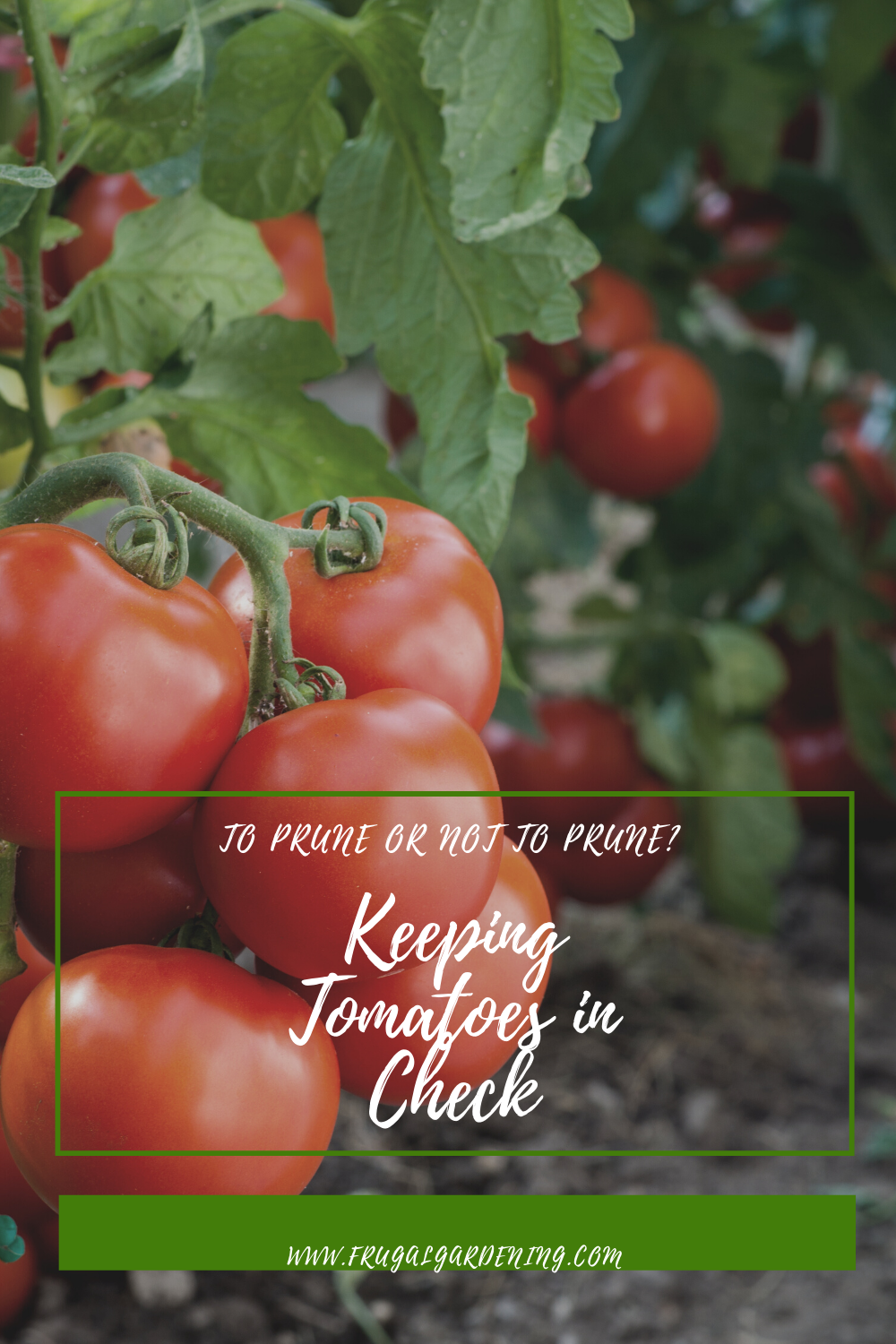
To Prune or Not to Prune Keeping Tomatoes in Check

To prune or not to prune, that is the question! Tomatoes are one of the most popular garden plants for a reason. They’re fairly easy to grow, produce an impressive yield, and are available in many interesting varieties. There are many schools of thought when it comes to tomato pruning. So what’s the right way to do things? Should you let tomatoes grow wild? Or keep them neat and tidy?

Tomato pruning

I believe that you should do what works for you. Whether you decide to prune heavily or not, you’ll probably end up with at least some tomatoes if all other conditions are met. Pruning heavily results in a neat and tidy look. It ensures that most of the plant’s energy goes into creating fruit.

But pruning aggressively can also be a lot of work. It requires paying close attention to your plants. I used to prune heavily, but now I’m a lot more laid back with it. Picking the suckers off is pretty easy to do, especially if you check on your plants regularly.

If even that sounds like a lot of work, choose tomato varieties that require no pruning, like compact and dwarf determinate varieties.

The dos and don’ts of pruning tomatoes

Here are things you should and shouldn’t do when pruning tomatoes:

  • Do give tomatoes enough room to breathe. Crowding plants reduces airflow and invites pests and disease. Pruning can help improve airflow and allow you to plant tomatoes closer to one another without suffocating plants.
  • Do keep enough foliage to protect the plant and fruits from sun damage. Removing too much of a plant leaves it vulnerable to weather and sunburn. Instead, keep some leaves around for protection.
  • Do remove foliage that’s touching the ground. Soil keeps plants alive, but it’s also a potential breeding ground for all sorts of nefarious fungi and bacteria. So even if you’re a lazy gardener, make sure to prune the lower leaves of a tomato plant to avoid potential contamination.
  • Do use cuttings to propagate new tomato plants. Just because you’ve snipped off a branch doesn’t mean you need to toss it into the compost. Instead, you can propagate a whole new tomato plant by placing the cutting in a cup of water. Within a week or so, you’ll notice roots start to appear, and soon after, you can plant the cutting and enjoy a whole new tomato plant.
  • Don’t prune determinate tomatoes. Some pruning at the base of the plant may be required, but you should prune determinate tomatoes minimally. By removing stems and offshoots, you risk limiting your harvest.
  • Don’t prune after rainfall when plants are still wet. This is a good way to spread and introduce disease. Instead, wait till the plant is dry before pruning.
  • Do make sure to give support to tomato plants. Whether you use bamboo poles or cages, tomatoes need support structures to stay upright. Plants that sprawl on the ground are more likely to pick up diseases.
  • Don’t use inflexible ties. You’ll need ties to fix tomato plants to support to keep them from bending or toppling over. Use flexible ties to do the job to prevent damage to the stem as the plant grows.

Photograph of Steph Coelho.
Steph Coelho

Steph Coelho is a freelance writer gardening in zone 5b. She is a certified Square Foot Gardener and has taught various garden-related workshops. When she’s not digging in the dirt or writing, she’s cooking up fresh produce, running, or listening to her favorite podcasts.

Filed Under: plant growth Tagged With: dos and donts of pruning, dos and donts of pruning tomatoes, pruning tomatoes, tomato, tomato pruning, tomatoes

Previous Post: « What Is the Real Cost of Growing Your Own Food?
Next Post: 7 Places Where You Can Get Free Mulch »

Reader Interactions

Leave a Reply Cancel reply

Your email address will not be published. Required fields are marked *

Primary Sidebar

Struggling to get your garden off the ground? Put those days behind you with our special starter kit – perfect for thrifty green thumbs everywhere. Get growing and add a splash of color today!

Popular Posts

  • usda free seeds websiteHow To Get Free Seeds From The Government by Amanda Blankenship Seeds might seem like a small expense, but any seasoned…
  • Enviro Ice On PlantsShould I Use Enviro Ice On My Plants? by Kathryn Vercillo Every week, I receive food from Hungryroot. It's a great…
  • is shredded paper good for the gardenFrom Trash to Treasure: Transform Shredded Paper Into Garden Gold by Amanda Blankenship Should you use shredded paper as garden mulch? It might…
  • Enviro IceWhat Happens to Plants If You Use Enviro Ice on Them? by Amanda Blankenship About a year ago, I wrote our first article about…
pollinator-friendly fall garden

Your Neighbors May Hate the Mess — But Pollinators Need Some of It

The instinct to clean up the yard every fall is hard to resist: rake every leaf, cut every brown stem, remove every dead flower head, and make the garden look tidy before winter arrives. Your neighbors may appreciate the neat landscaping, but the bees, butterflies, moths, and other beneficial insects that spent summer in your…

Read More

overseas seeds

Before Buying Cheap Seeds From an Overseas Seller, Check These USDA Rules

A packet of unusual flower or vegetable seeds for $2 can look like one of the easiest gardening bargains you’ll find online. But if the seller is shipping those seeds from another country, you’re not simply ordering inexpensive garden supplies—you may legally be importing plant material into the United States. The USDA’s Animal and Plant…

Read More

plants you should never burn

5 Plants You Should Never Burn in a Backyard Fire

Fall cleanup can leave you staring at a pile of vines, weeds, branches, and dead plants that seems perfect for the backyard fire pit. Before striking a match, though, take a much closer look at what’s actually in that pile. Certain plants you should never burn contain oils or toxins that can become part of…

Read More

HOA drought rules

Can an HOA Force You to Grow Grass During a Drought?

Your lawn turns brown during a drought, you cut back on irrigation to conserve water, and then an HOA violation letter arrives telling you to restore the grass. It sounds absurd, but conflicts over HOA drought rules are real enough that states have passed laws specifically addressing what associations can demand from homeowners. The answer…

Read More

  • About
  • Contact Us
  • Garden Frugally
  • Buy These
  • Our Editorial Commitment
  • Navigation Menu: Social Icons

    • Facebook
    • Pinterest
    • Twitter
  • Facebook
  • Pinterest
  • Twitter

Copyright © 2026 · Foodie Pro & The Genesis Framework