• Skip to primary navigation
  • Skip to main content
  • Skip to primary sidebar

Frugal Gardening

Simple ways to save money while you garden

  • About
  • Contact Us
  • Garden Frugally
  • Buy These
  • Privacy Policy
  • Navigation Menu: Social Icons

    • Facebook
    • Pinterest
    • Twitter

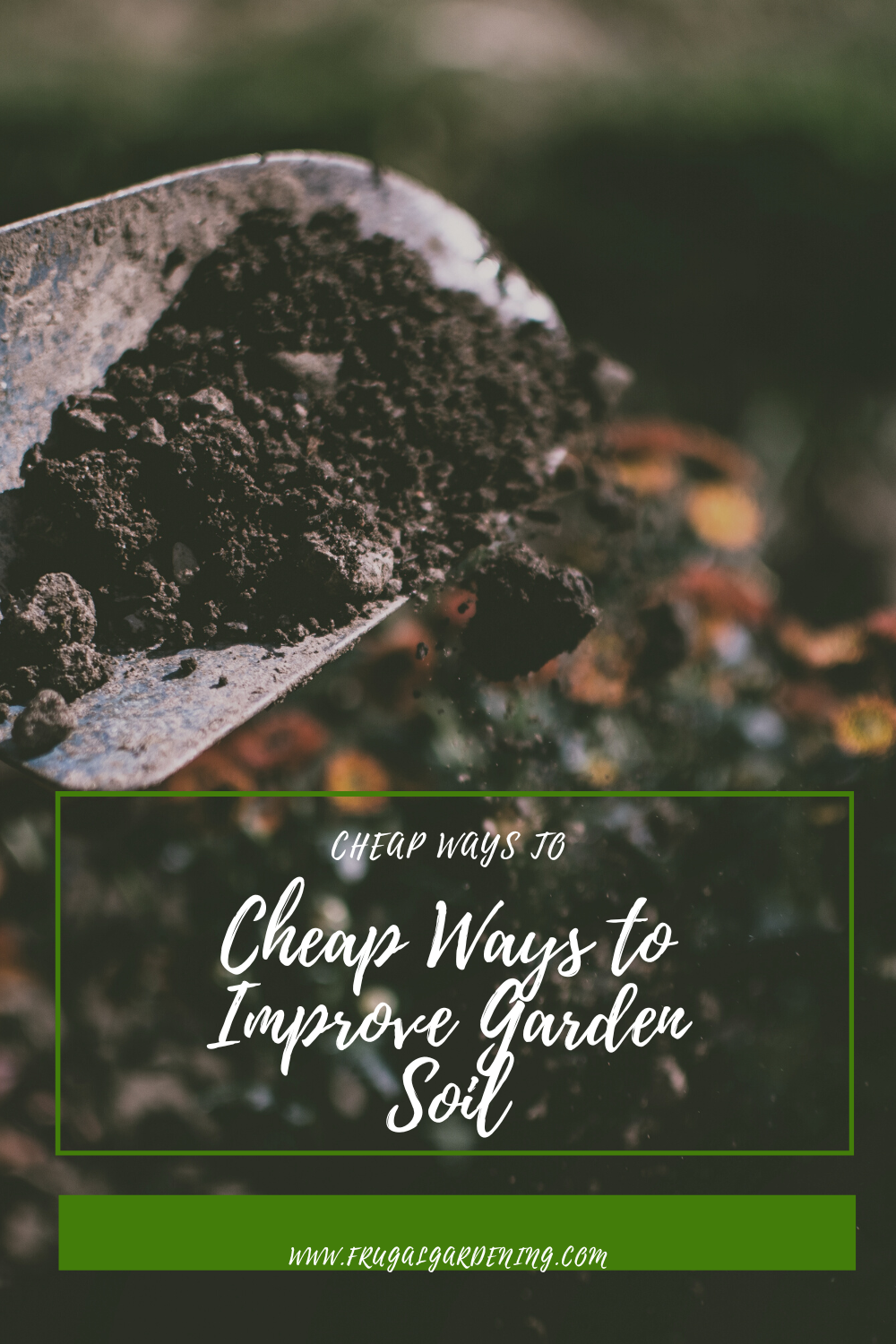
Cheap Ways to Improve Garden Soil

November 3, 2022 by Ali Southerland Leave a Comment


Soil is the heart of your garden. And if we want to keep our gardens healthy and producing plenty, it’s essential to care for the soil diligently. Here are some practical and cheap ways to improve garden soil.

Fertilizer

When people think of improving soil, they most often think of adding fertilizer. This is because plants pull nutrients out of the soil, so we must put them back. There are 2 ways to add fertilizer: organic matter and inorganic fertilizers.

Organic Matter

Adding organic matter means adding products from living things into your soil. Some common ways of doing this include adding compost, manure, blood/bone meal, or seaweed-based fertilizer.

Inorganic Fertilizers

You can also use inorganic products. You can buy these at any gardening store. And they come in all kinds of varieties, like succulent, for encouraging blooms, fruits, or houseplants.

Soil Amendments

Nutrients are just 1 facet of keeping soil healthy. Paying attention to several soil characteristics like pH and permeability/drainage is essential.

Soil pH

Soil pH is a measure of the soil’s acidity. For example, you need acid soil to grow blueberries, corn, cucumbers, and onions.

How to Lower Soil pH

The easiest way to lower soil pH is to add sulfur, which you can find at garden supply stores. How much sulfur you need is determined by how much you need to lower the pH, so it’s a good idea to start with a pH test. Then you work it evenly into the soil according to the package directions. Be sure to wear protective gear as indicated. Be sure to give a 1 month’s break between adding sulfur and planting. If you do not, you will burn the roots of your plants.

How to Raise Soil pH

Adding agricultural lime, or simply lime is the go-to way to raise soil pH. Lime is ground-up limestone. Like lowering the pH, you need to start with a soil test to add the proper amount of lime. Then work it into the soil until evenly distributed. Allow at least 2 months, ideally 3, between treatment and planting to ensure enough time for the lime to neutralize the acid.

Permeability

The rate at which water moves through the soil is an integral part of growing healthy gardens. If water moves too fast, it may not be absorbed by the plant and leech nutrients away.If it drains too slowly, it can cause root rot and encourage fungal growth.

Improving Permeability

There are several cheap ways of improving the permeability of your soil.

Sand

Sand is a cheap way to make soil drain. How much and how fine the sand needs to be depends on what your soil is composed of.

Manure

You can aged manure to increase your soil’s permeability.

Mulch

An excellent way to prevent water loss from the soil is to keep the soil mulched. It will also make the soil cooler and prevent weeds from growing.

Conclusion

Growing delicious food starts with caring for your soil. So what do you add to it?

Read More:

5+ Cheap Ways To Make Soil More Acidic

5 Things To Consider When Recycling Soil

Why You Should Test Your Soil

Ali Southerland

Ali is a homeschooling mom of 5 who includes gardening and food prep as important subjects in her school. She has been raising plants her whole life and learned how to garden from her father. When she isn’t caring for her plants, she can be found reading or hiking.

Filed Under: Uncategorized

Previous Post: « How to Keep Gardening from Being Boring
Next Post: Tips for Keeping Your New Pup Out of Your Garden »

Reader Interactions

Leave a Reply Cancel reply

Your email address will not be published. Required fields are marked *

Primary Sidebar

Struggling to get your garden off the ground? Put those days behind you with our special starter kit – perfect for thrifty green thumbs everywhere. Get growing and add a splash of color today!

Popular Posts

  • usda free seeds websiteHow To Get Free Seeds From The Government by Amanda Blankenship Seeds might seem like a small expense, but any seasoned…
  • Enviro Ice On PlantsShould I Use Enviro Ice On My Plants? by Kathryn Vercillo Every week, I receive food from Hungryroot. It's a great…
  • is shredded paper good for the gardenFrom Trash to Treasure: Transform Shredded Paper Into Garden Gold by Amanda Blankenship Should you use shredded paper as garden mulch? It might…
  • Enviro IceWhat Happens to Plants If You Use Enviro Ice on Them? by Amanda Blankenship About a year ago, I wrote our first article about…
How to Revive Plants After Accidental Overwatering

How to Revive Plants After Accidental Overwatering

A plant drowning in kindness sounds like a contradiction, yet that’s exactly what overwatering does. One extra pour turns into two, and suddenly those once-perky leaves droop like they’ve given up on everything. The soil feels heavy, the pot looks innocent, and the plant sends distress signals that often get mistaken for thirst. That moment…

Read More

Inexpensive Ways to Shade Plants During Hot Weather

Inexpensive Ways to Shade Plants During Hot Weather

The sun does not play around in peak summer, and plants feel every blazing second of it. Leaves scorch, soil dries out faster than expected, and even the hardiest greenery starts to look tired and overwhelmed. Anyone who cares about their garden knows that heat waves demand quick thinking and smarter strategies, especially when expensive…

Read More

7 Things Earwigs Do in Gardens and When They Become a Problem

7 Things Earwigs Do in Gardens and When They Become a Problem

There is something dramatic about spotting an earwig curled up in a leaf, pincers poised like it just stepped out of a tiny action movie. These insects look intense, a little prehistoric, and maybe even a bit suspicious. But appearances rarely tell the whole story in a garden, and earwigs prove that better than most….

Read More

What to Plant for Natural Pest Control Without Sprays

What to Plant for Natural Pest Control Without Sprays

The garden does not need chemicals to win the battle against pests. It needs strategy, a little creativity, and the right lineup of plants that know exactly how to hold their ground. Nature already built an entire defense system, and it works better than most store-bought sprays when used correctly. The trick lies in understanding…

Read More

  • About
  • Contact Us
  • Garden Frugally
  • Buy These
  • Privacy Policy
  • Navigation Menu: Social Icons

    • Facebook
    • Pinterest
    • Twitter
  • Facebook
  • Pinterest
  • Twitter

Copyright © 2026 · Foodie Pro & The Genesis Framework