• Skip to primary navigation
  • Skip to main content
  • Skip to primary sidebar

Frugal Gardening

Simple ways to save money while you garden

  • About
  • Contact Us
  • Garden Frugally
  • Buy These
  • Privacy Policy
  • Navigation Menu: Social Icons

    • Facebook
    • Pinterest
    • Twitter

Benefits of Buying Grafted Trees

October 19, 2022 by Ali Southerland Leave a Comment


What are Grafted Trees?

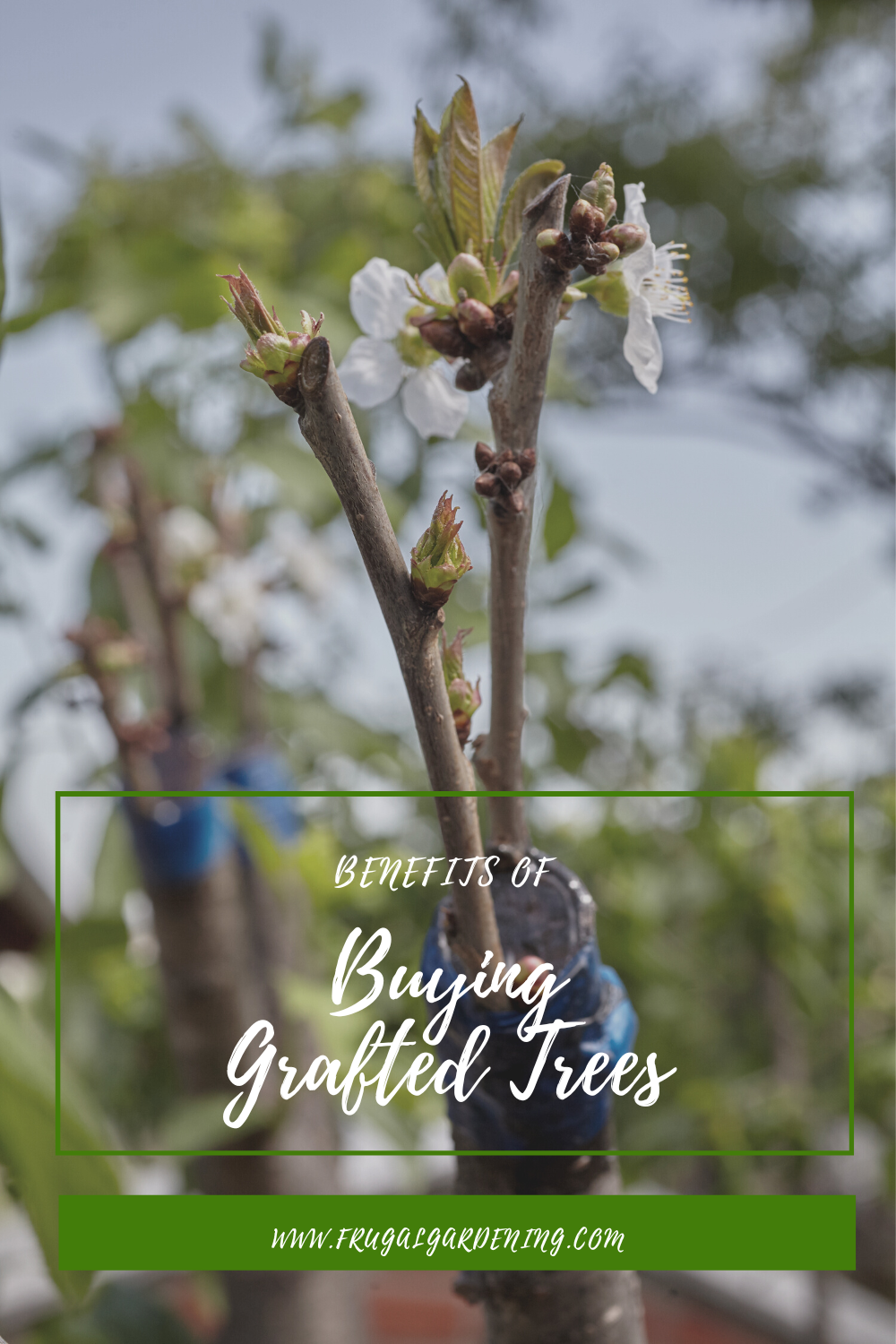
Grafted fruit trees are simply 2 trees fitted to grow as one.

The rootstock is the root of a tree that is cut to let a second tree be fitted into it so it can bind the inner tissues together, heal, and continue to grow.

The second tree, called the scion, is usually cut from a young growth on an established tree. This is the part that will produce fruit. And since it has been taken from a known tree, we can be sure the fruit will taste the same.

Benefits of Buying Grafted Fruit Trees

Taste

Fruit trees are not true to seed.

This means that if you grow an apple tree from seed, its fruit may not taste like the variety of apples you took the seed from. Simply put, there is no guarantee a Honeycrisp apple seed will grow into a tree that produces Honeycrisp apples.

Hardiness

Because you can mix and match the rootstock and the scion, you can get trees that are very well adapted to your exact conditions, giving them a chance to thrive without much help.

Resistance

Grafted fruit trees often have better resistance to disease and insect activity.

Can You Graft Trees Yourself?

Yes. Grafting trees is not difficult and requires a few supplies.

How to Graft

With just a little knowledge, you can graft trees by yourself and end up with a tree that produces multiple types of fruit, like the Tree of 40 Fruits.

Pick the Right Trees

You have to start by picking compatible rootstock and scion. This means that they have to be closely related.

Gather Supplies

You will need a sanitized sharp knife, tape, and grafting wax.

Cut Your Trees

There are several methods for cutting, like Bark Grafting or Whip and Tongue.

They all boil down to using a clean, sharp knife to expose a broad portion of the green tissues underneath the bark. Next, you need to make sure they fit tightly together.

And it is essential to be as precise as you can. Sharp cuts and a tight fit will help the tree heal quickly from this stressful event.

Bind and Seal Your Trees

Use the tape to bind the two pieces together and the wax to seal the wound to help keep out bacteria and fungi that will cause infections or worse.

When to Graft Fruit Trees?

The best time to graft fruit trees is during the late summer or early fall. This means the tree will have a short time to heal before going dormant for the winter.

Conclusion

Buying grafted fruit trees is the only way to be confident they will produce a specific fruit. So what trees do you want to plant?

Read More:

Benefits of Buying Grafted Trees

10 Techniques To Increase Germination Rate of Seeds

5 Plants That Easily Grow in Water

Ali Southerland

Ali is a homeschooling mom of 5 who includes gardening and food prep as important subjects in her school. She has been raising plants her whole life and learned how to garden from her father. When she isn’t caring for her plants, she can be found reading or hiking.

Filed Under: plant growth Tagged With: Grafted Trees, grafting, How to Graft

Previous Post: « 6 Health Benefits of Gardening: How It Boosts your Physical and Mental Health
Next Post: How to Keep Gardening from Being Boring »

Reader Interactions

Leave a Reply Cancel reply

Your email address will not be published. Required fields are marked *

Primary Sidebar

Struggling to get your garden off the ground? Put those days behind you with our special starter kit – perfect for thrifty green thumbs everywhere. Get growing and add a splash of color today!

Popular Posts

  • usda free seeds websiteHow To Get Free Seeds From The Government by Amanda Blankenship Seeds might seem like a small expense, but any seasoned…
  • Enviro Ice On PlantsShould I Use Enviro Ice On My Plants? by Kathryn Vercillo Every week, I receive food from Hungryroot. It's a great…
  • is shredded paper good for the gardenFrom Trash to Treasure: Transform Shredded Paper Into Garden Gold by Amanda Blankenship Should you use shredded paper as garden mulch? It might…
  • Enviro IceWhat Happens to Plants If You Use Enviro Ice on Them? by Amanda Blankenship About a year ago, I wrote our first article about…
The 30-Day Harvest: Fast Crops That Put Food on the Table by Next Month

The 30-Day Harvest: Fast Crops That Put Food on the Table by Next Month

Fresh food in just 30 days sounds like a gardener’s cheat code, but it’s completely doable with the right crops and a little strategy. Fast-growing vegetables don’t just save time—they cut grocery bills, boost nutrition, and give you that unbeatable satisfaction of eating something you grew yourself. You don’t need acres of land or years…

Read More

The Winter Sowing Method: Why You Should Start Your Garden in the Snow

The Winter Sowing Method: Why You Should Start Your Garden in the Snow

Snow blankets your yard, the garden beds sit frozen solid, and most people assume planting season still sits months away. That’s exactly when savvy gardeners grab recycled containers, a handful of seeds, and get to work. The winter sowing method flips traditional gardening on its head by letting nature handle germination in real time. Instead…

Read More

The 'Native' Advantage: Why Local Plants Save You Hundreds in Maintenance

The ‘Native’ Advantage: Why Local Plants Save You Hundreds in Maintenance

Lush gardens don’t have to drain your wallet or your weekends. The secret sits right beneath your feet—literally. Native plants thrive without constant babysitting, expensive treatments, or sky-high water bills, making them one of the smartest financial moves a homeowner can make. While trendy landscaping fads come and go, native plant landscaping quietly delivers consistent…

Read More

The Fall Preview: Why Smart Budgeters Start Buying for Next Year Today

The Fall Preview: Why Smart Budgeters Start Buying for Next Year Today

Autumn doesn’t just signal the end of the growing season—it quietly opens one of the best money-saving windows in gardening. Retailers start clearing shelves, nurseries slash prices, and seasonal items suddenly cost a fraction of their spring price tags. Smart gardeners recognize this shift and treat fall like a strategic shopping season rather than a…

Read More

  • About
  • Contact Us
  • Garden Frugally
  • Buy These
  • Privacy Policy
  • Navigation Menu: Social Icons

    • Facebook
    • Pinterest
    • Twitter
  • Facebook
  • Pinterest
  • Twitter

Copyright © 2026 · Foodie Pro & The Genesis Framework