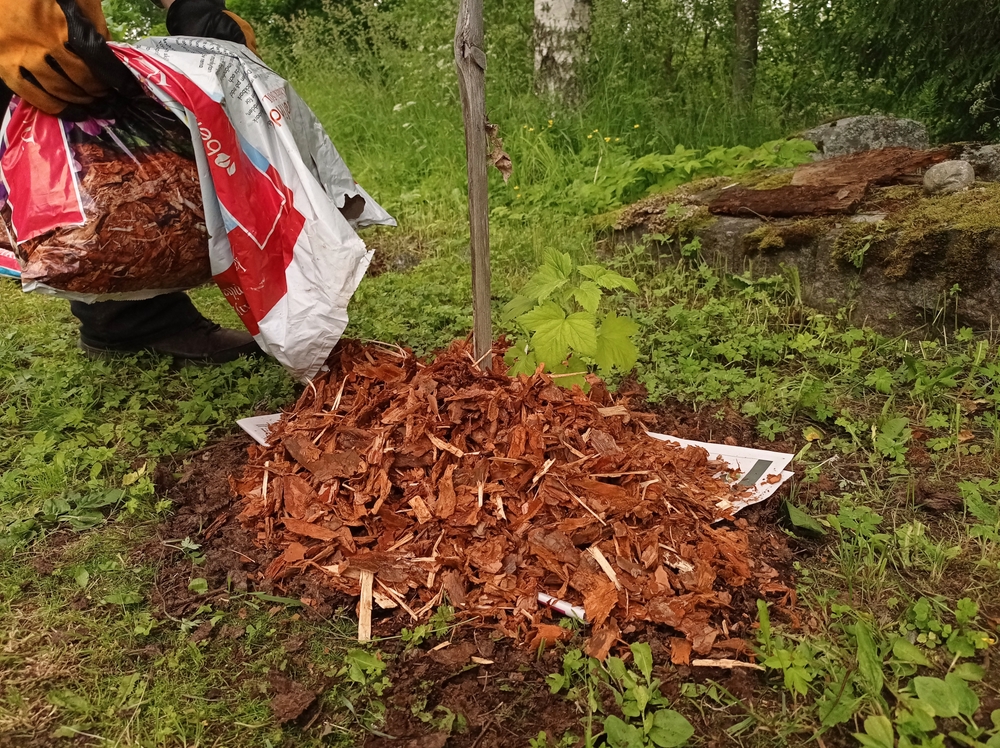
You spend hundreds of dollars on a beautiful ornamental tree, carefully plant it in your yard, and surround it with fresh mulch to give your landscaping a polished appearance. Everything looks perfect, especially that neat mound of dark mulch rising around the trunk. But what if the very thing you did to protect your investment is slowly killing it? Unfortunately, this landscaping mistake is so common that you can spot examples in residential neighborhoods, commercial properties, and even professionally maintained landscapes.
The problem is called volcano mulching, and horticulture experts warn that it can contribute to serious tree damage, sometimes taking years before the consequences become obvious. Understanding what goes wrong beneath those attractive mulch piles could save you from losing an expensive tree.
That Perfect-Looking Mulch Mound Is Actually a Warning Sign
Walk through almost any neighborhood, and you’ll probably notice trees surrounded by tall, cone-shaped piles of mulch. This practice, known as volcano mulching, happens when wood chips or shredded bark are piled directly against the trunk instead of spread across the surrounding soil. The technique can cause premature tree decline by trapping moisture against bark and covering the root flare. The problem is that a freshly mulched tree may initially appear perfectly healthy, making homeowners believe the landscaping technique is beneficial. By the time obvious symptoms appear, the tree may already have experienced considerable stress or damage.
Trapped Moisture Can Cause the Trunk to Decay
Tree roots benefit from consistent soil moisture, but the bark surrounding the lower trunk isn’t meant to remain buried beneath damp mulch. When volcano mulching keeps that bark constantly moist, it can create favorable conditions for decay, fungal diseases, and insect activity. Mulch pressed against tree trunks can encourage deterioration and provide openings for pests and pathogens. Imagine wrapping a damp blanket around the base of your tree and leaving it there through repeated rainstorms and watering cycles. Although damage doesn’t happen overnight, prolonged moisture exposure can weaken vulnerable tissues and contribute to serious problems over time.
You May Be Burying the Most Important Part of the Tree
One of the easiest ways to identify improper mulching is to examine where the tree trunk meets the ground. Healthy trees generally have a visible root flare, the widened area where the trunk transitions into the major roots. A tree that disappears straight into the ground like a telephone pole may have its root flare buried too deeply. Covering this area with excessive mulch can conceal structural problems and create unfavorable growing conditions around the tree’s base. If you can’t see any widening at the bottom of your tree, carefully checking the mulch depth should be one of your first steps.
Hidden Roots Can Eventually Strangle the Trunk
Perhaps the most surprising danger associated with excessive mulch involves roots that begin growing in the wrong direction. Under certain conditions, roots can develop within thick mulch or near a buried trunk and eventually circle around the tree instead of extending outward. These girdling roots can gradually compress the trunk and interfere with the movement of water and nutrients. Some trees may continue growing for years before showing significant decline, making the underlying problem difficult for homeowners to recognize. While girdling roots can also develop from poor nursery practices or improper planting depth, volcano mulching can contribute to conditions that encourage their formation.
Too Much Mulch Can Actually Keep Water From Reaching Roots
Mulch is supposed to help soil retain moisture, but excessive layers can interfere with the very process they’re meant to improve. Thick, compacted mulch may become matted, restricting water infiltration and reducing oxygen movement into the soil beneath it. Applying more than four inches of organic mulch can harm tree roots, with finer materials sometimes requiring even thinner layers. This means a tree surrounded by a towering mulch mound could experience moisture-related problems even when you’re watering regularly. Instead of assuming more mulch provides more protection, gardeners should focus on maintaining a consistent, appropriate depth.
The Mulch Pile Could Be Sheltering Hungry Rodents
Another overlooked problem with volcano mulching is that thick piles of organic material can provide hiding places for animals that damage trees. Voles and other small rodents may shelter beneath mulch, where they can chew vulnerable bark near the base of the trunk. The International Society of Arboriculture recommends keeping mulch away from the trunk while spreading it across the surrounding root zone. Damage becomes especially serious when chewing removes bark around much of the trunk’s circumference, potentially disrupting the tissues responsible for transporting nutrients. Keeping the tree’s base visible makes it easier to spot chewing damage, decay, or other warning signs before they become severe.
The Correct Mulch Depth Is Probably Less Than You Think
Fortunately, protecting a tree with mulch doesn’t require complicated equipment or expensive landscaping materials. Most landscape trees benefit from approximately two to four inches of organic mulch, with thinner applications recommended for poorly drained soil or finely shredded materials. The mulch should extend outward across the root zone rather than rise upward against the trunk, creating a broad, relatively flat ring. Penn State recommends keeping mulch roughly three to five inches from young tree trunks and eight to 10 inches from mature trunks while leaving the root flare exposed. This simple adjustment provides many of mulch’s benefits without creating the risks associated with volcano mulching.
You Might Not Need to Buy More Mulch This Year
One of the most expensive mulching mistakes is automatically adding fresh material every spring without checking what’s already there. Over time, repeated applications can create excessively deep layers, particularly when older mulch hasn’t decomposed completely. You should check existing mulch depth and refresh its appearance with a rake when enough material is already present. For example, if your tree already has three inches of mulch, adding another three inches could create a six-inch layer that exceeds commonly recommended depths. Simply loosening compacted mulch and redistributing excess material may improve the appearance of your landscaping without spending another dollar.
Here’s How to Fix a Mulch Volcano Before It’s Too Late
If your tree is surrounded by a tall mulch mound, start by gently pulling the excess material away from the trunk using your hands or a small garden rake. Exposing the root flare and spreading excess mulch outward is recommended rather than leaving it piled against the bark. Avoid scraping the trunk, cutting exposed roots, or digging aggressively into the soil because these actions can create additional damage. If the root flare remains buried beneath compacted soil or you discover large roots circling the trunk, consider consulting an ISA Certified Arborist before attempting major excavation. Correcting the mulch depth won’t reverse existing decay or severe root damage, but it can remove an ongoing source of stress and improve the tree’s growing conditions.
A Few Minutes of Mulch Maintenance Could Save Your Tree
Mulch remains one of the most useful and affordable landscaping materials when it’s applied correctly. It helps conserve moisture, moderate soil temperatures, reduce weed competition, and protect tree trunks from lawn equipment. However, piling it against the trunk or continually adding new layers can turn those benefits into serious risks for an otherwise healthy tree. Before purchasing another bag, inspect your existing mulch, locate the root flare, and make sure the material is spread outward rather than stacked upward. Avoiding volcano mulching is a simple way to protect your landscaping investment and give expensive trees a better chance of thriving for decades.
Have you noticed mulch piled high around trees in your neighborhood, or have you ever had to correct a mulch volcano in your own yard? Share your experience in the comments!
What to Read Next
Why Volcano Mulching Can Damage Trees Before Winter
You’re Mulching Too Deep — And It Could Slowly Kill Your Trees
Raking Every Leaf Out of Your Garden? You May Be Throwing Away Free Mulch
Leave a Reply