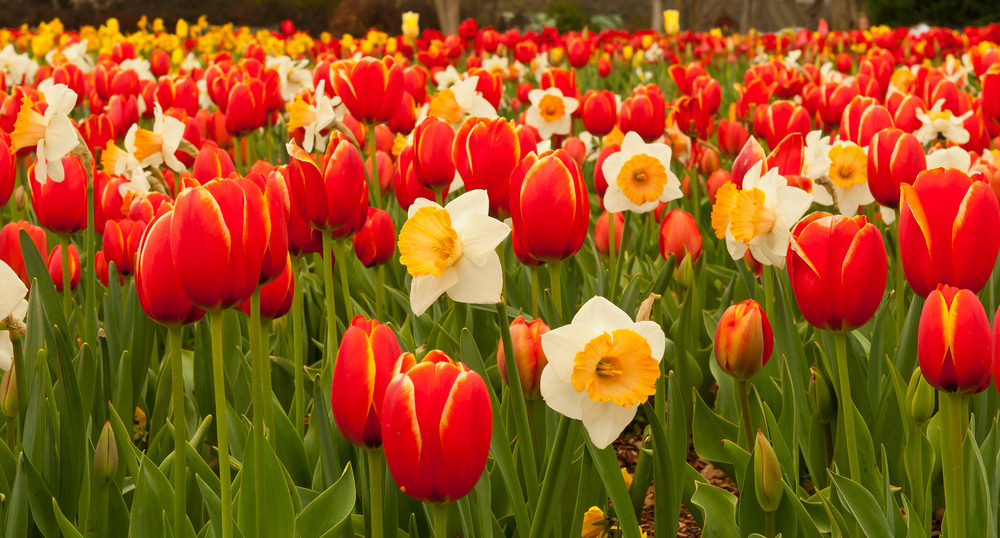
October can feel like the month when gardening starts shutting down, but one of the year’s best opportunities is sitting in bags and boxes at garden centers right now. Plant the right spring flowering bulbs this fall, and you’ll get weeks of color next year without buying trays of annuals or starting dozens of seeds. The University of Minnesota explains that hardy spring bulbs need a cold period to break dormancy and begin flower development. Fall planting also gives bulbs time to establish roots before frozen ground arrives. Better yet, combining bulbs with different bloom times can turn one October afternoon of planting into a display stretching from late winter into early summer.
1. Snowdrops Can Start the Show Surprisingly Early
If you’re impatient for the first sign of spring, snowdrops deserve space near a walkway or window where you’ll actually notice them. These small white flowers can emerge extremely early, sometimes while patches of snow remain nearby, and spring bulbs can begin blooming with snowdrops in late February depending on location. Because the plants are small, a single bulb won’t create much impact, so plant snowdrops in groups rather than scattering them individually across a large bed. They also work well beneath deciduous trees because they can grow and flower before the tree canopy fills in and blocks much of the sunlight. Think of these spring flowering bulbs as the opening act rather than the main spring display.
2. Crocuses Bring Color Close to the Ground
Crocuses are another excellent choice when you want flowers before most perennials have done much more than poke through the soil. Purple, white, yellow, and striped varieties can create small pools of color along paths, beneath shrubs, and near the front of garden beds. University of Minnesota includes crocuses among hardy bulbs that can be planted in fall and left in the ground to return. Their small size also makes them affordable for mass planting, which usually produces a much stronger visual effect than placing individual bulbs several feet apart. If squirrels routinely investigate newly disturbed soil in your yard, protect fresh plantings because rodents can dig up some fall-planted bulbs.
3. Daffodils Are a Dependable Spring Investment
For gardeners who want bulbs that can provide value beyond a single season, daffodils are hard to overlook. They come in far more than the familiar solid-yellow trumpet form, with cultivars offering white, orange, peach, pinkish, and multicolored flowers in different sizes. Hardy bulbs such as daffodils can remain in the ground and flower year after year when conditions suit them, according to the University of Minnesota. Additionally, narcissus bulbs are poisonous, making them less attractive to squirrels and chipmunks than favorites such as tulips. Plant several together, and you’ll get a more impressive display while giving the bulbs room to naturalize over time.
4. Tulips Deliver Some of Spring’s Boldest Color
Few spring flowering bulbs offer the range of colors and flower forms available from tulips. You can choose everything from compact early varieties to tall late-season tulips, along with fringed, double, lily-flowered, and parrot types that barely resemble the classic supermarket bouquet. Tulips do require well-drained soil because prolonged wet conditions can encourage bulb rot, and some varieties perform better as repeat bloomers than others. University of Minnesota notes that tulips are unusually forgiving about late planting and can be planted as long as you’re still able to work the soil. If you’re shopping clearance racks late in the season, firm, healthy tulip bulbs can therefore still be worth taking home.
5. Hyacinths Pack Fragrance Into a Small Space
Hyacinths earn their place in the garden not only through color but through fragrance. Their dense flower spikes are available in shades including pink, purple, blue, white, and other colors, making them easy to coordinate with tulips and daffodils. Place them beside a front walk, porch, patio, or frequently opened window where their scent won’t be wasted in a distant corner of the yard. Like tulips and daffodils, hyacinths are classic fall-planted bulbs, and Penn State also identifies October as a good time to prepare hyacinths for indoor forcing. Buying a few extra bulbs lets you experiment with both an outdoor bed and an inexpensive indoor spring display.
6. Grape Hyacinths Make Excellent Edging Plants
Despite their name, grape hyacinths aren’t simply miniature versions of ordinary hyacinths. Muscari produce clusters of tiny flowers, commonly blue or purple, that resemble upside-down bunches of grapes and look especially effective planted by the dozen. You should try massing small spring bulbs for immediate visual impact, a strategy that works particularly well with plants this compact. Their size makes grape hyacinths useful along bed edges or beneath taller tulips and daffodils rather than competing with those plants for attention. They’re another good choice for gardeners who want to layer different heights and bloom periods into the same limited space.
7. Alliums Can Carry the Display Toward Summer
If your bulb garden seems to disappear too quickly every spring, ornamental alliums can help extend the season. Some varieties produce dramatic globes of purple or pinkish-purple flowers on tall stems, creating a completely different shape from traditional tulips and daffodils. Giant flowering onions can reach three to four feet tall and flower from late spring into early summer. Because of that height, taller alliums generally work best toward the back of a perennial bed, where emerging summer plants can eventually disguise fading bulb foliage. Adding them to your spring flowering bulbs helps prevent all the color from arriving—and disappearing—at once.
8. Glory-of-the-Snow Creates an Early Blue Carpet
Glory-of-the-Snow lives up to its name by producing small star-shaped flowers early in the season. Chionodoxa luciliae is a fall-planted bulb producing blue flowers with white centers and it can slowly multiply through self-seeding. At only a few inches tall, it works beautifully beneath deciduous shrubs or at the front of borders where larger plants won’t hide it. Planting many bulbs close enough to read as one patch creates a much stronger effect than sprinkling a handful throughout the yard. This is the kind of inexpensive, small bulb that becomes more rewarding as the planting matures.
9. Dwarf Iris Adds Something Different to Early Spring
Dwarf or reticulated irises give gardeners the familiar elegance of an iris flower on a much smaller early-season plant. They work particularly well in rock gardens, along walkways, and toward the front of beds where their short flowers can be appreciated up close. Pairing them with crocuses and snowdrops creates early color before taller daffodils and tulips take over the display. As with other bulbs, drainage matters because continually waterlogged soil can encourage rot rather than healthy root development. A small cluster also takes up remarkably little garden real estate, making dwarf iris useful for gardeners working with compact beds.
10. Fritillaria Can Add an Unexpected Shape
Gardeners who already have plenty of tulips and daffodils may want to reserve part of their October bulb budget for something less familiar. Fritillaria includes species ranging from relatively small checkered flowers to striking crown imperial types that can become commanding focal points. University of Minnesota includes fritillaria among the hardy bulbs suitable for fall planting. Check the mature height and requirements of the particular species you’re buying because this group is considerably more varied than a typical bag of identical crocus bulbs. Used selectively, fritillaria can keep an inexpensive spring bulb bed from looking like every other planting on the block.
Plant Once in Fall, Then Let Winter Do Some of the Work
Whichever spring flowering bulbs you choose, don’t simply dig ten identical holes without checking the package directions. A useful general rule from University of Minnesota is to plant bulbs about two to three times deeper than their diameter, adjusting somewhat for soil type, then water thoroughly and cover the soil with two to three inches of mulch. Good drainage matters because bulbs sitting in saturated soil are vulnerable to rot, and bulbs should be firm rather than soft, moldy, or badly damaged when planted. For a stronger display, plant clusters or broad drifts rather than isolated bulbs, and combine early, middle, and late bloomers so your investment pays off over a longer period.
Which bulbs are you putting in the ground this October for next spring?
What to Read Next
Don’t Bag Those Fall Leaves — They Could Replace 3 Things You Pay for in the Garden
Should You Buy Clearance Trees and Shrubs in Fall? Check the Roots First
Don’t Prune These 7 Plants in Fall or You Could Lose Next Year’s Flowers
Leave a Reply