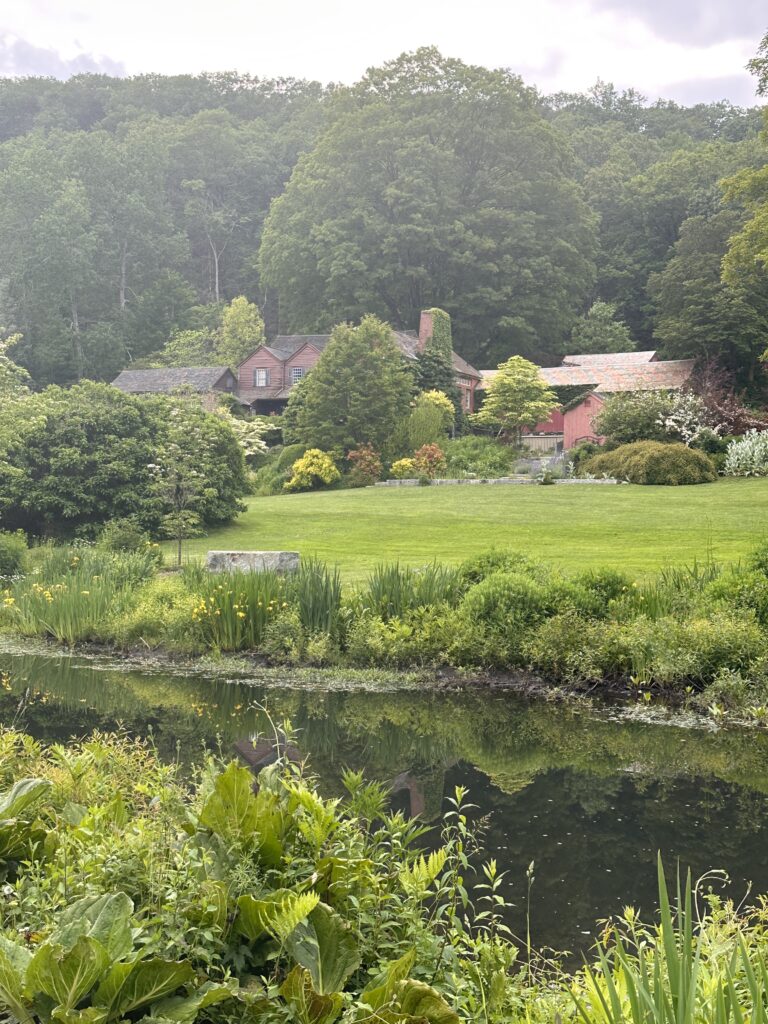
I’m never going to have an English garden. It just feels a little bit too perfect for my brown thumb, even though it has some informality to it. Either way, though, they are beautiful gardens, and it’s a delight to get a chance to visit one. I had just that chance recently on a family trip to Connecticut. We were staying in Washington, CT, where we visited the Hollister House Garden.
What Is Hollister House Garden?
As the website proudly proclaims, this garden is:
“A classic garden in the English manner, with a loosely formal structure, informally planted in generous abundance situated in the Litchfield hills of Northwestern Connecticut.”
They further go on to explain that the garden is inspired by famous English gardens. However, it’s an American version of that inspiration, particularly in terms of plant choice.
What Is an English Garden?
An English garden refers to a particular style of gardening that originated in England. It became popular during the 18th and 19th centuries. They style is characterized by its naturalistic, romantic, and somewhat informal design despite the fact that it has a formal structure.
Formal aspects of the English garden include:
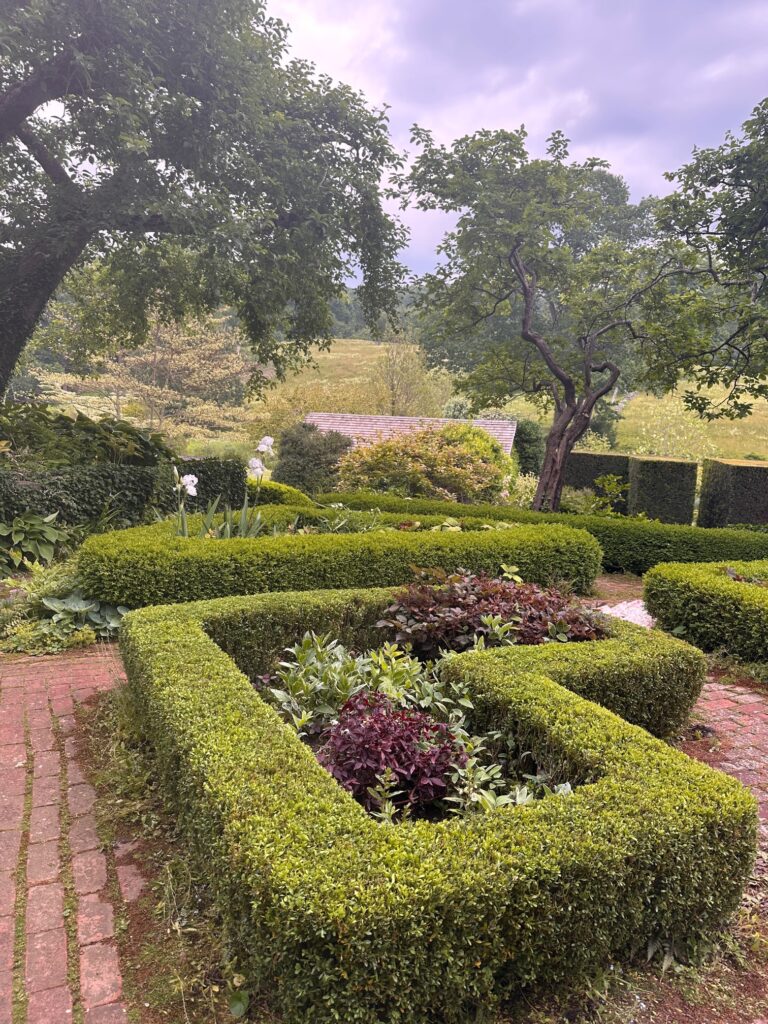
- Symmetry and Balance: Formal English gardens often exhibit a sense of symmetry and balance in their design. Pathways, hedges, and flowerbeds may be laid out in precise geometric patterns, creating an orderly and structured appearance.
- Defined Shapes and Lines: The formal elements of an English garden involve crisp and well-defined shapes and lines. This includes neatly trimmed hedges, geometrically shaped flowerbeds, and precisely aligned paths or walkways.
- Architectural Features: Formal English gardens often incorporate architectural elements, such as statuary, fountains, and ornate gazebos. These features add a touch of elegance and structure to the overall design, enhancing the formal atmosphere.
- Pruned and Controlled Plantings: Plants in formal English gardens are typically pruned and shaped meticulously to maintain a controlled and uniform appearance. This includes topiaries, espaliered trees against walls, and manicured shrubs.
Informal aspects of the English garden include:
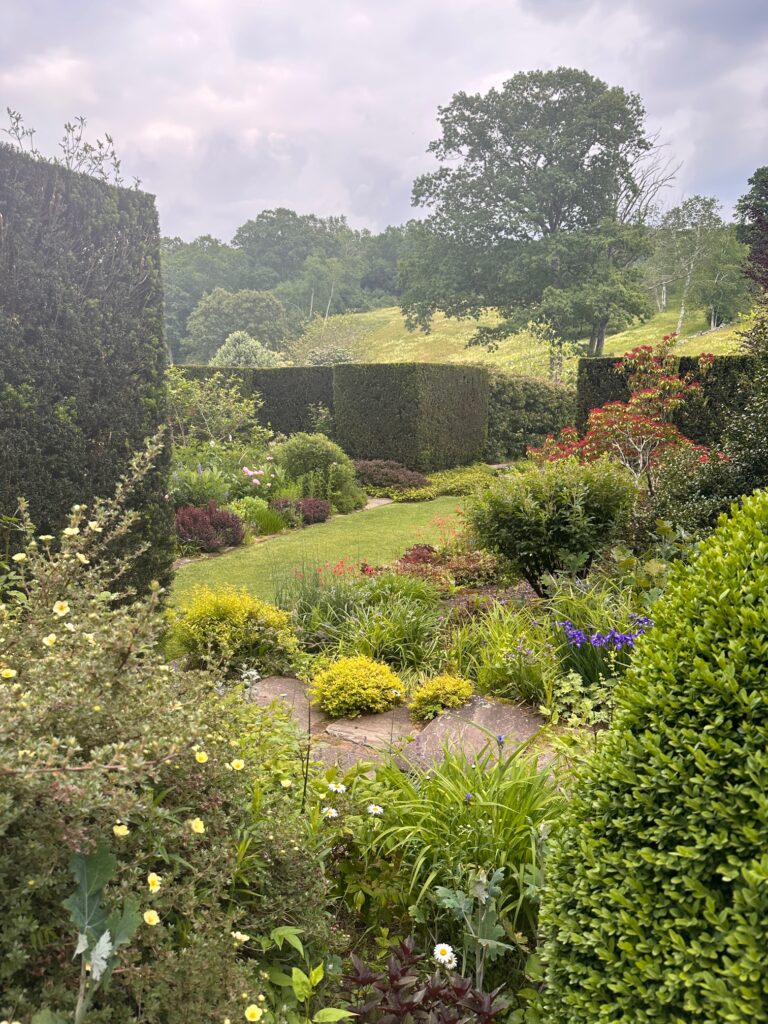
- Naturalistic Layout: Informal English gardens embrace a more natural and relaxed layout. Paths and walkways may meander and curve, mimicking the flow of nature rather than adhering to strict geometric patterns.
- Abundance of Plantings: Informal gardens are known for their profusion of plants and flowers. They often feature mixed and densely planted beds of various colors, textures, and heights, creating a sense of abundance and wild beauty.
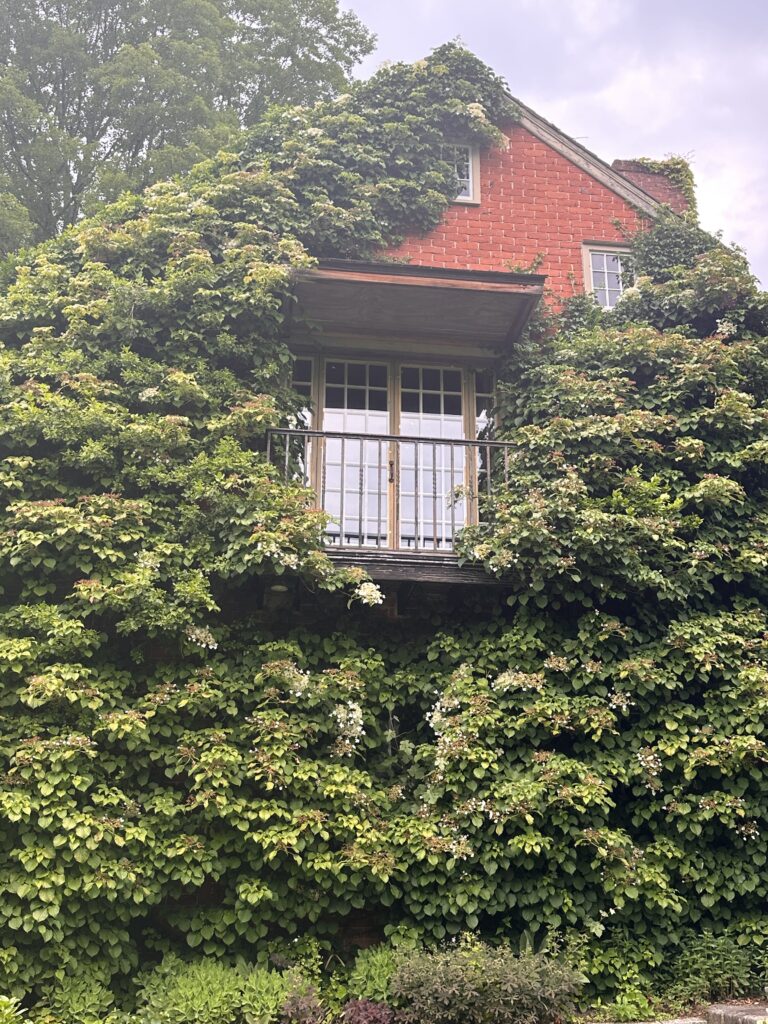
- Soft Edges and Blending: Informal English gardens avoid sharp edges and instead emphasize softer transitions. Plants may spill over onto pathways, creating a more organic and less structured appearance.
- Embracing Nature: Informal gardens celebrate the natural characteristics of the landscape. They may incorporate elements such as natural rock formations, existing trees, and gentle slopes, harmonizing with the surroundings rather than imposing rigid structure.
- Cottage Garden Influence: Informal English gardens often draw inspiration from traditional cottage gardens, with their casual and charming aesthetics. This influence can be seen in the use of cottage-style plants, including roses, hollyhocks, and other cottage garden favorites.
More About Hollister House Garden
George Schoellkopf started the garden in 1979. The garden is located on about 25 acres of woodsy land, next to a house built in the 18th century. Hollister House Garden was designed to complement the old house as well as the barns and buildings from the same era that surround the place. They used antique / handmade materials as much as possible to add to this feeling.
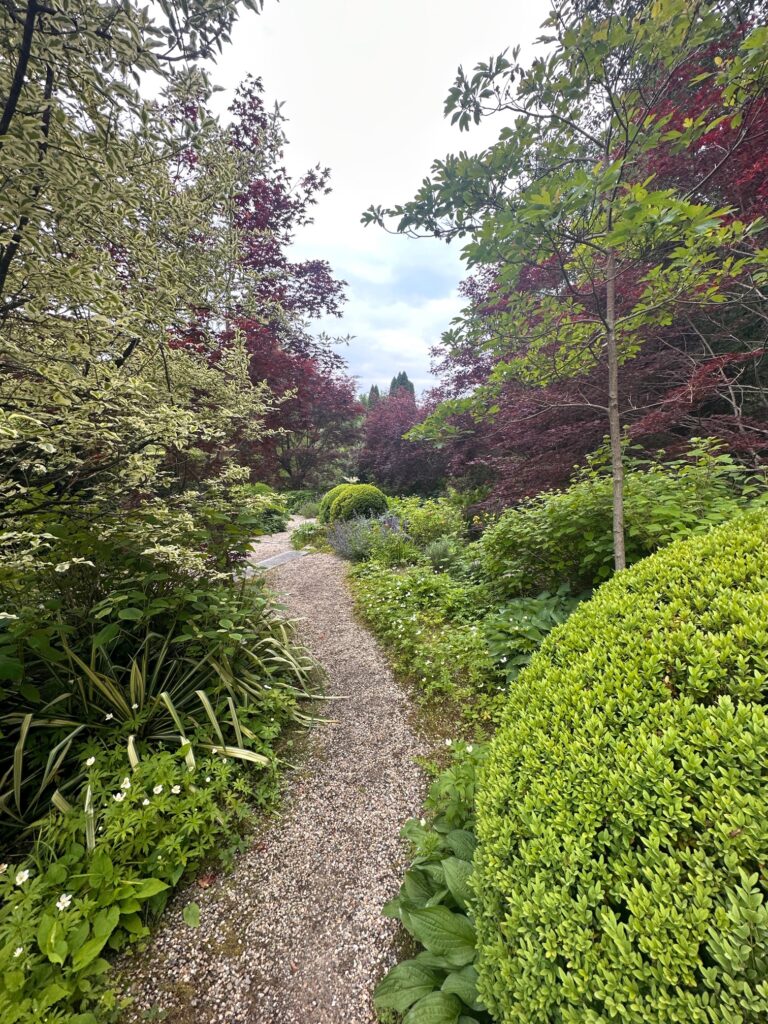
The garden combines formal elements with the natural surroundings. The paths, walls, and hedges blend into the landscape. There are about different sections with varying colors and spaces. Walls and hedges, about eight to ten feet tall, define the different areas, creating a solid structure for the various plantings. There is also a winding brook and a large pond on the property.
Plants at Hollister House Garden
Naturally, you’ll see different plants blooming at different times depending on when you visit the garden. These are mostly spring and summer plants. Therefore, you should visit between April and October. During the winter months, you get a little bit of fall foliage, but you don’t see a lot of the beauty of the English garden. We went at the beginning of June, which is one of the best times of year to go. I recognized lilies and forget-me-nots, as well as the red Japanese Maple trees.
My sister knows plants a lot better than I do, so she pointed out the others for me. The small hedges were Boxwood, the large ones were Yew. There were also a lot of dogwood trees. For flowers she noticed irises, peonies, azalea, zinnias. She said not everything was in bloom but we also saw viburnum, daisies, salvia, dianthus, sweet busy, and wiegela. And, of course, mountain laurel, which is the state flower. It was a lot of lovely color laid out in little “rooms” separated by hedges.
What I Loved About Hollister House Garden
Those “rooms” are what’s so great about English gardens. One of the things that I love about old San Francisco houses is that they’re made up all of these little rooms and nooks so even in a small square footage space, you get to explore and see discover things. English gardens are like this. While this particular garden is large, you could scale it down and use hedges to create rooms in a smaller garden and achieve the same effect. It’s a delight because it feels like you’re on an adventure, not just sitting in a garden.
Of course, there’s nothing wrong with just sitting in a garden, either. There are plenty of great places to just sit in this garden as well. Benches. Tiered rock stairs. We hiked over a small bridge to a viewpoint overlooking the house and garden, sitting on large rocks there. It was peaceful. Beautiful. Inspiring. Colorful. Green, so green. The weather was lovely, the view was amazing, and the people we ran into while visiting were all welcoming. All in all, it’s what you want when you visit a garden.
Read More:
- Garden Photo Walks for Mindfulness
- The Best Plants for Mental Health Benefits
- Greek Gardening Style on the Cheap

Kathryn Vercillo is a long time writer, crafter and author of several books. A resident of San Francisco, she is committed to helping others explore, articulate and share their own individuals stories. When she’s not evaluating investing opportunities Kathryn is an avid knitter, researcher, and blogger.
Leave a Reply