• Skip to primary navigation
  • Skip to main content
  • Skip to primary sidebar

Frugal Gardening

Simple ways to save money while you garden

  • About
  • Contact Us
  • Garden Frugally
  • Buy These
  • Our Editorial Commitment
  • Navigation Menu: Social Icons

    • Facebook
    • Pinterest
    • Twitter

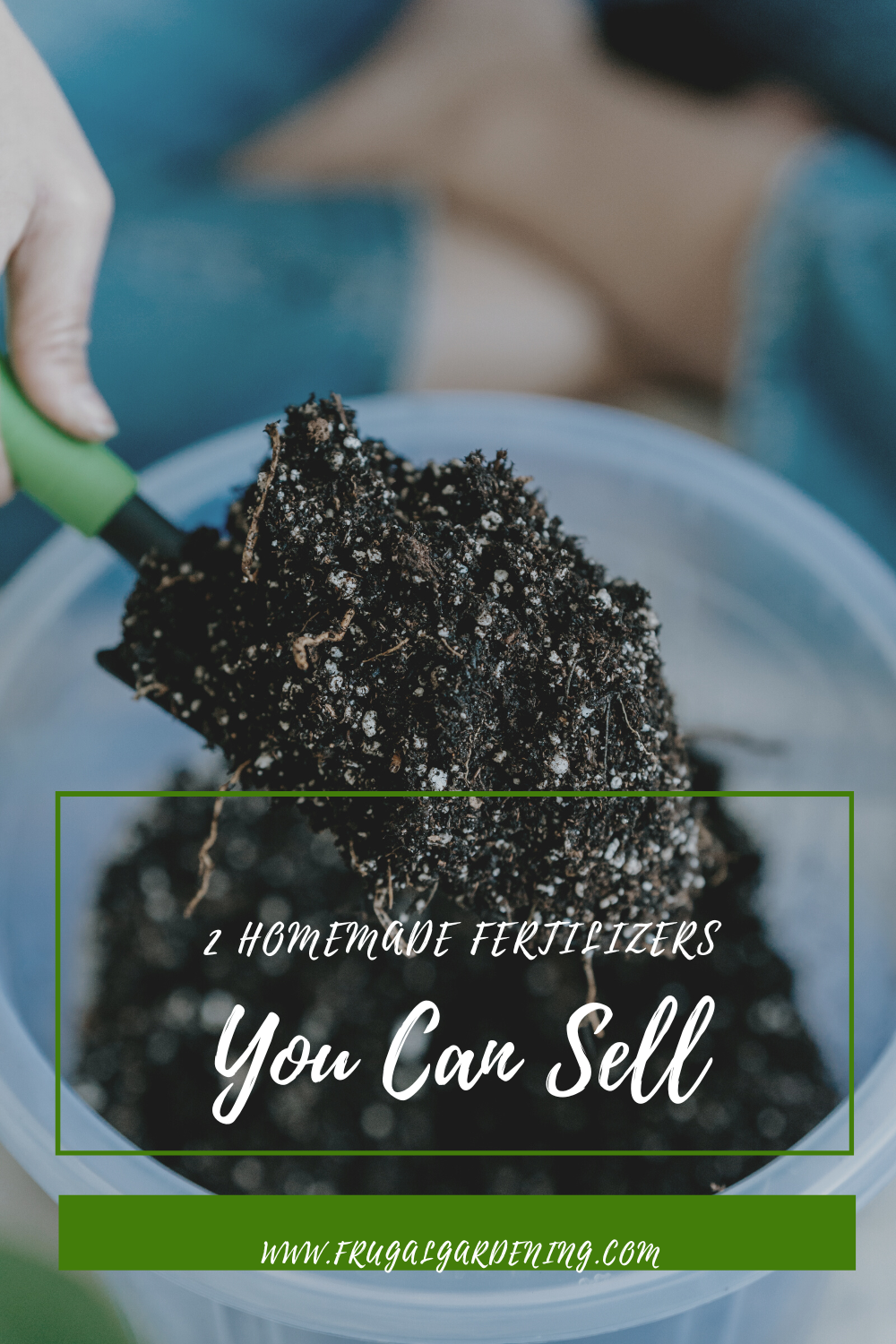
2 Homemade Fertilizers You Can Sell

October 12, 2022 by Ali Southerland Leave a Comment

Looking to make extra money? Mixing up homemade fertilizer is a great side hustle for gardeners. 

What is fertilizer?

I want to discuss fertilizers. They are anything you add to the soil to make it a hospitable place for plants. They can be organic or non-organic. 


When looking at fertilizers, they seem to come in all different kinds. For example, there are fertilizers for growing big and flavorful fruits and veggies, encouraging root, foliage, or flower growth, and even ones formulated for specific plants like roses. 


Fertilizers usually have 3 numbers on the front that refer to the ratio of 3 elements they contain. These are called the NPK ratio. 


Nitrogen (N), Phosphorus(P), and Potassium (K) are essential for plant growth. Nitrogen is critical for producing amino acids, and the proteins plants use for structure. Phosphorus is vital in photosynthesis. Potassium is necessary to move water and nutrients through plants and create energy. 


What is a soil amendment?

Many people confuse fertilizer and soil amendments. They are both things you add to the soil to encourage plant growth. Amendments include changing the soil’s acidity, drainage, or water retention. 


Best Homemade Fertilizers to Sell

These easy recipes are great to mix up and sell. 


Homemade Fertilizer: Seaweed

Water plants, both salt, and freshwater varieties, are rich in nitrogen, potassium, and phosphorus.


And there is a long history of people gathering water plants off the shores, steeping them in water, and then using that water to feed plants. 

You can create your seaweed fertilizer in 2 ways: 


Simple Seaweed Tonic

  1. Collect weeds from the shore 
  2. Lay weeds in a single layer and let dry. You can do this slowly in the sun or use your oven at a very low temperature (160-180℉) for a couple of hours until dry.
  3. Steep in hot water until the water has tinted green. 
  4. Let it cool, then water your plants with it.


Seaweed Powder

This one seems to be the preferred way of using seaweed. 

  1. Dry seaweed like above 
  2. Use a large grinder, food processor, or blender to pulverize the dry weeds. 
  3. Add the powder directly to the soil in the garden. 


Kitchen Ingredient Fertilizer

This simple fertilizer can be mixed up from simple, everyday kitchen ingredients and provides nitrogen, magnesium, and sulfur, all crucial nutrients for general plant growth. Some of the elements also protect plants from fungal diseases. 


Follow this recipe to the letter, though. Adding too much of each ingredient can cause burns on your plants. 


Kitchen Ingredient Fertilizer Recipe

  1. Gather a plastic gallon pitcher, Epsom salt (not table salt), baking powder, and ammonia. 
  2. Add 1.5 tablespoons Epsom Salt, 1.5 teaspoons baking powder, and just under .5 teaspoons ammonia to the empty pitcher. 
  3. Add water to the mixture to make 1 gallon.
  4. Let sit for 15 minutes to make sure all solids are fully dissolved.
  5. Apply to your plants 


Conclusion

Do you make your fertilizer? Let us know your recipe in the comments below.

 

Ali Southerland

Ali is a homeschooling mom of 5 who includes gardening and food prep as important subjects in her school. She has been raising plants her whole life and learned how to garden from her father. When she isn’t caring for her plants, she can be found reading or hiking.

Filed Under: Uncategorized

Previous Post: « 5 Tips for Starting a Garden and Landscaping Company
Next Post: 6 Health Benefits of Gardening: How It Boosts your Physical and Mental Health »

Reader Interactions

Leave a Reply Cancel reply

Your email address will not be published. Required fields are marked *

Primary Sidebar

Struggling to get your garden off the ground? Put those days behind you with our special starter kit – perfect for thrifty green thumbs everywhere. Get growing and add a splash of color today!

Popular Posts

  • usda free seeds websiteHow To Get Free Seeds From The Government by Amanda Blankenship Seeds might seem like a small expense, but any seasoned…
  • Enviro Ice On PlantsShould I Use Enviro Ice On My Plants? by Kathryn Vercillo Every week, I receive food from Hungryroot. It's a great…
  • is shredded paper good for the gardenFrom Trash to Treasure: Transform Shredded Paper Into Garden Gold by Amanda Blankenship Should you use shredded paper as garden mulch? It might…
  • Enviro IceWhat Happens to Plants If You Use Enviro Ice on Them? by Amanda Blankenship About a year ago, I wrote our first article about…
6 Ways to Protect Ripening Fruit From Sudden Splitting

6 Ways to Protect Ripening Fruit From Sudden Splitting

Nothing frustrates a gardener quite like spotting beautiful fruit one evening, then walking outside after a rainstorm to find it covered in ugly cracks. Tomatoes split down the sides, cherries burst open, and plums suddenly wear deep scars that invite insects and disease. A harvest that looked picture-perfect can change overnight. Fruit rarely splits for…

Read More

Why Do Some Garden Beds Stay Wet Long After a Storm?

Why Do Some Garden Beds Stay Wet Long After a Storm?

Rain should leave a garden refreshed, not looking like it belongs in a marsh. Yet some garden beds stay soggy for days after a storm while others drain beautifully within hours, and that difference often points to problems hiding beneath the surface. A waterlogged bed does more than create muddy shoes. It can suffocate roots,…

Read More

Are Old-Fashioned Flowers Making a Comeback in Modern Gardens?

Are Old-Fashioned Flowers Making a Comeback in Modern Gardens?

Old-fashioned flowers have stepped back into the spotlight, and today’s gardens look better because of it. Gardeners now hunt for fragrant blooms, rich colors, and timeless favorites that filled family gardens decades ago instead of chasing every flashy new hybrid that appears on store shelves. That shift makes perfect sense. Many classic flowers offer beautiful…

Read More

What Is the Best Use for Tomato Suckers You Remove?

What Is the Best Use for Tomato Suckers You Remove?

Tomato suckers often look like little troublemakers stealing energy from the main plant, but those tiny shoots can become valuable garden helpers. Instead of tossing them into the compost pile, gardeners can turn many tomato suckers into new plants, extra harvests, or nutrient-rich compost. The next time a tomato plant sprouts a sucker between a…

Read More

  • About
  • Contact Us
  • Garden Frugally
  • Buy These
  • Our Editorial Commitment
  • Navigation Menu: Social Icons

    • Facebook
    • Pinterest
    • Twitter
  • Facebook
  • Pinterest
  • Twitter

Copyright © 2026 · Foodie Pro & The Genesis Framework